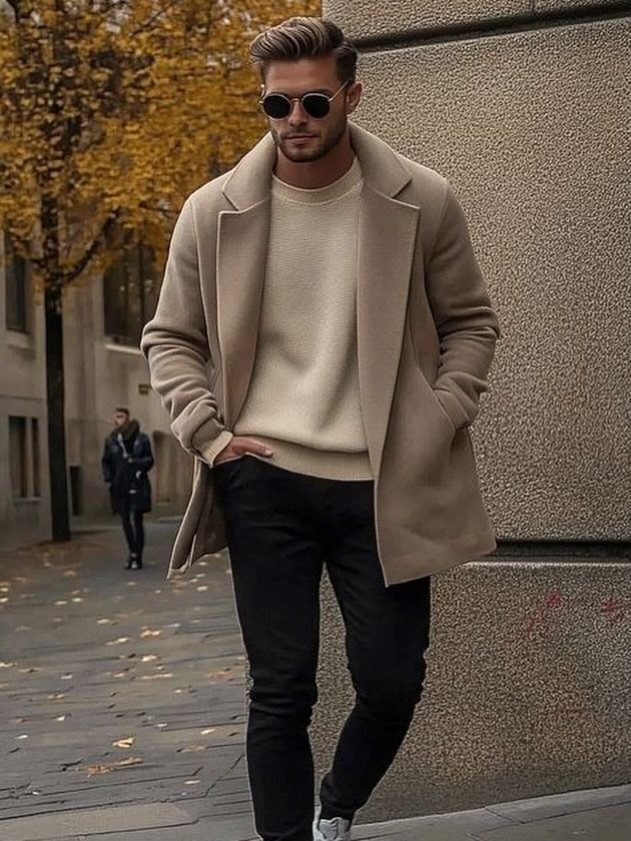
Weather decides which of these coats is yours before style does: a trench or a wool overcoat holds up on a cool fall day, but once temperatures sit near freezing, only a parka with down or synthetic fill keeps you out of the closet-bound pile by January.
The list runs from a long black overcoat for dressy rooms to a fur-trimmed parka for real cold, with a tan corduroy jacket in the casual middle.
In each case the shoulder seams sitting at the bone is the fit detail I check first.
1. Overcoat
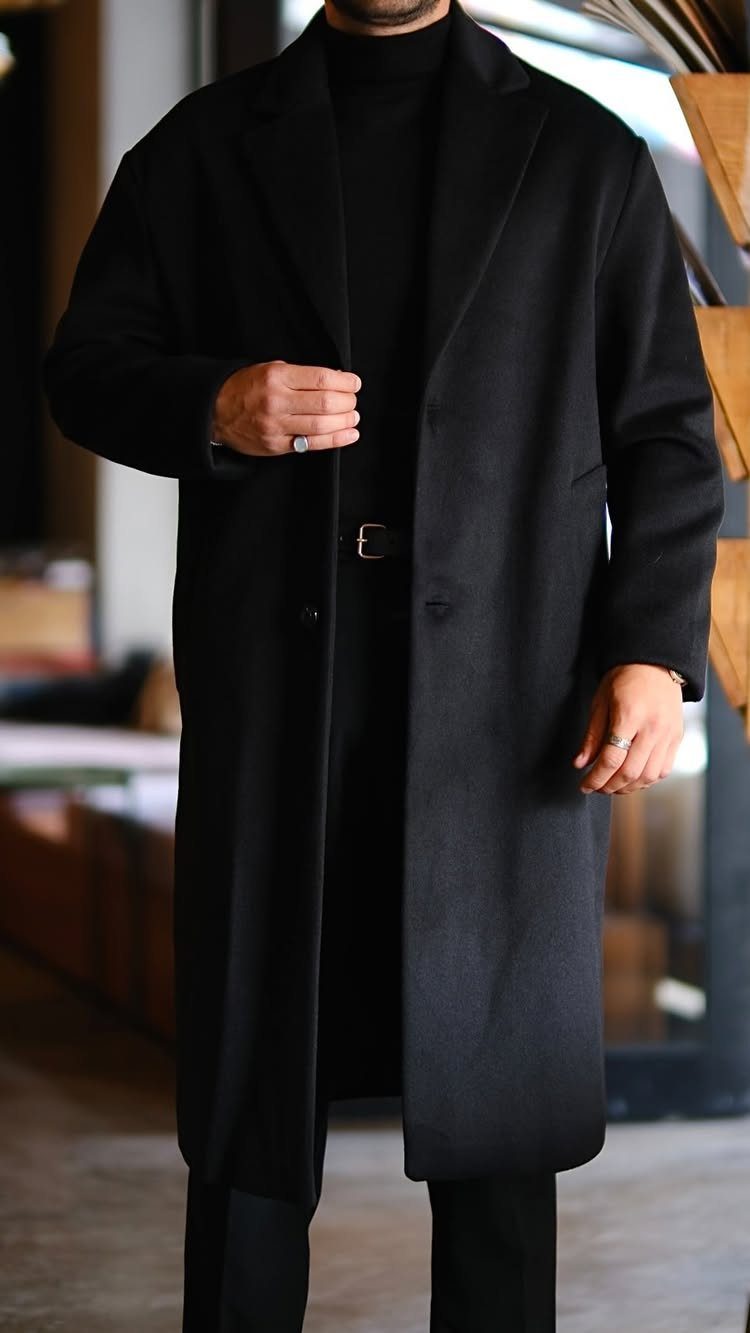
A long black wool overcoat is the one layer that makes a plain outfit look planned. Worn over a black turtleneck and black trousers, it needs no accessories beyond a belt and maybe a ring or two.
Length matters most.
I prefer the hem near the knee, because it reads formal without swallowing a shorter frame. Shoulder seams should sit right at the bone, since that is the part a tailor cannot easily fix.
The trade-off is that all black shows lint and dust fast, so keep a roller by the door.
2. Peacoat
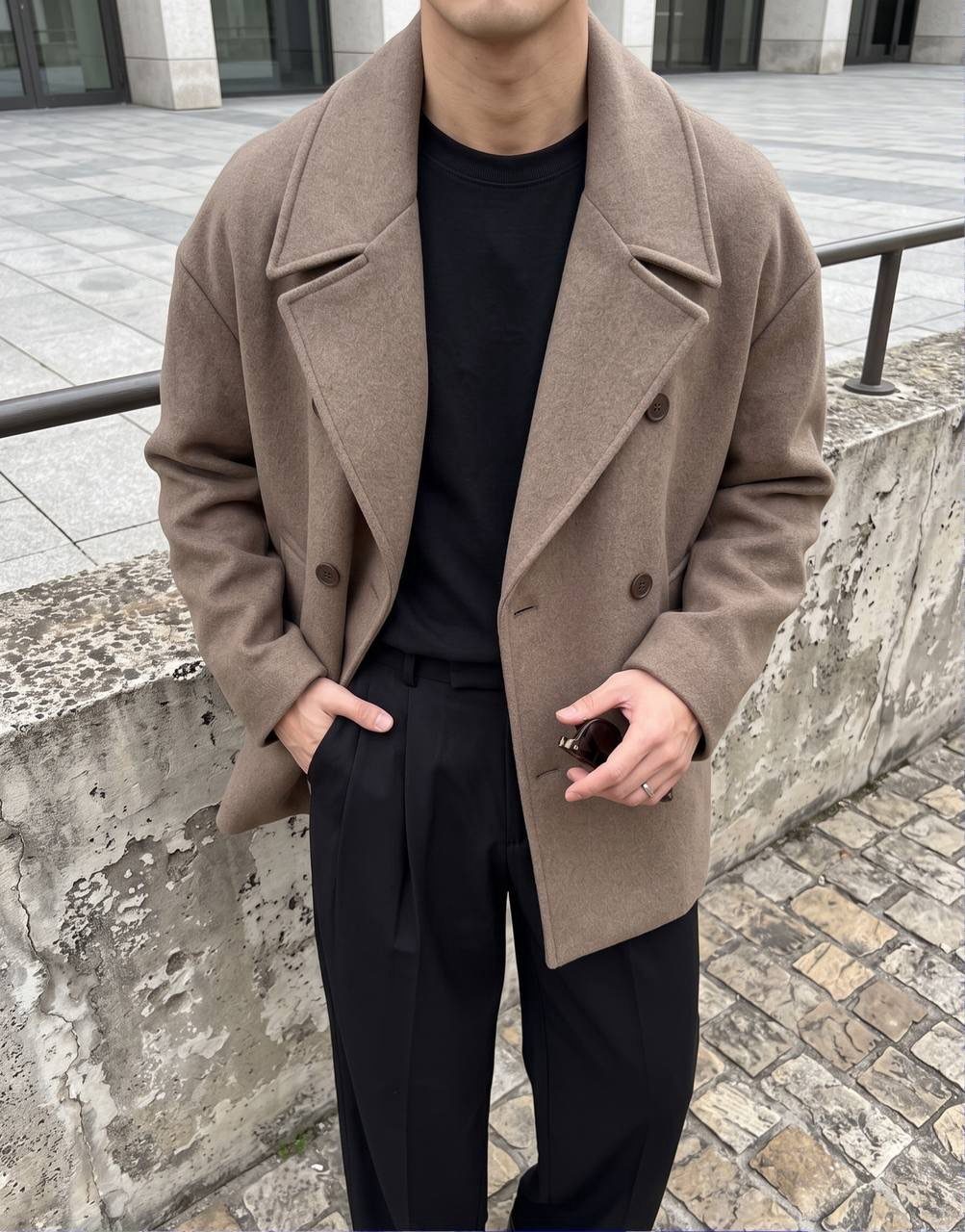
Short and double-breasted, a peacoat sits at the hip and keeps the look relaxed. Tan is a softer choice than navy, and it pairs easily with a black t-shirt and black trousers.
For men on the shorter side, this cut is kinder than a long coat, since it doesn’t cut the leg line in half. Button it when the wind picks up and leave it open on mild days.
I would pick it over an overcoat for everyday errands, though it looks less formal at a dressy event.
3. Tan Sherpa Corduroy Jacket
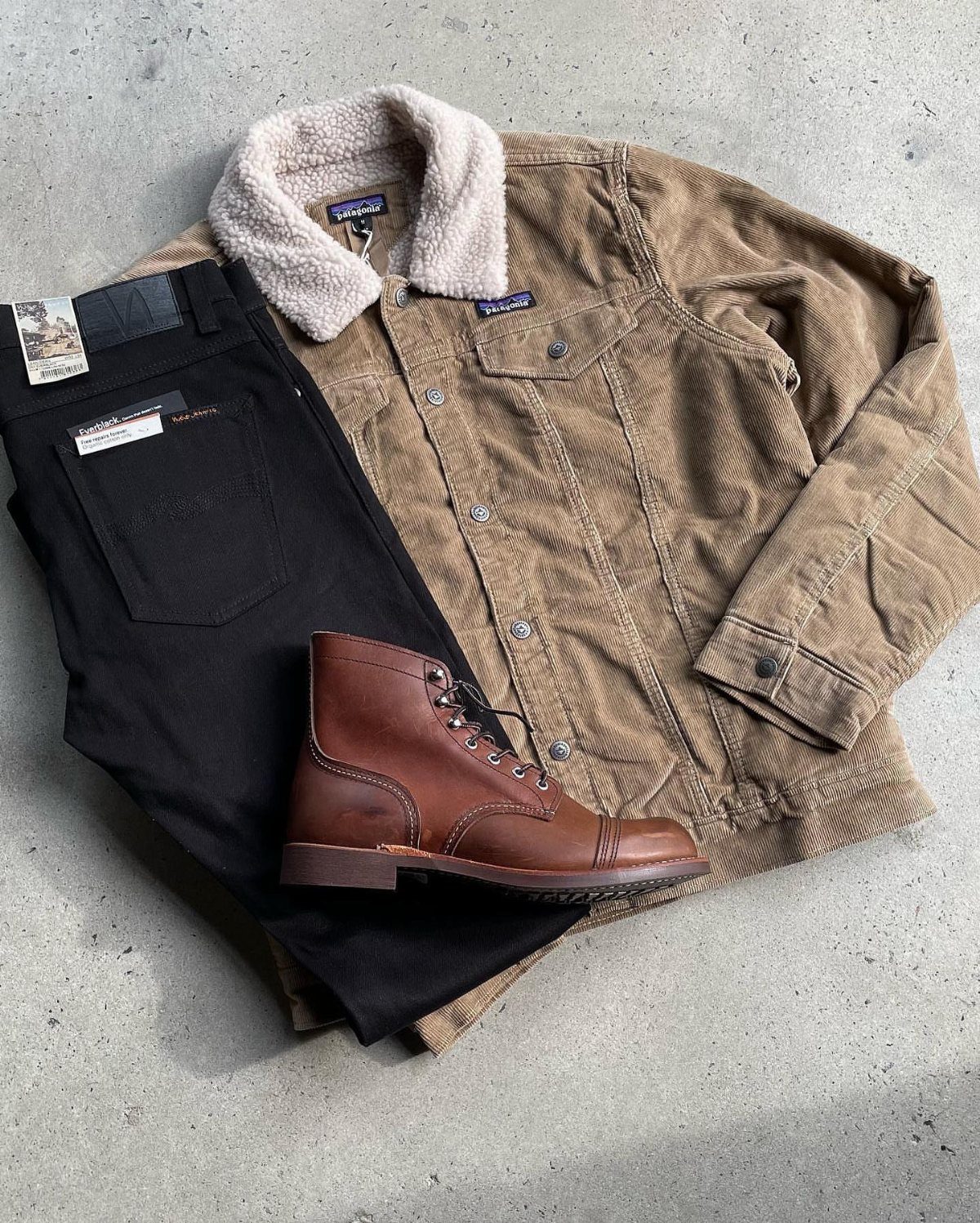
Corduroy with a white sherpa collar gives a jacket texture before you add a single other piece. Tan is the color I would pick, because it works with black pants and brown leather boots without any effort.
Keep the rest of the outfit plain. The collar and the ribbed fabric already supply the interest, so a solid tee or sweater underneath is enough.
Expect a casual result. This is a weekend jacket, not something for a suit or a formal office.
4. Black Textured Winter Coat
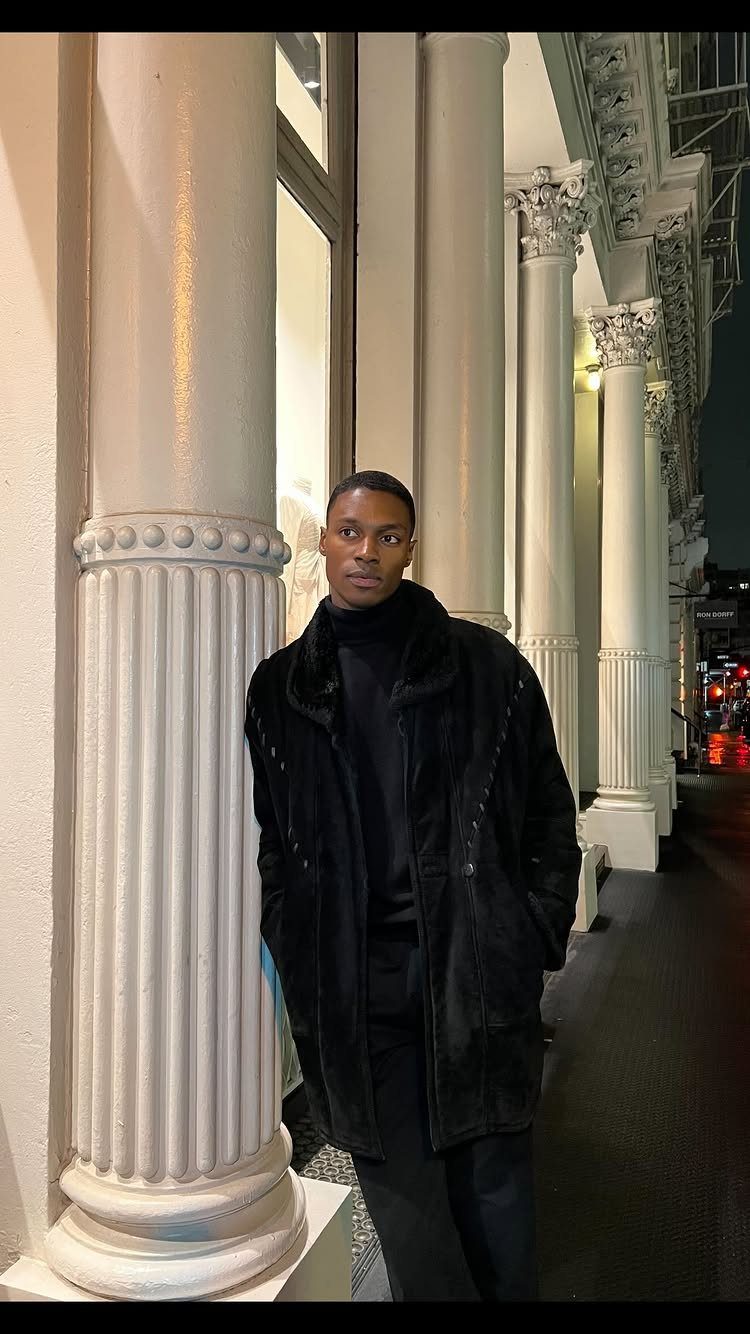
Black on black works at night, and texture is what keeps it from looking flat. A textured coat over a black turtleneck catches streetlight in a way smooth fabric does not.
I like this for dinners and evenings out because it needs nothing else. Add dark trousers and clean boots, and stop there.
Check the coat in daylight before buying. Some textures look rich after dark and a bit dull at noon, so choose one you still like in both.
5. Fur-Trimmed Parka

A black parka with a faux-fur hood is built for real cold, and the trim frames the face against wind. Faux fur also keeps the price and the upkeep lower than the real thing.
Pair it with a beanie and grey pants, and the bulk of the coat looks balanced instead of heavy. Keep the pants slim so the silhouette stays clean.
A hood adds warmth and adds volume, and I think that compromise is worth making in real cold. If you want something sleeker, choose a version where the trim can be removed.
Choosing the Right Coat
Fit comes first, and the shoulders settle it. If the seams sit at the bone and the coat closes over the sweater you will actually wear under it, the rest can be adjusted.
A coat that fits poorly looks sloppy no matter how good the fabric is. One that follows your proportions looks put together even when the outfit under it is simple.
Then match the coat to the setting. For black tie or a winter wedding, I reach for a Chesterfield with a velvet collar, or a long alpaca coat if the room will be warm and the dress code is looser.
A quilted jacket or a leather jacket suits casual hangouts, and a bomber doesn’t belong at a business meeting.
Before buying, ask yourself where you will wear it most. Choose for that week, not the rare exception.
Winter Coat Functionality
Weather should set the weight before style narrows the choice. A trench handles a cool fall day, but once temperatures sit near freezing it lacks the insulation, and a parka with down or synthetic fill is what I’d pick.
A coat that looks sharp and leaves you shivering gets left in the closet by January.
Test it in the conditions you face: stand outside for a few minutes in it, and check that the collar blocks wind at your neck.
Choose the warmest coat that still suits your daily routine, then adjust with layers underneath instead of buying a thinner coat and hoping.
Layering Tips
A thin merino or fine-gauge wool sweater is the layer I add first under a coat, because it takes no planning and leaves the coat to do the heavy work.
A hoodie works too, for casual days, though its bulk can crowd the shoulders and sleeves.
Try on any coat with the thickest layer you plan to wear beneath it. If your arms feel pinned or the front pulls across the chest, size up or switch the layer.
Match the system to the weather. A trench with a sweater handles milder days, while a parka carries you through the cold, where you may need less underneath.
Keep the layers thin and the coat doing the heavy work. That keeps the silhouette clean and lets you adjust indoors by taking off one piece.
Frequently Asked Questions
What are the best types of winter coats?
For a sharp look, a long wool overcoat is the strongest pick, with a peacoat as the easier everyday option. Match the type to where you wear it most, since formality and warmth pull in different directions.
How long should a men’s overcoat be?
The hem should land near the knee.
That length reads formal without swallowing a shorter frame. Check the shoulders too, because a tailor cannot easily fix seams that sit off the bone.
What is the best winter coat for a shorter man?
A peacoat is kinder than a long coat.
A hip-length jacket stops where the leg begins, so the silhouette reads as one line instead of two halves. If you still want an overcoat, keep the hem near the knee and no longer.
What should I wear under a winter coat?
A sweater in midweight wool or merino provides warmth without adding too much volume under the shell. A hoodie fits casual outfits, though the extra fabric around the shoulders and arms can bind when the coat closes.
Put the coat on over the thickest piece you’ll actually wear; if the sleeves restrict your reach or the front gaps when you button it, go up a size or pick a thinner underlayer.
What coat works for a formal event or a winter wedding?
A Chesterfield with a velvet collar suits black tie or a winter wedding.
If the venue runs warm and the event allows more flexibility, a long coat in alpaca or camel hair is another option. Bombers and quilted or leather jackets belong to casual settings, not formal ones.
Is faux fur on a parka worth it?
Yes, in real cold. Faux fur around the hood shields your face from wind, and it costs less than real fur while skipping the maintenance real fur demands.
The hood adds volume along with warmth, so if you want a sleeker shape, pick a version with removable trim.