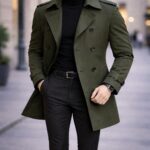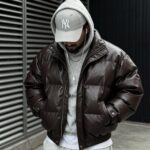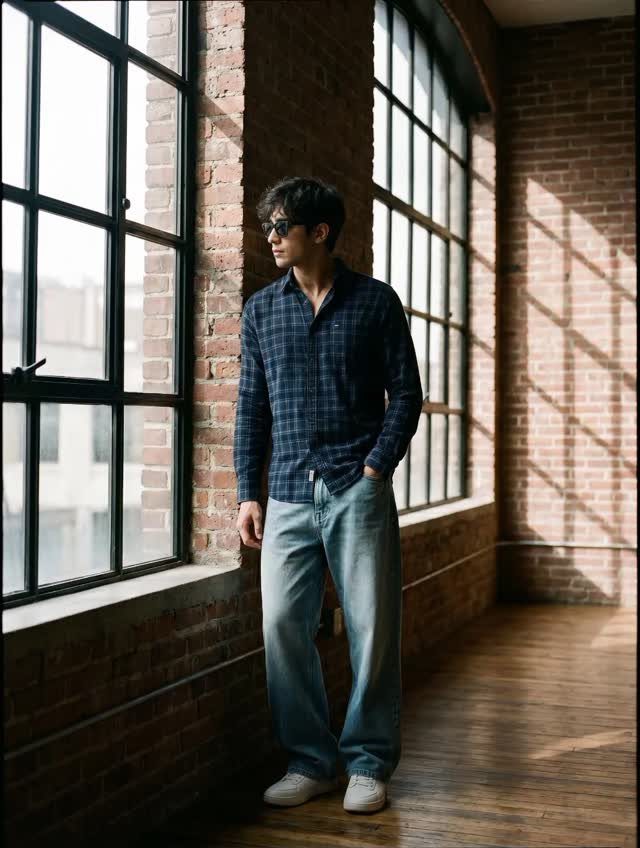
Some of these ideas ask for one easy move, like a sweater over the shoulders that comes off when the sun shows up, and others change the whole palette, such as rust trousers and a neutral shirt.
Your pick depends on how far the temperature swings between morning and afternoon: a cool start and a warm midday favor removable layers and a sweater over the shoulders, while a day that stays hot favors wide leg jeans, a short-sleeve knit polo and other loose, thin pieces.
1. Wide Leg Jeans
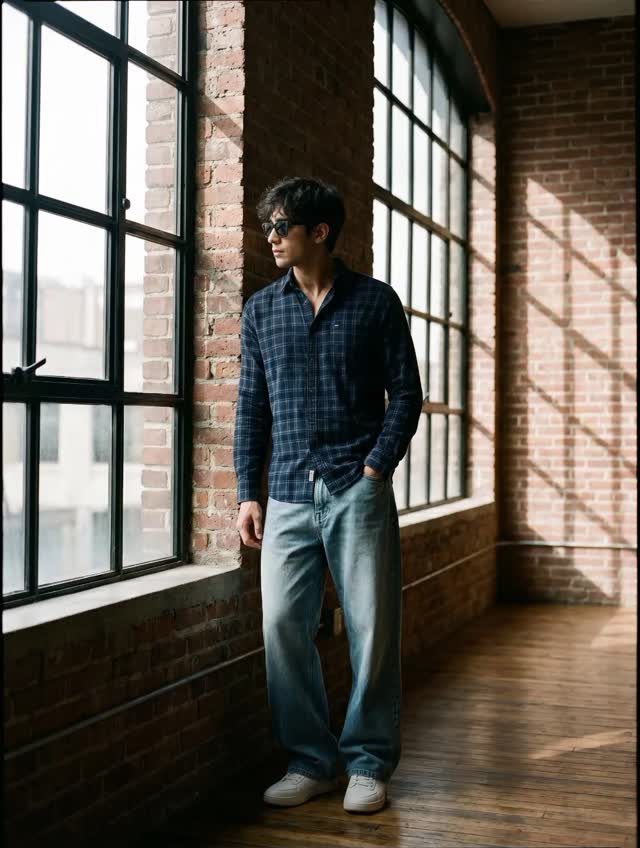
Width in the leg is what makes jeans workable in heat: fabric that hangs away from the skin moves air, and skinny denim never will.
A flannel button-down in navy plaid works while the weather is still warm, as long as you wear it open or push the cuffs up past the forearm.
Keep the top half simple so the jeans can carry the volume. White sneakers finish it without any fuss.
One trade-off: wide legs can swallow a shorter frame, so buy a length that just grazes the shoe.
2. Knitwear Like Sweater Vests
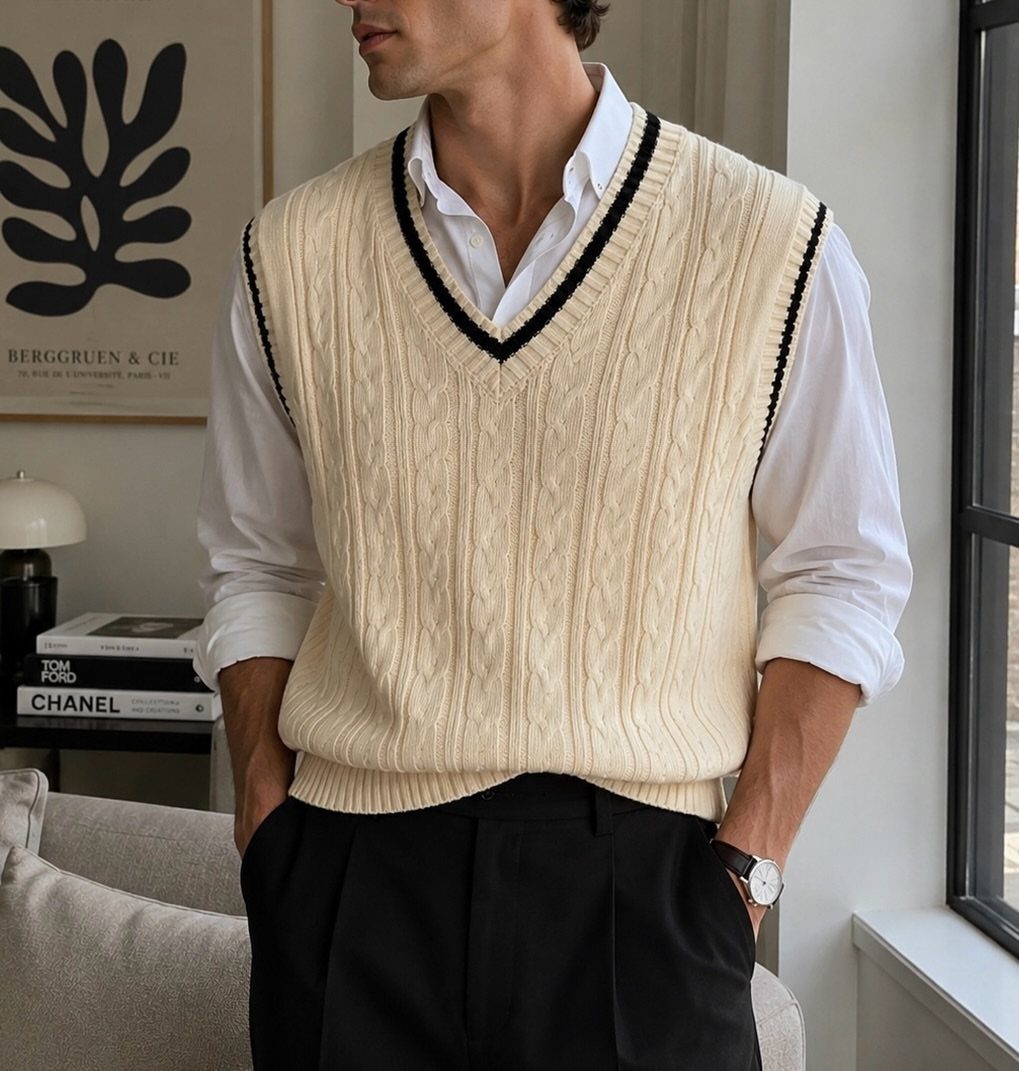
A cream cable-knit vest over a white shirt gives you the look of fall while cutting the bulk, which is why it handles a warm afternoon better than a full sweater.
Wear it over a white shirt and the shirt stays crisp while the knit adds texture.
I would pick a lighter yarn over a chunky one when the temperature stays high, even if the cable pattern looks best in thicker wool. Chunky cable reads heavier and traps heat across the torso, which defeats the purpose.
Black trousers give a cream sweater vest some weight, so the outfit reads sharp instead of soft. If the day turns cool, the long-sleeve shirt underneath already covers you.
3. Open Plaid Flannel Shirt
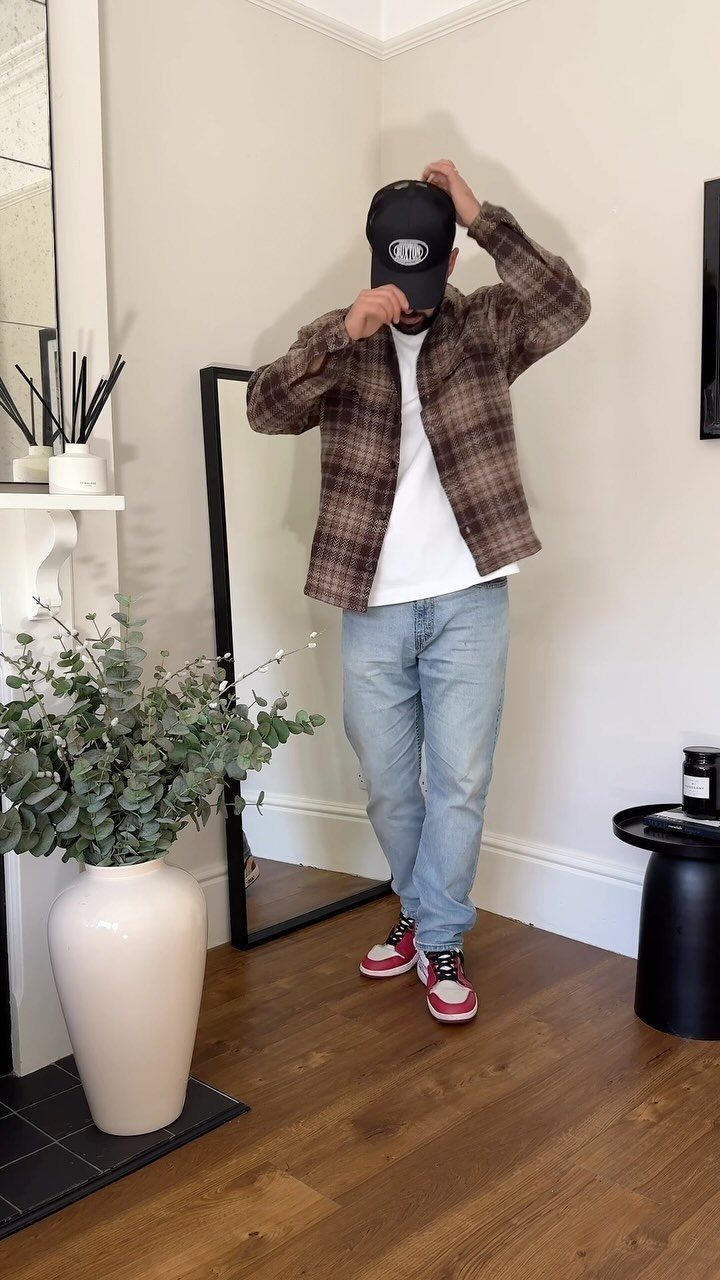
Leave the flannel unbuttoned and the white tee underneath does the cooling. Brown plaid over a basic white or gray T-shirt is about the easiest outfit a man can put together, and it needs no planning.
Light blue jeans keep the dark flannel from feeling heavy. A cap and a pair of bold sneakers, red in this case, give it some personality without another layer.
My advice is to choose a thinner flannel for hot weeks. Wear it as a shirt-jacket, never buttoned, and take it off when the afternoon peaks.
4. Short-Sleeve Knit Polo
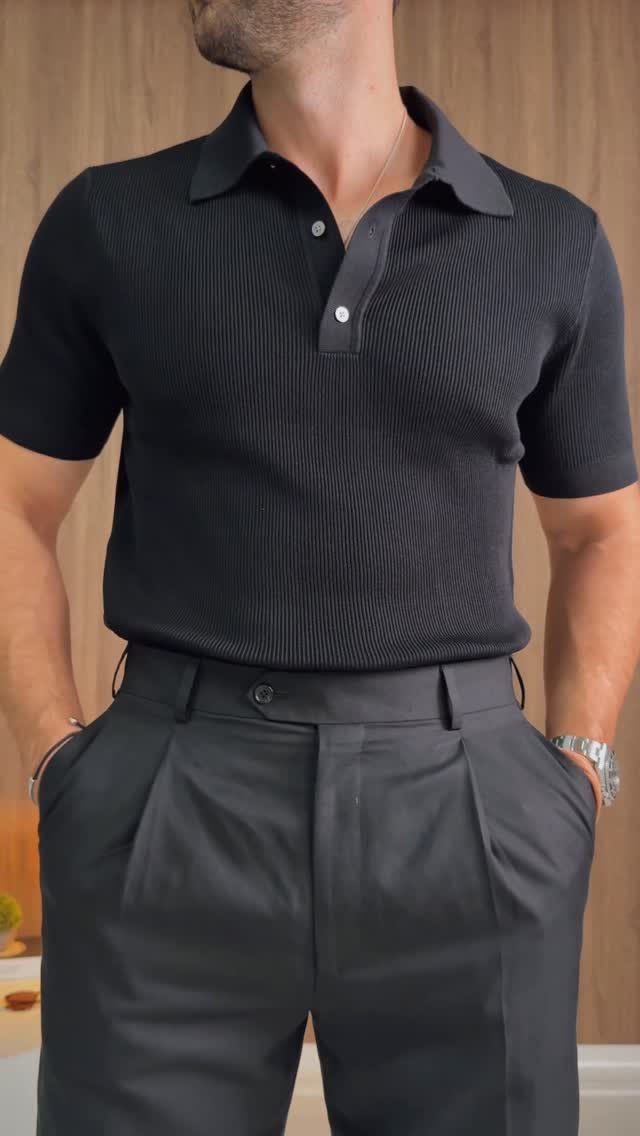
Ribbed knit gives a polo some texture, so a short-sleeve version looks closer to a sweater than a golf shirt. Paired with black dress trousers, as above, it reads dressy but stays light on the arms.
This is the one I would pick for a dinner or an office that runs warm. The pleats in the trousers add room, which helps in heat.
Choose a polo that fits close through the chest and ends at the belt line. A knit that is too long bunches when you sit.
5. All-Black Casual Warm-Weather Outfit
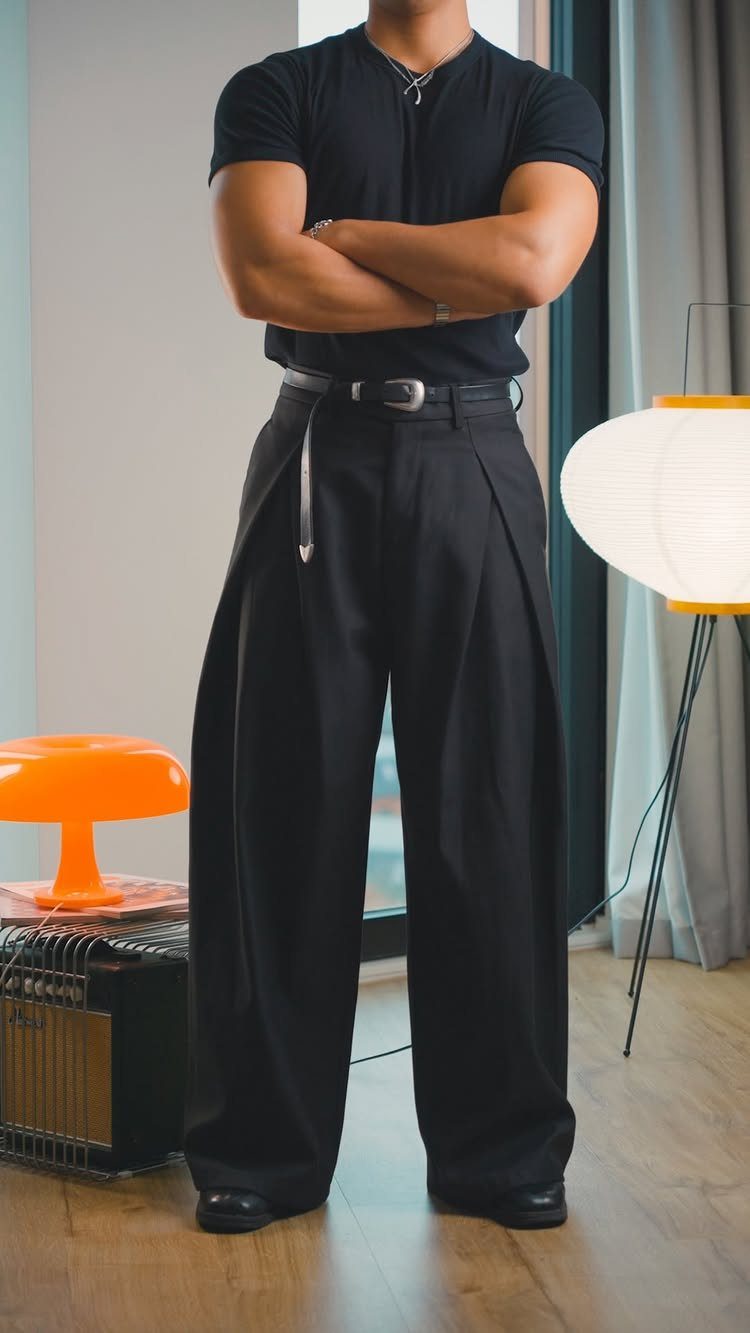
Black head to toe sounds like a winter plan, but short sleeves and loose trousers change that. Tuck the shirt into wide-leg black trousers and the outfit looks deliberate rather than gloomy.
Fabric decides whether you survive it. Pick thin, matte materials that hang loose, since black absorbs heat and a snug fit makes it worse.
Black also shows lint and fading, so keep pieces fresh. A lone accent such as a watch or a pair of leather shoes breaks up the flat color.
6. Sweater Draped Over Shoulders
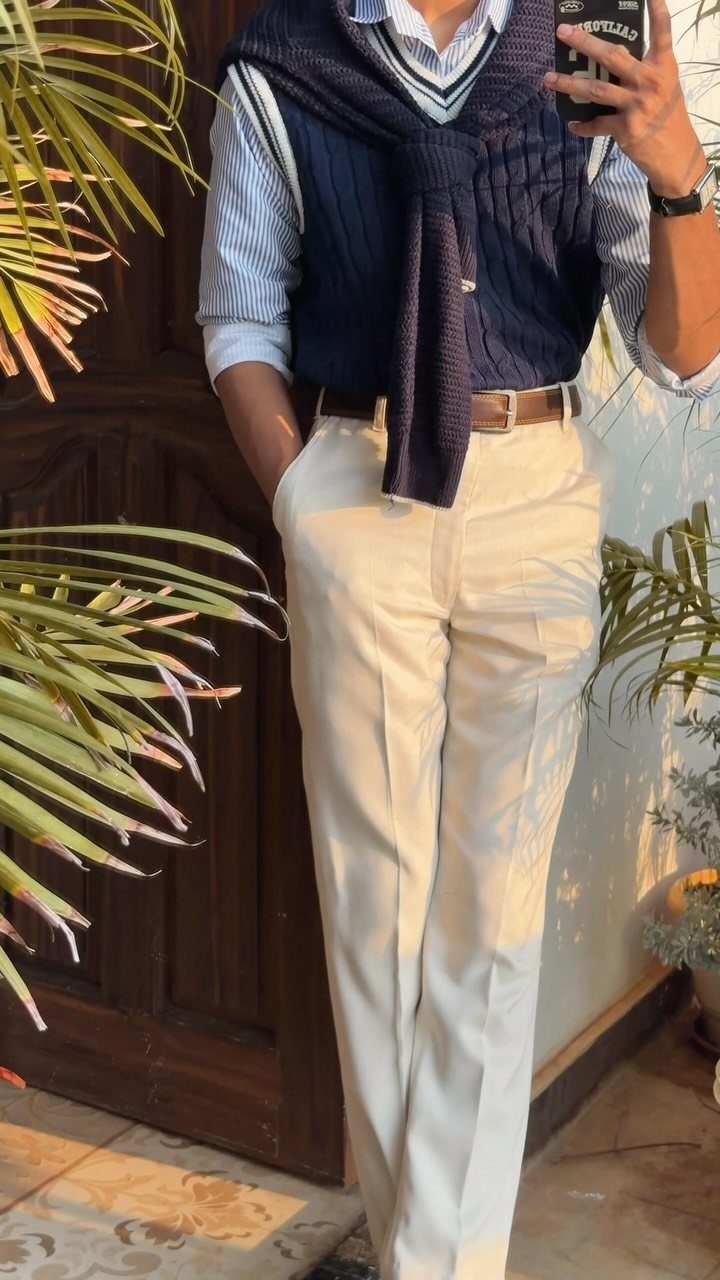
A sweater draped over the shoulders is a styling move first and a layer second. It gives you something to put on the minute the evening cools, without wearing it through the afternoon.
Navy over a striped button-down and cream trousers works because the colors are quiet and close in tone. Choose a knit light enough to sit flat; a heavy one slides off.
Let the sleeves hang loose rather than tying them tight at the chest. A knot is a bit much, and it wrinkles the knit.
7. Checkered Shirt and Chinos
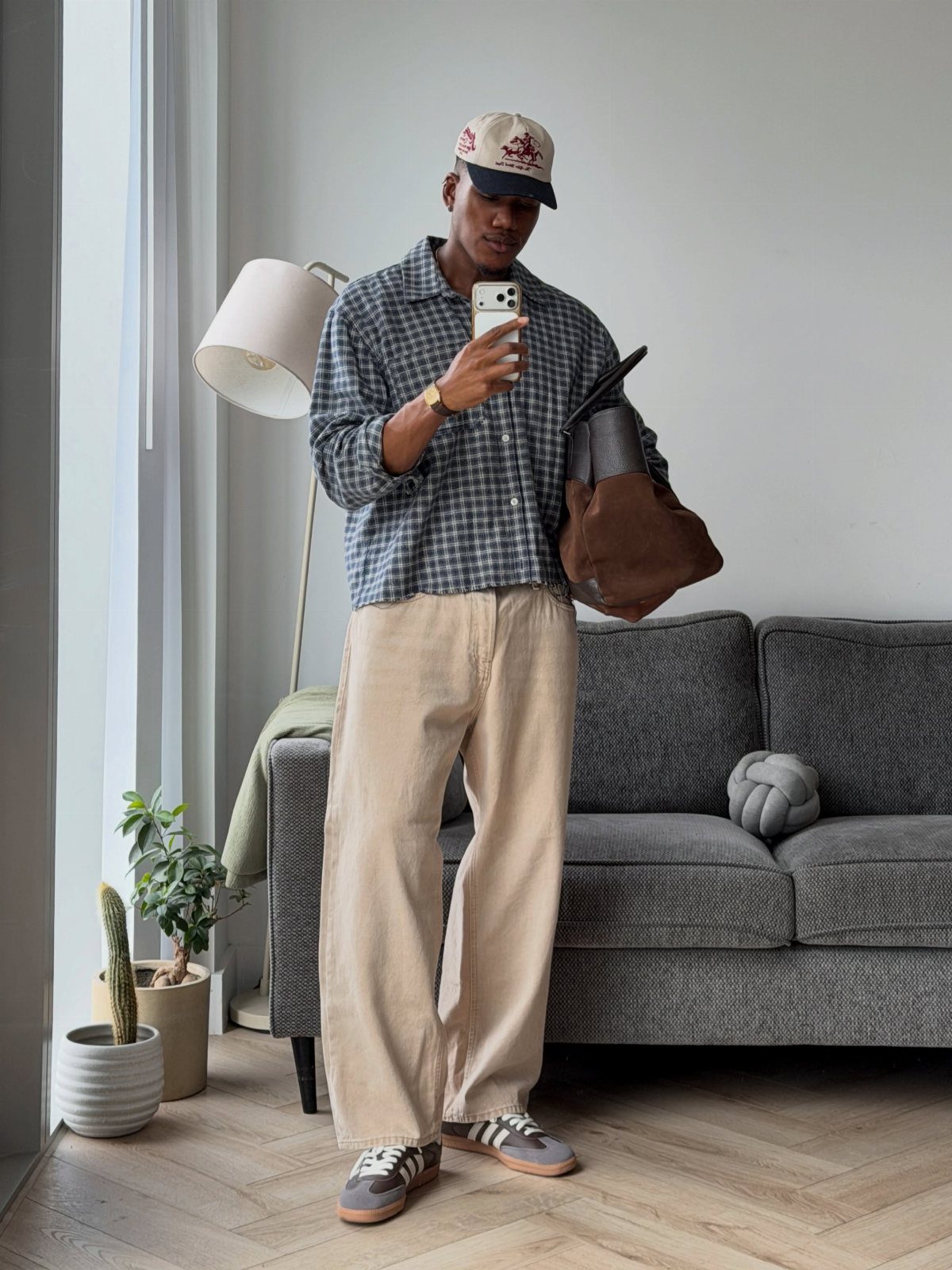
Blue and white checks in a long-sleeve shirt read as fall without adding weight, and wide-leg beige chinos keep air moving around the legs. Two pieces, one cap, and the outfit is done.
Push the cuffs to the forearm when the temperature climbs. Leave the shirt untucked if it ends at the hip, or tuck it only if you want a sharper line.
Beige and blue are quiet together, so sneakers in white or off-white keep the whole thing easy to wear.
8. Removable Layers
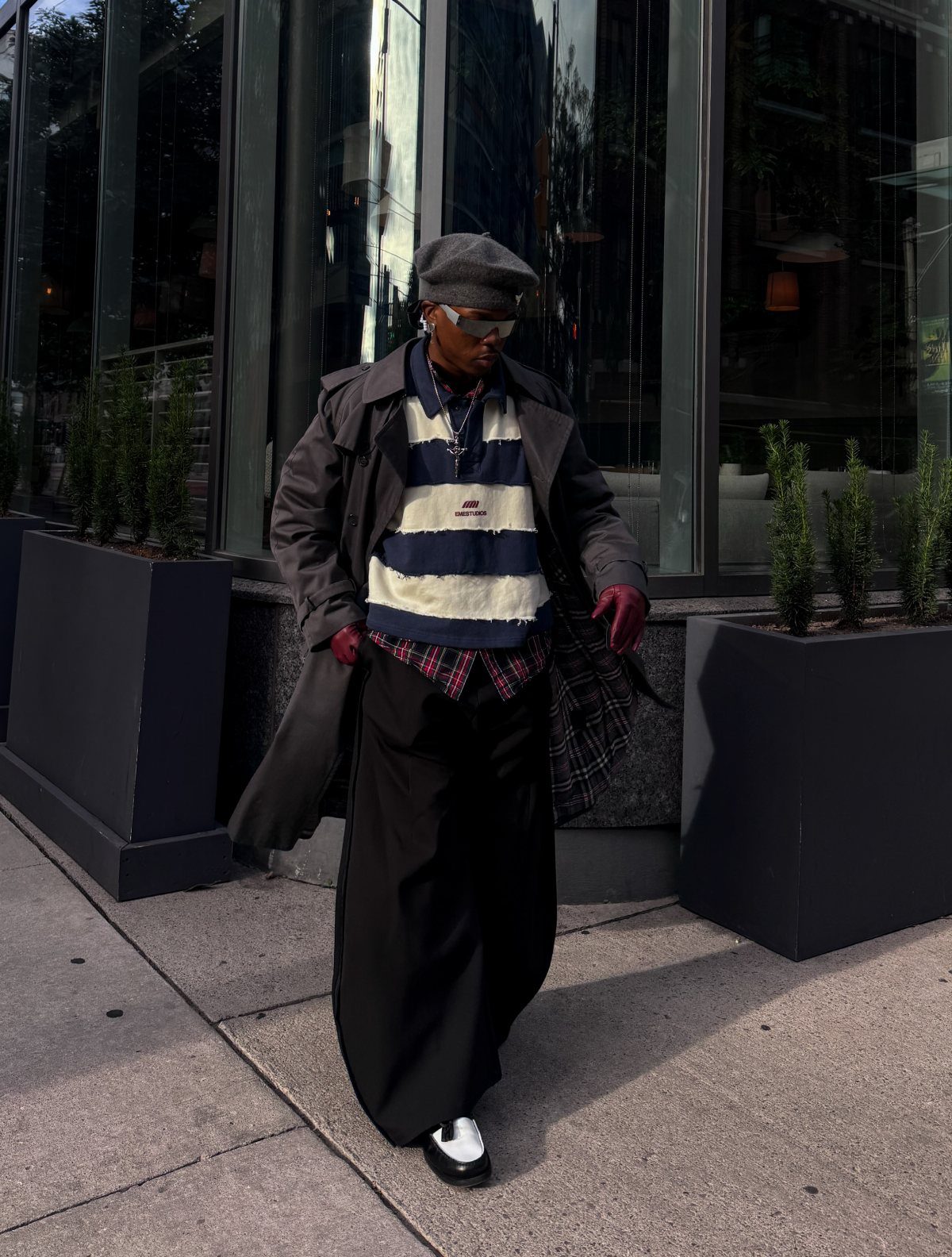
The outer layer lifts off when you step inside, leaving the base outfit intact. Morning is cool, midday is not, and each layer has to work alone.
I would start with the shirt, since stripes look sharp with nothing over them. The plaid layer goes next: wear it open, or tie it off if the day warms.
Take the coat off first, because it is the heaviest piece, and carry it on one arm. Wide trousers breathe well enough that the lower half rarely needs any change.
9. Rust, Browns, Deep Greens, and Burgundy
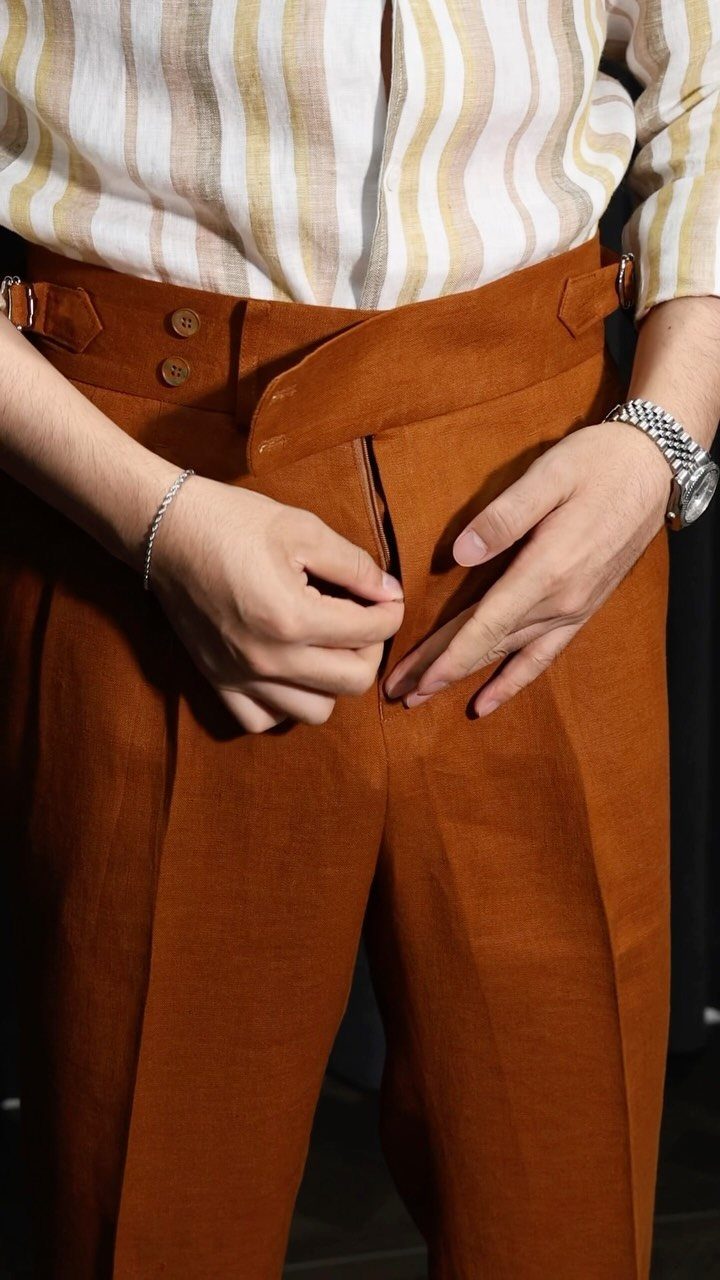
Rust trousers with a high waist and pleats are the single piece I would buy first from this palette. They look like fall in color but hang loose enough for a warm day.
Rust is strong, so keep the shirt neutral and put the color in the trousers.
Browns, deep greens and burgundy follow the same logic: one earthy color, one pale piece.
Transitioning from Summer to Fall
Start with what you already own. The shirts and trousers that worked all summer keep working, and you add one piece you can pull off when the sun’s out.
A knit polo, an overshirt or a lightweight sweater all do that job for a cold morning. Buying one of them beats replacing whole outfits.
Rain, a chilly commute or a dressier setting are good reasons; a calendar date is not.
I would also plan for air conditioning. A layer you can pull on indoors and shed outside is as useful in September as it was in July.
Color Palette for Fall
Keep a base of white, navy, gray and light blue, then add one fall color. Olive, burgundy, brown or oatmeal all work.
Use that color once. Too much matching looks like you planned it, and one accent looks like you knew what you were doing.
Burgundy and olive are my picks if you want something with depth. Oatmeal is the softest option and sits easily next to navy.
Black also gets more wear as the season turns, and it pairs well with any of these tones.
Layering Techniques
The right layer is the thinnest one that fixes the temperature problem you actually have.
An overshirt gives you more shape than a tee but stops short of a jacket. A cardigan, blazer or denim jacket also works over a tee.
Check the fit before you leave the house.
Sit down and reach forward.