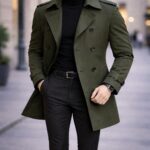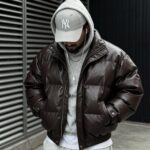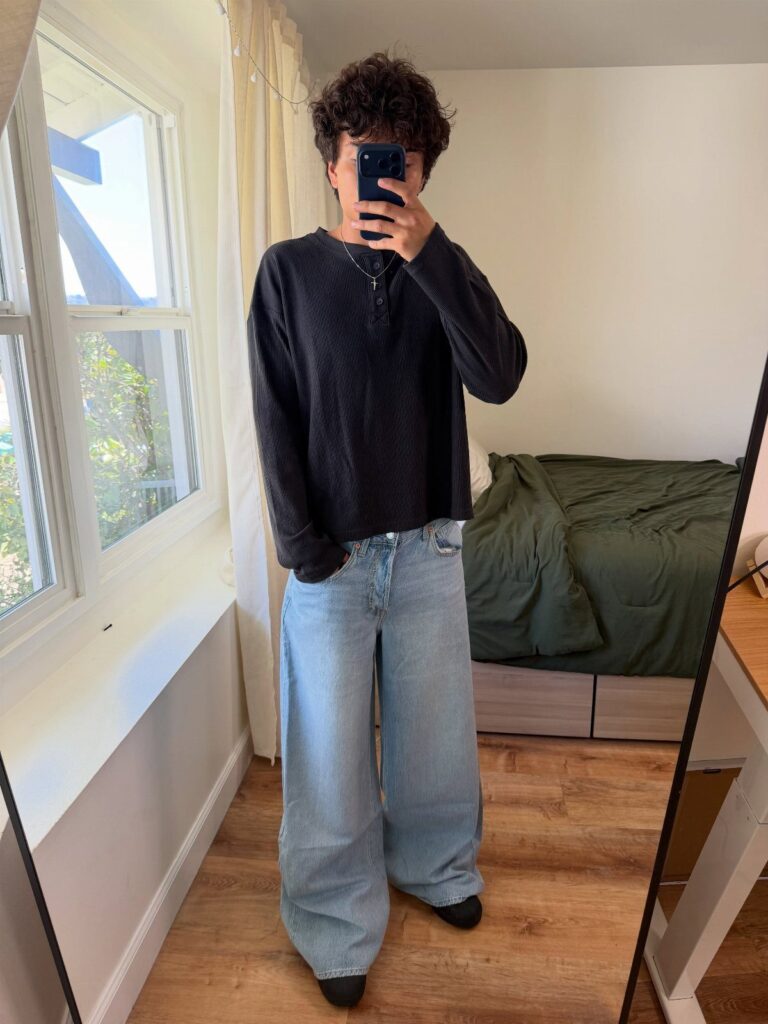
The outfits here run from outerwear and heavyweight knitwear to a short-sleeve polo with pleated trousers, and the weather where you live picks between them.
If mornings are cold and afternoons warm, wear something you can open or pull off, like a zip-up knit or a flannel worn open over a tee.
If the cold arrives all at once, I’d go for the heavyweight knitwear or the layering formula, since both add warmth without much extra thought.
1. Outerwear
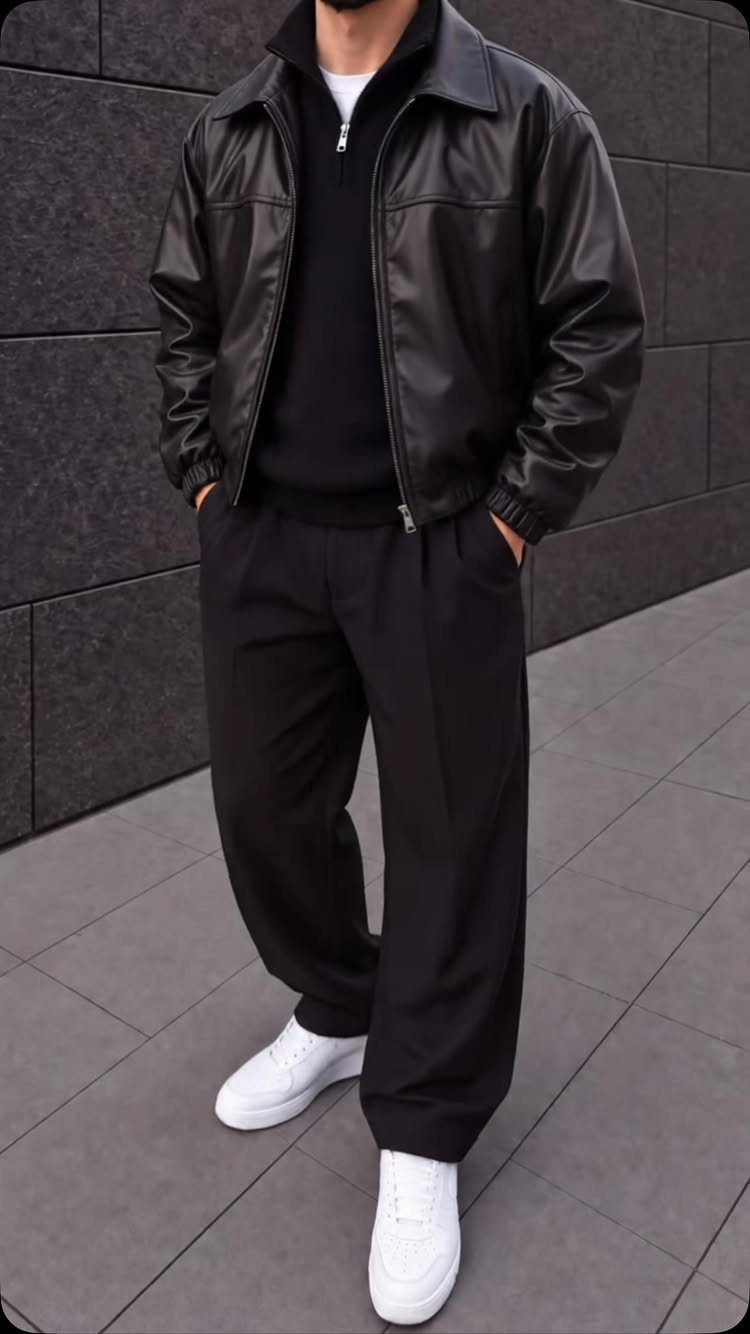
A black leather jacket does the most work when the temperature swings hard between morning and afternoon. Keep everything under it black, as here: zip-up knit, trousers, and white sneakers for the one point of contrast.
I like the zip-up knit over a plain tee because you can open it or close it as the day warms up and cools off, and the tee underneath keeps the outfit tidy either way.
Faux leather costs less and suits a first purchase. Choose a plain collar with no extra hardware, and the jacket works with nearly anything.
2. Heavyweight Knitwear
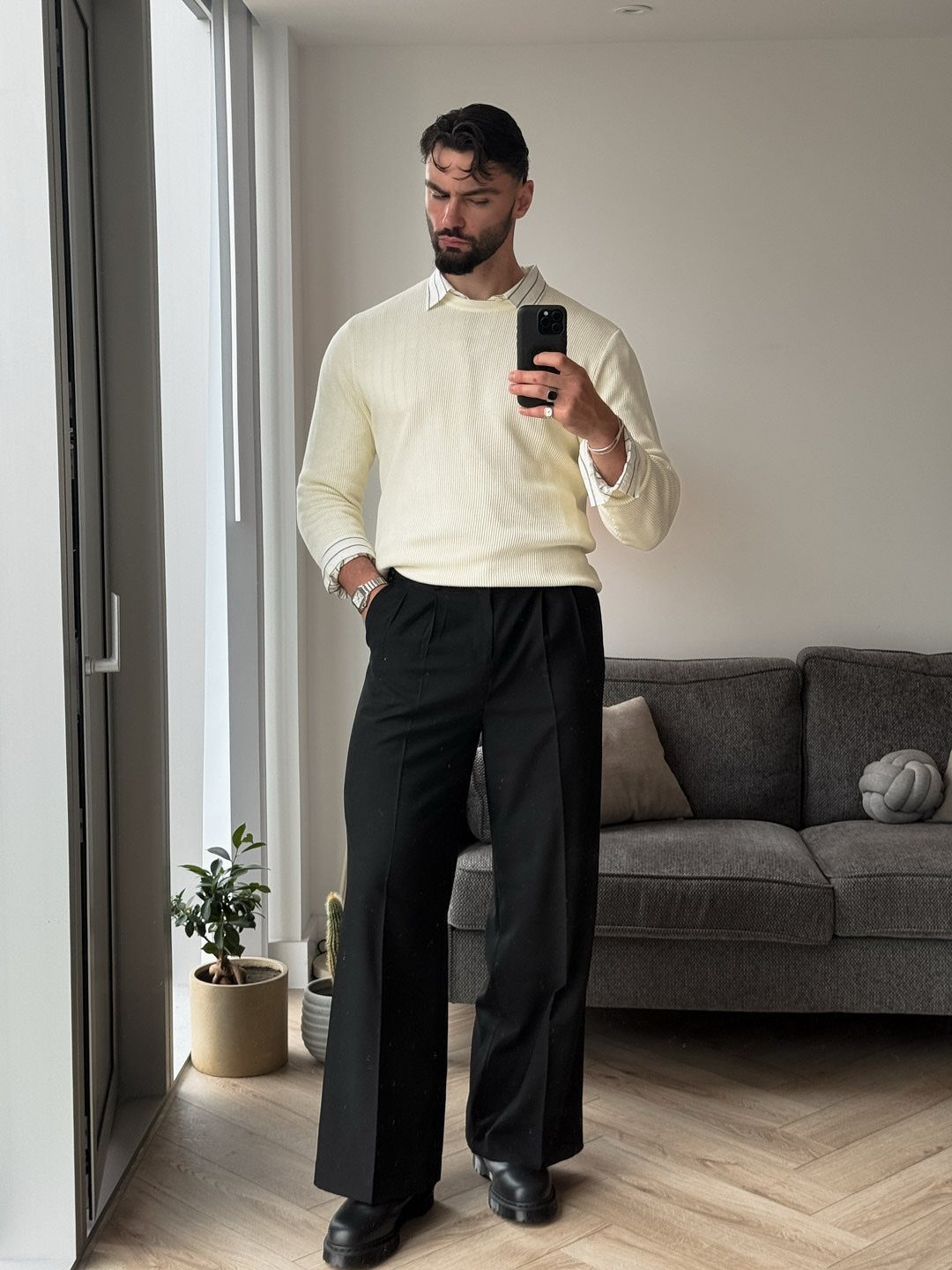
Thick ribbed knit in cream is the easiest way to look warm and put-together at once. Worn over a collared shirt, it gives you a clean neckline without a scarf, and the shirt collar adds structure the sweater lacks.
Wide-leg black trousers balance the bulk on top, so the proportions stay clean instead of shapeless. I’d choose a sweater that ends at the belt line, not one that hangs past it.
Cream shows dirt faster than darker shades, which is the one real cost.
3. Flannel Shirts
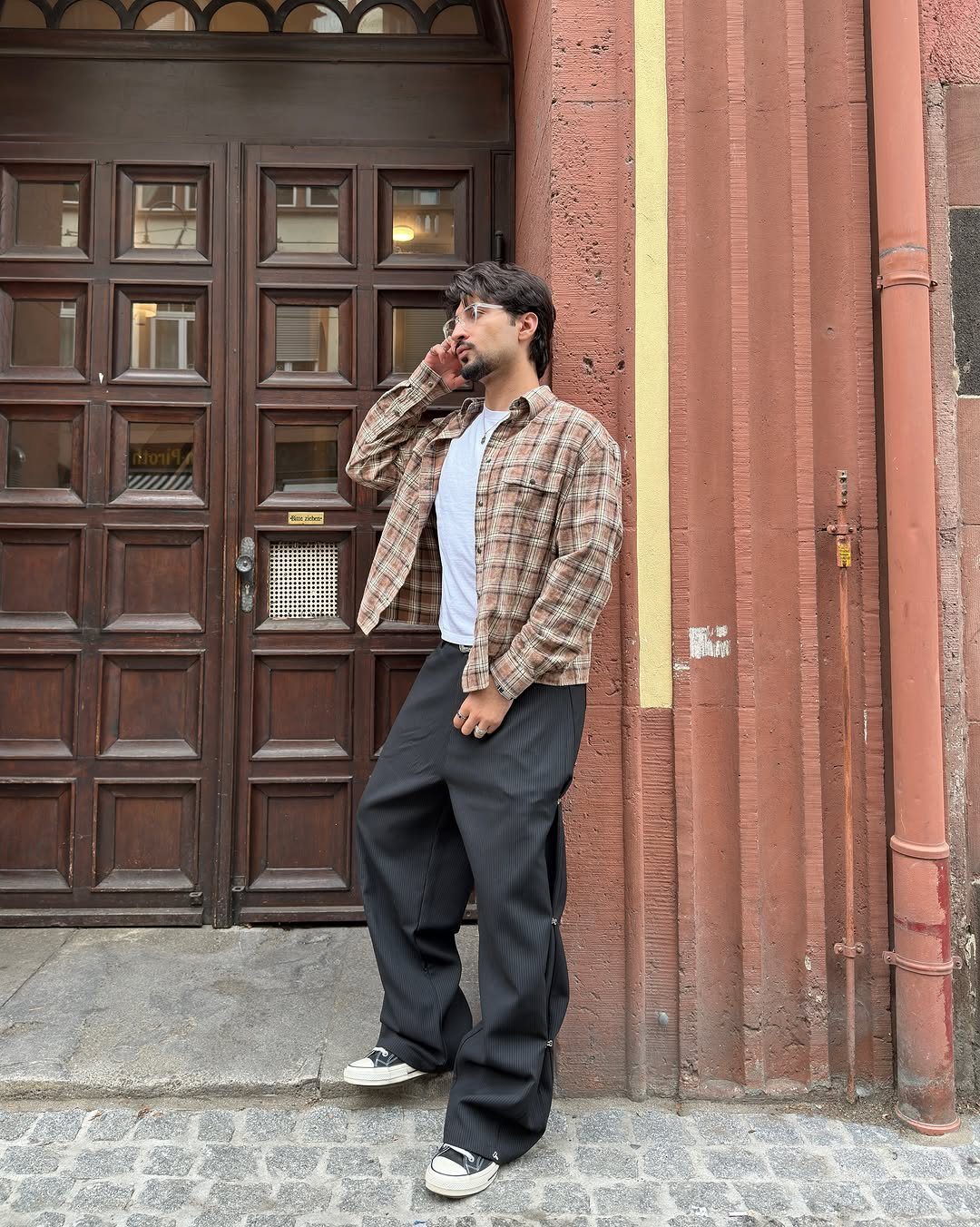
Worn open over a white tee, a brown plaid flannel reads as a jacket, not a shirt. That’s why it earns a place in fall: it covers the gap before you need a real coat.
Brown against black is a quiet pairing, and the white tee brightens the middle.
Roll the sleeves to the forearm for warmer afternoons. Button it up and tuck it in when the weather turns, and the same shirt works on cooler days.
4. Layering
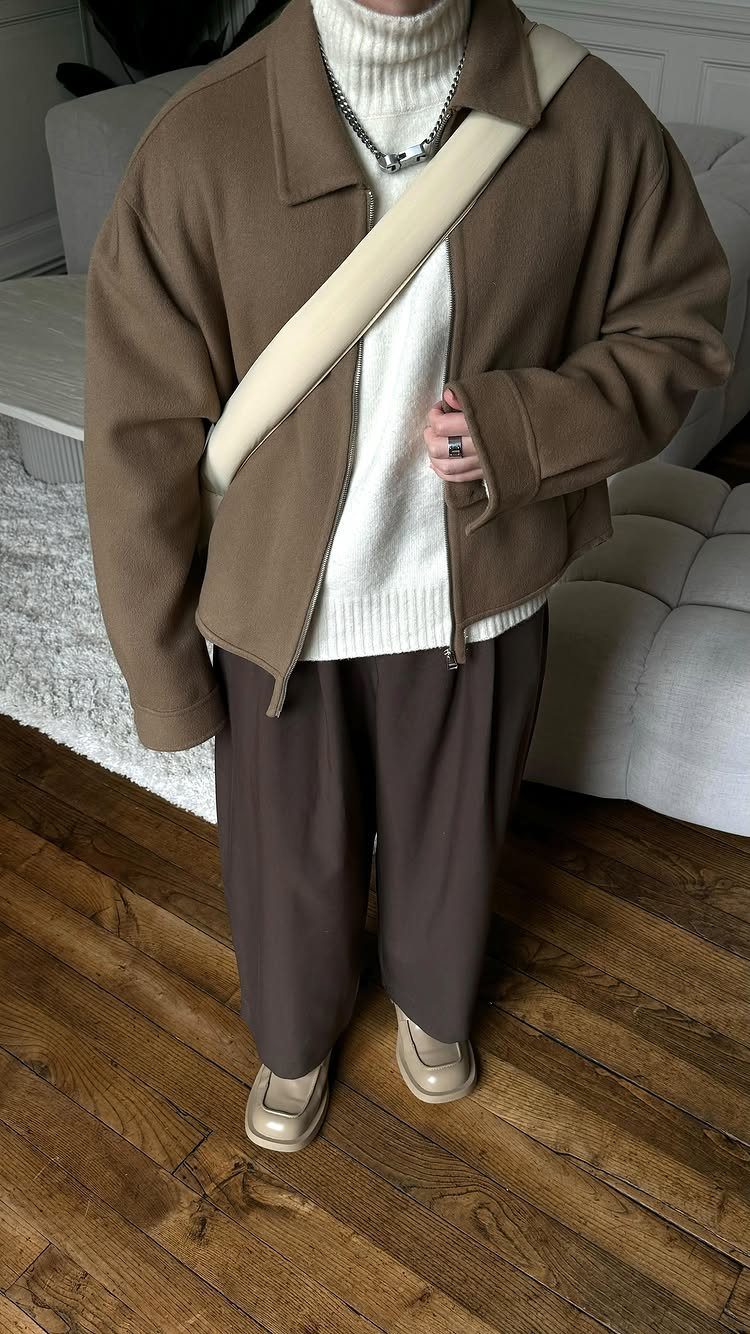
Brown on brown, broken up by a white turtleneck, is a layering formula I’d copy without changes. An oversized jacket over a fitted neck gives you two textures and a clear shape in 3 pieces.
Match the jacket and trousers in tone, not necessarily in fabric. The white turtleneck then acts as the single light spot, and beige shoes stay in the same warm family.
Keep the base layer slim. The looser the jacket, the more the turtleneck needs to stay close to the body.
5. Sweaters with Wide-Leg Pants
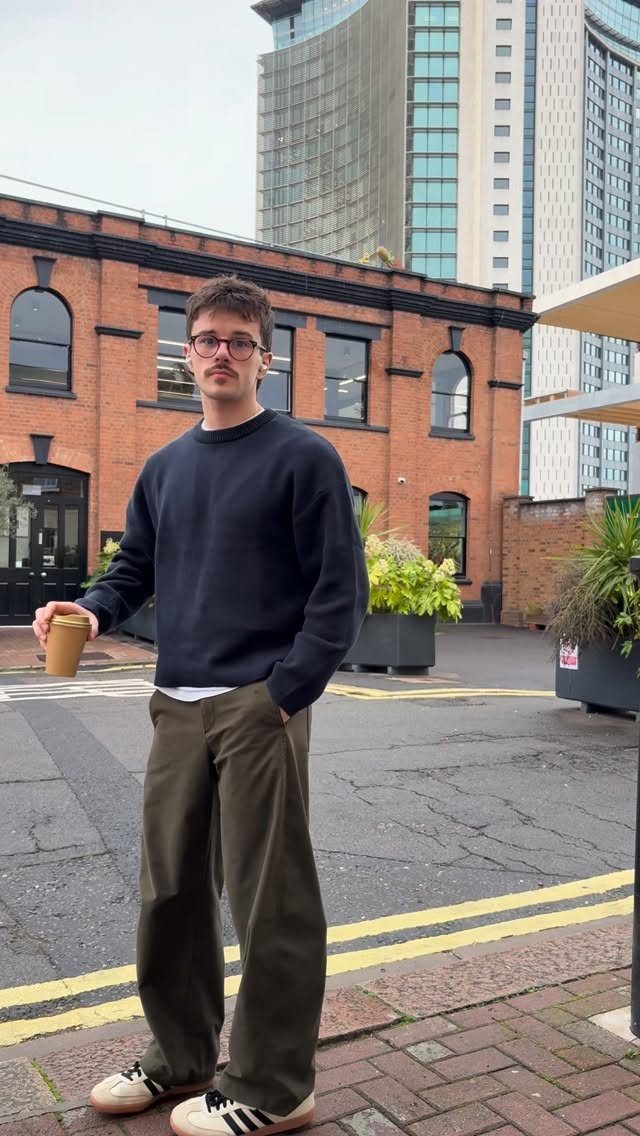
Navy sweater, olive wide-leg trousers, sneakers: 3 pieces, no thinking. Navy and olive sit close enough in depth that neither fights the other, and the relaxed trouser leg gives a plain knit some shape.
Pick a sweater that stops at the hip so the wide leg doesn’t swallow your proportions. Lightweight knit works best here, since the trousers already carry volume.
Jeans in a loose cut can replace the trousers on weekends. For a coffee run or a walk through town, this is about as little effort as a good outfit takes.
6. Button-Down Shirts with Trousers
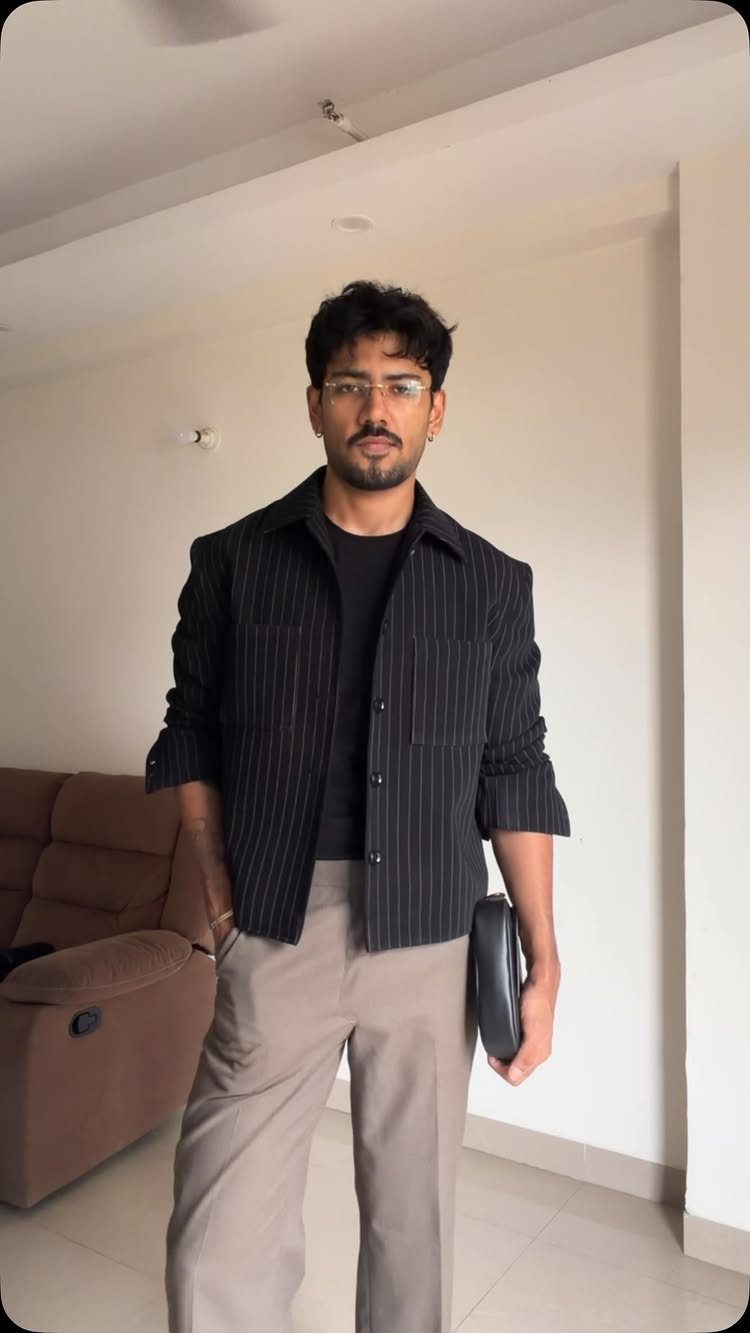
A black pinstripe button-down worn open over a black tee turns a work shirt into a light jacket. Beige trousers give it a lighter base, and the contrast feels deliberate, not accidental.
Leave it open for relaxed settings, or button it and tuck it in for something closer to office-ready. Both work with the same trousers.
The stripe should be thin enough to read as texture from a distance. Wider stripes on a dark shirt tend to look louder than you want with a plain tee underneath.
7. Long-Sleeve Polo and Trousers
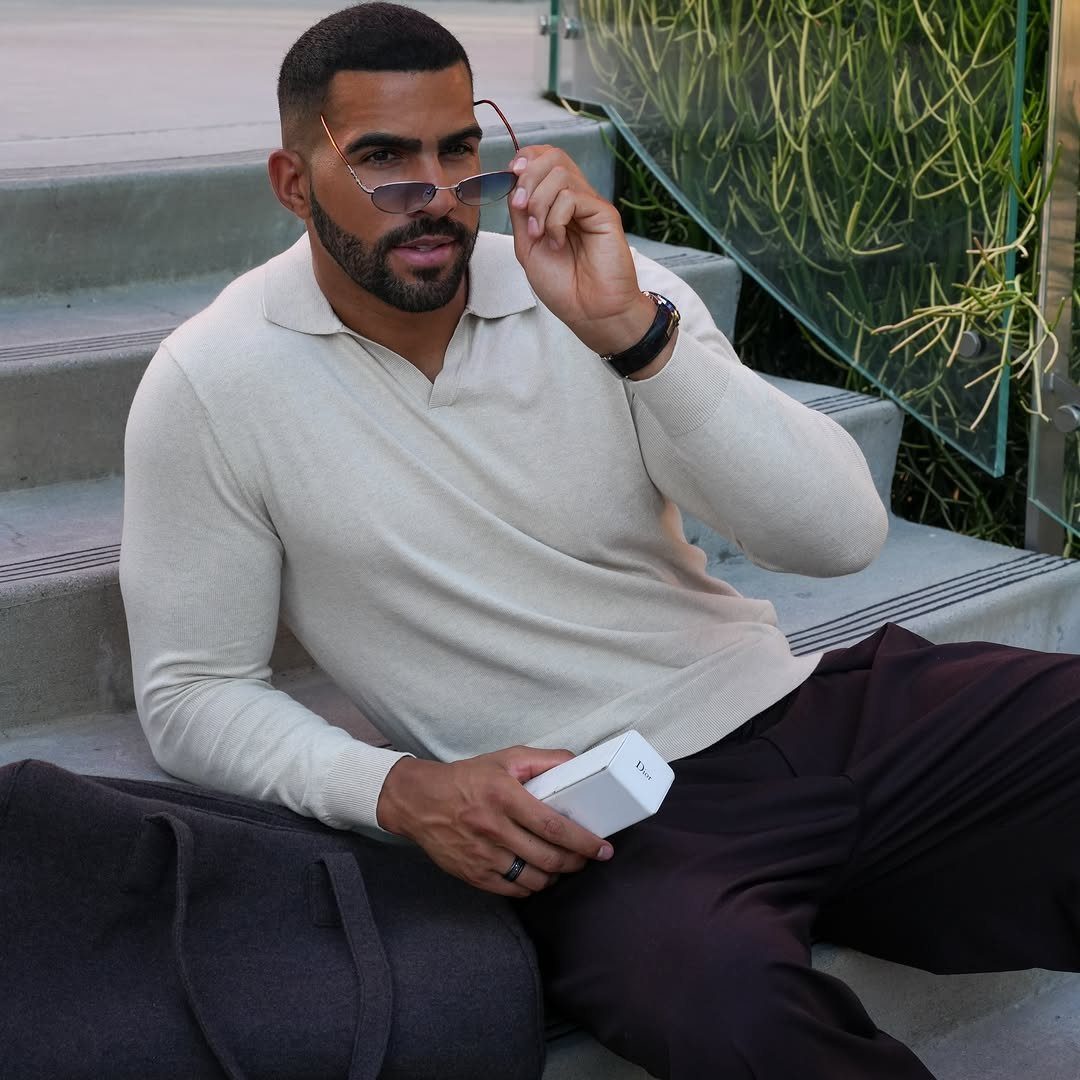
Burgundy trousers are the color move here, and a cream knit polo keeps them from shouting. Both sit in the same warm range, so the outfit reads as one idea, not two competing pieces.
A long-sleeve polo gives you a collar without a jacket, which suits a first cool morning.
Keep the knit fitted through the chest and let the trousers do the talking. Brown or white shoes would both work; I’d pick brown for the extra depth against the burgundy.
Cream marks easily, so keep it for dates and dinners, not messy errands.
8. Short-Sleeve Polo with Pleated Trousers
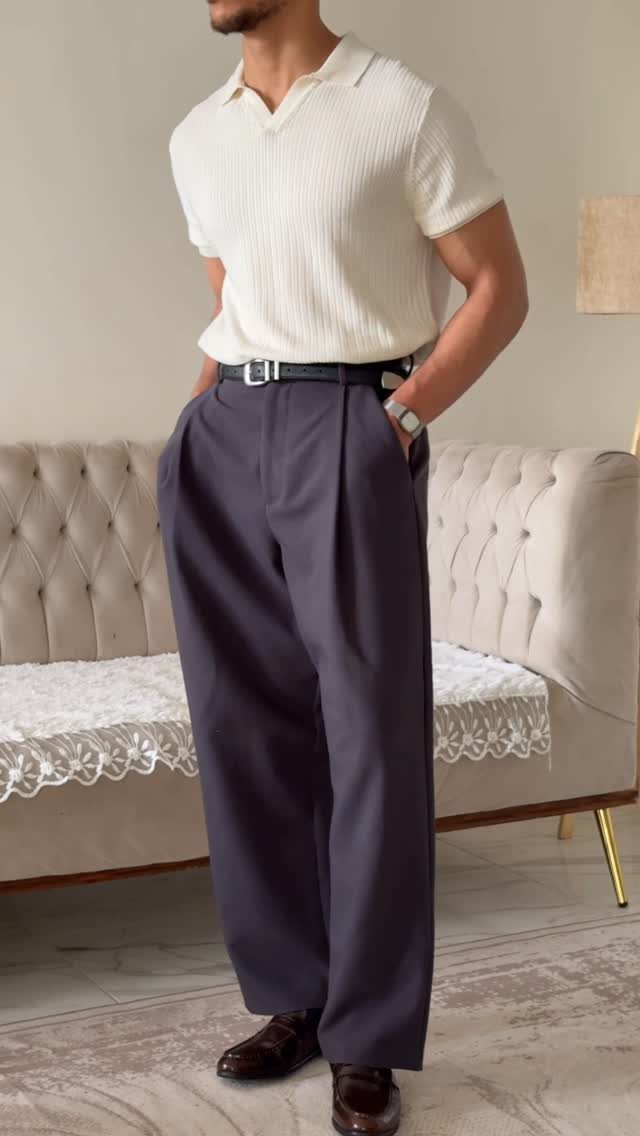
Tucked into high-waisted pleated trousers, a textured white polo looks dressed up without a collar button or a tie. The tuck matters: it shows the high waist and gives the pleats a clean line to fall from.
Choose a polo with visible texture so the white has some weight, and let the sleeves sit mid-bicep.
This is the lightest outfit on the list. When the air gets cold, a jacket sits over the top without changing anything else.
Autumnal Colors
As fall deepens, shift your base neutrals darker. Cool browns, charcoal, black, and navy hold up better than cream and beige once the leaves turn.
Dark olive and dark maroon get overlooked as neutrals, yet they go with nearly everything and suit the season well. Build on those with forest green, hunter green, spruce, stone blue, taupe, or dark mustard.
Then add one accent in a brighter shade: burnt orange, rust red, cinnamon, terracotta, or red oak. Terracotta is the better fall choice over salmon.
A simple test: wear colors that appear outdoors this time of year. Trees go orange and red before brown, and rivers look deeper blue under fall sun.
Swap your light summer cologne for something deeper and warmer, too. It fits the season the same way the colors do.
Accessorizing
Accessories add texture and personality, but they work best in small doses. Pick one or two and stop.
Scarves in wool or silk, leather belts, flat caps, and pocket squares all belong to fall. Each brings a different surface to the outfit without changing the clothes underneath.
If the outfit is already busy, choose the quietest option, like a belt in a leather that matches your shoes. If the outfit is plain, a scarf or cap is where you can add some interest.
Too many competing details pull attention from the outfit itself. When in doubt, leave one off.
Frequently Asked Questions
What to wear for fall transition?
On a day that starts at 45°F and ends at 68°F, a black leather jacket over a zip-up knit and a plain tee handles both ends without a bag to carry.
Keep the rest in one color family, with white sneakers as the single point of contrast.
A flannel left open over a white tee is the lighter option, and it holds up well until the first day that needs a real coat. Roll the sleeves for warm afternoons and button it up when the air cools.
What should guys wear for the fall time?
Build outfits from a few layers: a collared shirt or tee, a knit, and a jacket or open flannel on top. Cream ribbed knit over a collared shirt looks warm and neat, and wide-leg trousers balance the bulk.
Hem length matters more than most men expect: a sweater that stops at the belt line or hip keeps the proportions clean. As the season deepens, shift toward darker colors like brown, charcoal, navy, and olive.
What is the 3-3-3 rule for men?
A common version is 3 tops, 3 bottoms, and 3 pairs of shoes that all mix together, so a navy sweater, olive wide-leg trousers, and clean sneakers can each come from that set.
Another 3-piece formula is an oversized brown jacket, matching brown trousers, and a white turtleneck as the one light spot. Fewer pieces that mix well means less thinking each morning.
How many accessories should I wear with a fall outfit?
One or two is plenty.
If the outfit is busy, pick the quietest option, like a belt matching your shoes. A plain outfit has room for a scarf or cap to give it some interest.