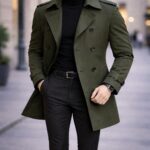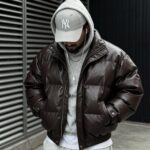
Weather decides which of these pieces earns a spot in your closet: a quilted jacket or a crewneck sweater handles a brisk afternoon, while a leather bomber is for the days that call for a real outer layer.
Prices here swing from a $200 sweater under a $1,600 jacket down to hoodies and henleys that cost far less, and those cheaper pieces carry more of the outfit than you’d expect.
Keep to one loud color per outfit, and let the rest stay neutral.
1. Rubber Soled Boots
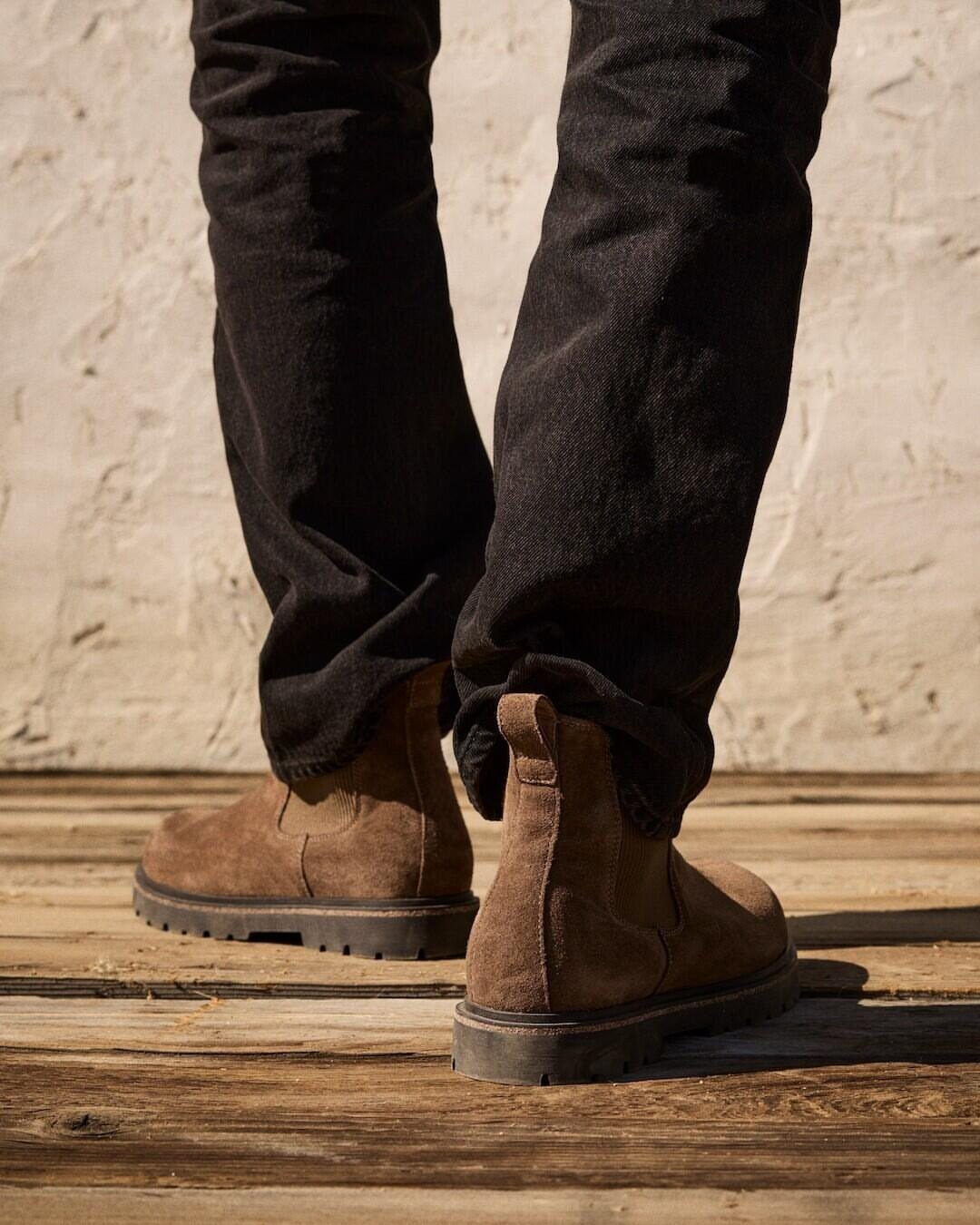
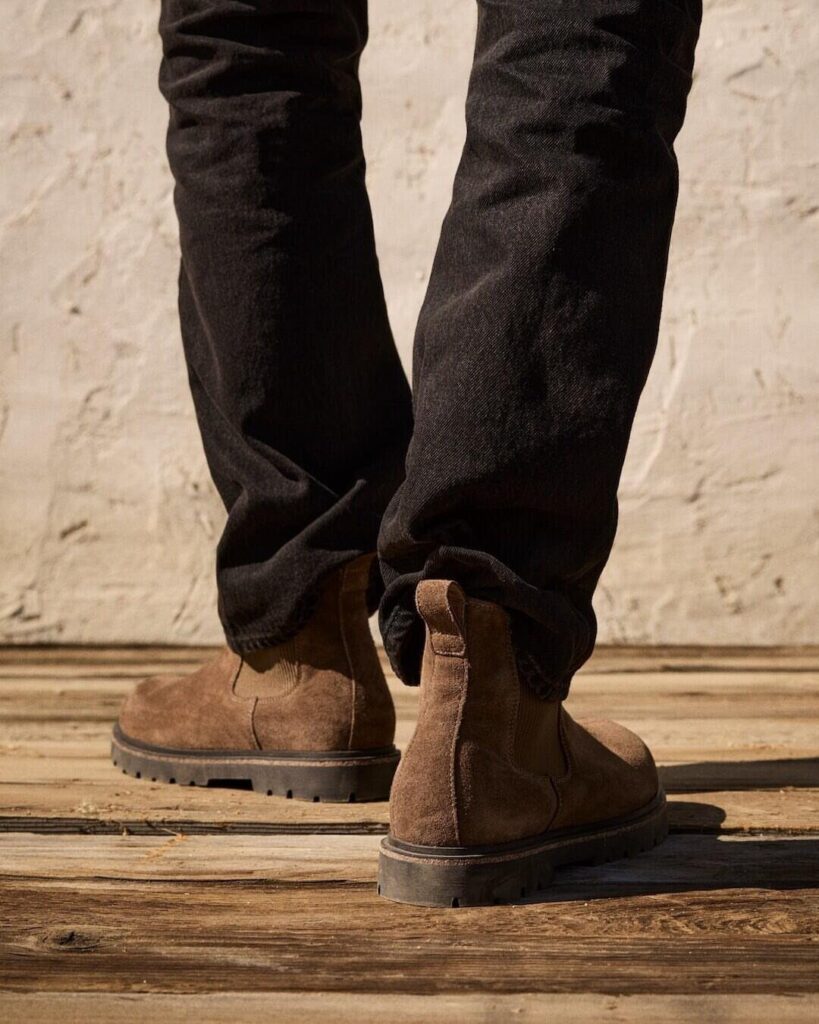
Wet sidewalks are where a thick rubber sole earns its place. Brown suede ankle boots with black trousers make a clean, dark-on-warm pairing that needs no other effort.
Keep the trouser hem slim enough to sit just over the boot shaft, so the sole’s bulk reads as intentional rather than clunky. Suede looks best in dry or damp weather, and I would still skip it in a downpour.
Add a gray crewneck on top and the outfit is finished.
2. Crewneck Sweater
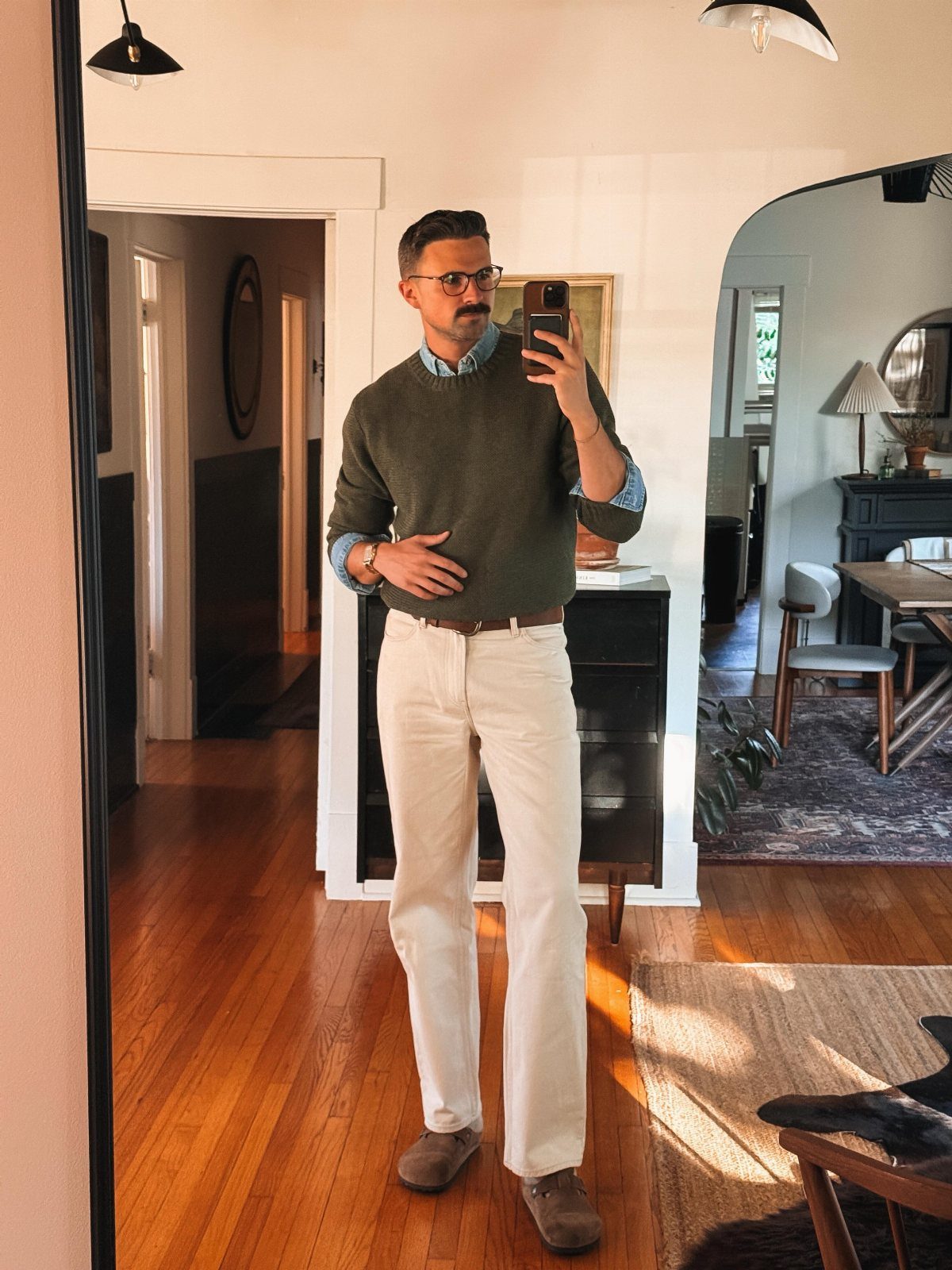
Let the shirt collar and a little cuff show, and the sweater stops looking like a lone layer.
Keep the sweater’s hem at the belt line, not past it, so lighter trousers stay in proportion.
For a heavier look, swap the white trousers for dark denim.
3. Long Sleeve Henley
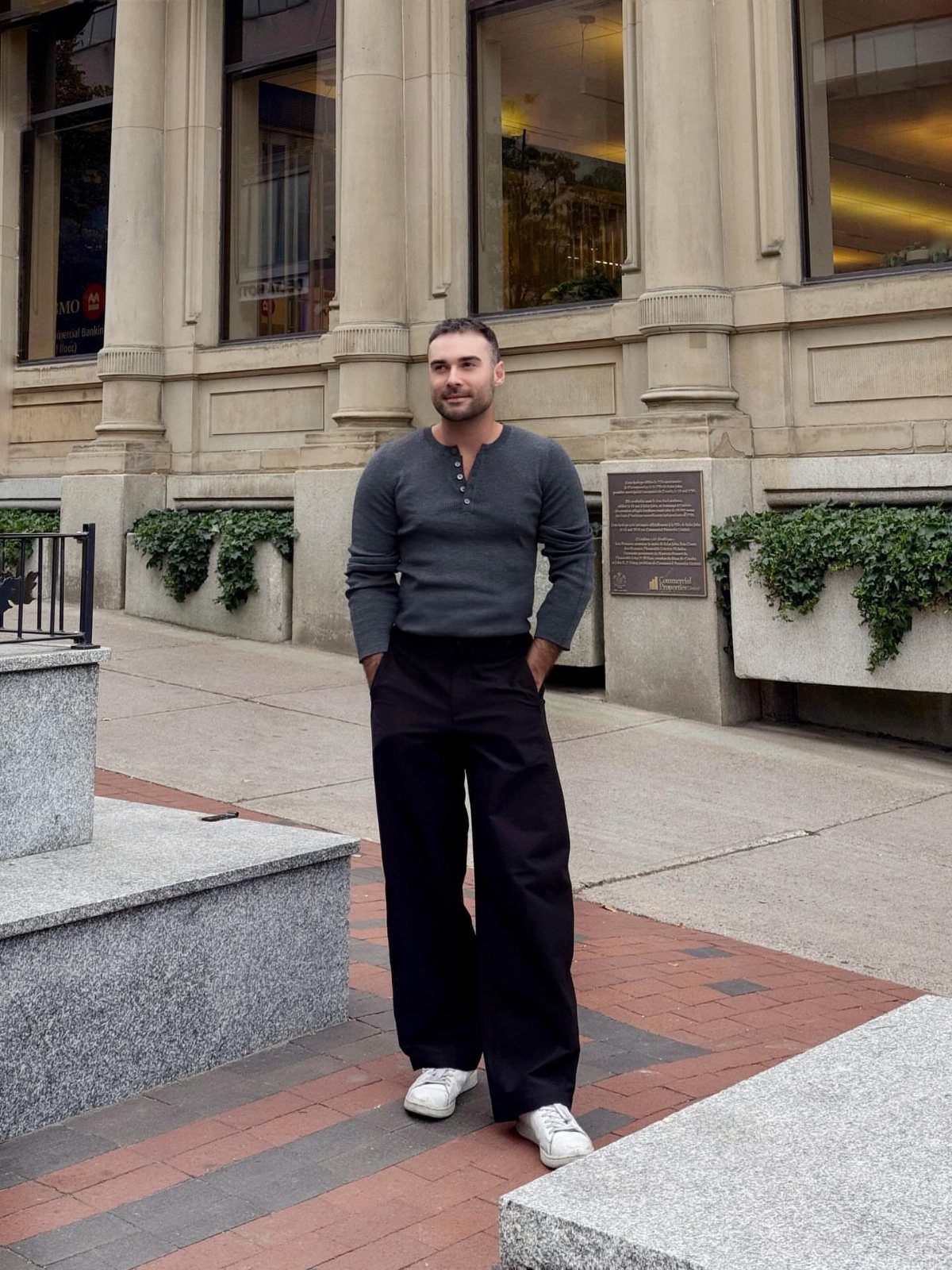
Henleys fix the problem of a plain tee looking too bare on a cool day.
A charcoal long sleeve version with wide black trousers and white sneakers keeps everything in one quiet range, with the sneakers as the single bright spot.
Because the trousers carry volume, I would keep the top fitted through the chest and shoulders. Leave the placket partly open, and push the sleeves up when the afternoon warms.
Throw an overshirt on top once temperatures drop.
4. Shawl Collared Cardigan
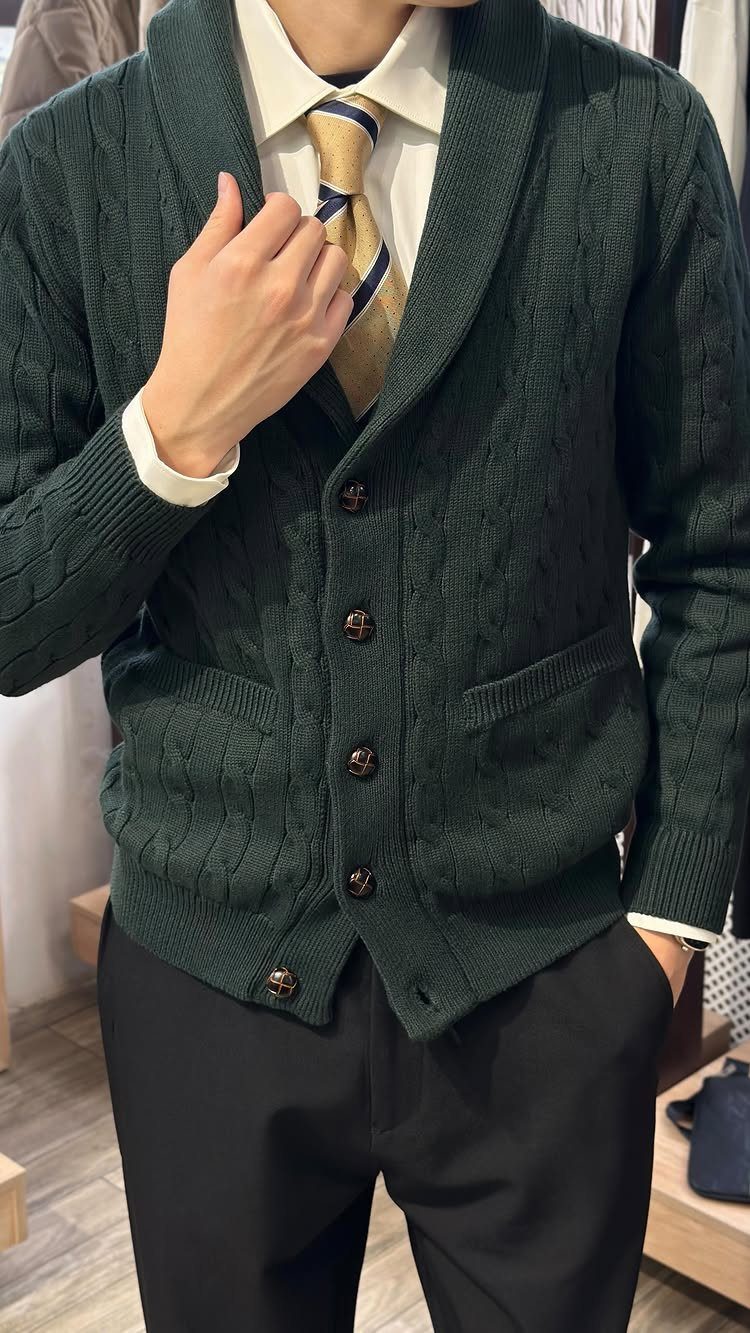
A shawl collar cardigan in dark green cable knit does what a blazer does, with a softer shape.
The wide, rolled collar sits flat, so a tie lies under it without bunching. Choose a knit thick enough to hold its shape, and button it only at the middle.
On weekends, drop the tie and open the top shirt button instead.
5. Gray Flannel Trousers
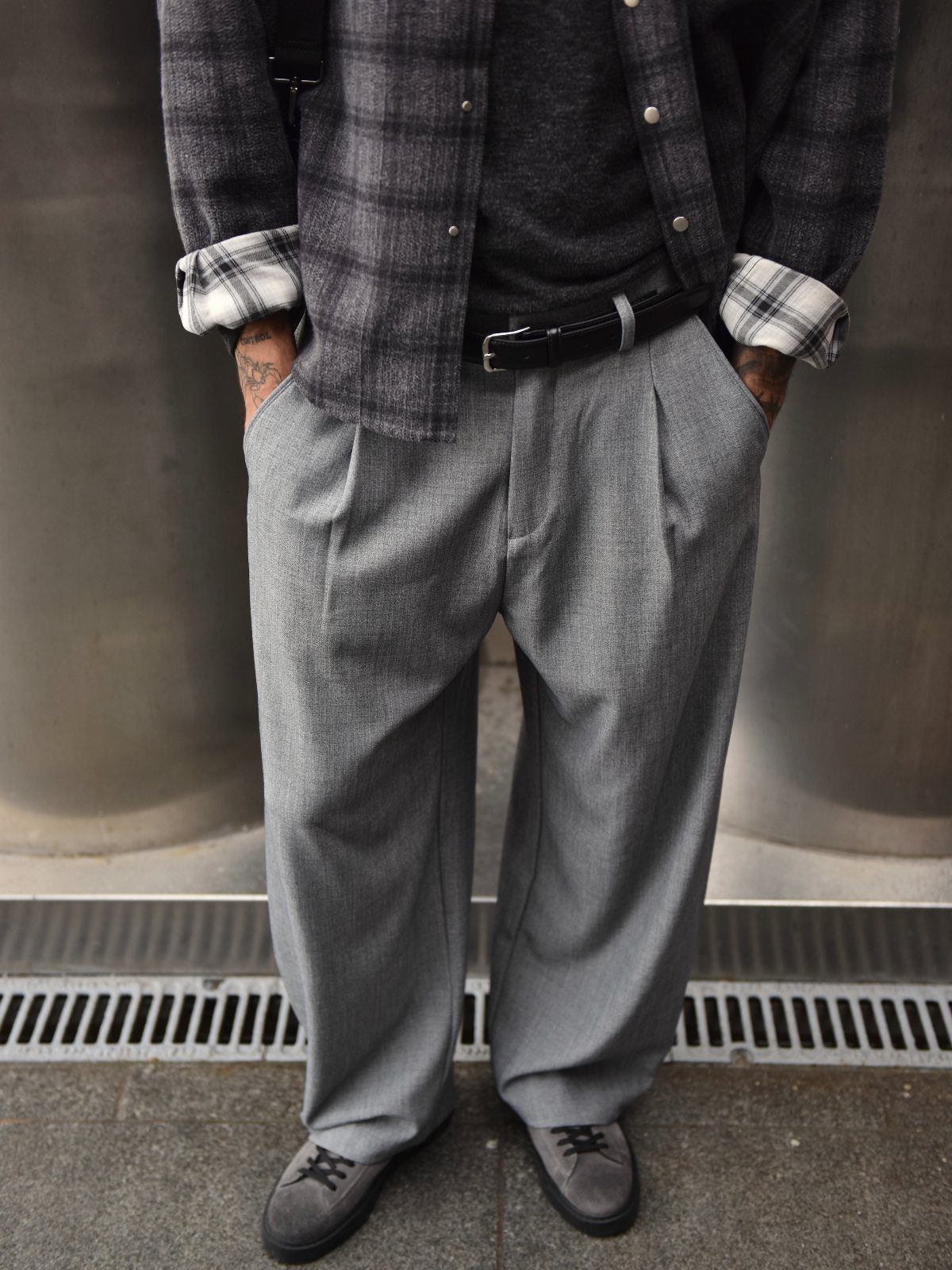
Gray flannel trousers, pleated and soft, are the pair I reach for when jeans feel too casual.
Pleats give extra room through the thigh, so pick a waist that fits without a belt fighting it. Mix textures rather than colors: flannel, knit, suede.
Brown shoes would break up the gray, if you want that.
6. Quilted Jacket
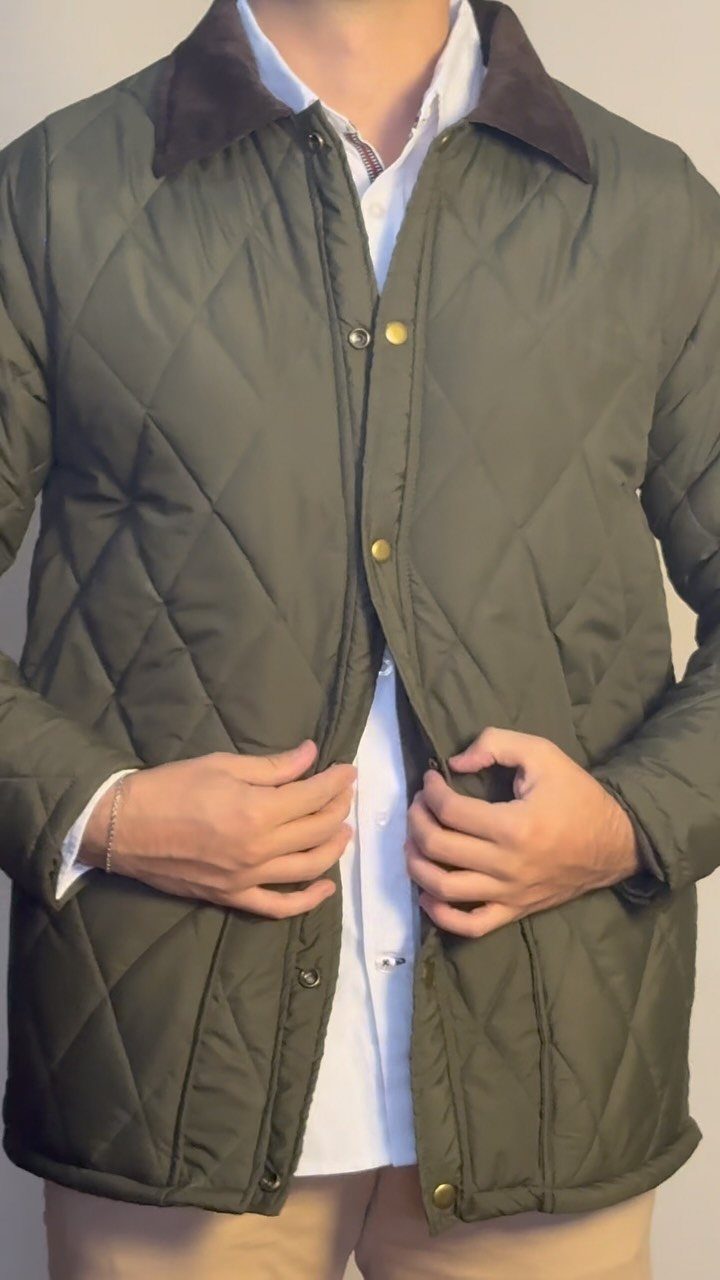
An olive quilted jacket with a brown collar is the light layer for brisk days outside. Worn open over a white button-down and khaki pants, it gives a tidy, outdoorsy look without looking dressed up.
The brown collar ties in nicely with brown boots or a leather belt. Choose a cut that ends at the hip so the shirt hem doesn’t peek out.
Quilting gives warmth without much weight, but it won’t replace a winter coat.
7. Pullover Hoodies
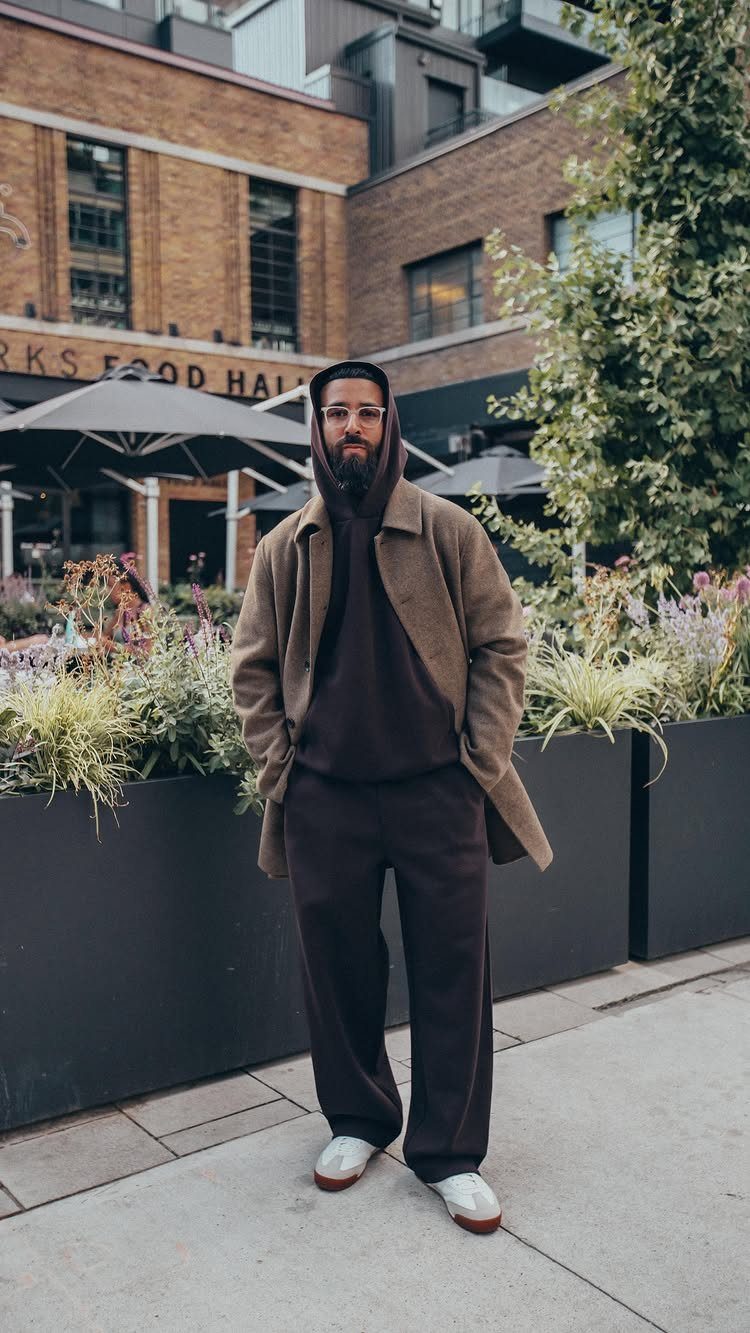
A dark hoodie under a tan overcoat is the easiest way to dress a coat down. The overcoat supplies the shape, and the hoodie keeps it from reading as formal.
Choose a hoodie in a slim, plain cut with no large graphics, and let the hood lie flat inside the collar. Matching the trousers to the coat keeps everything in one warm tone, and white shoes lighten the bottom half.
I like this for weekday errands, when you want warmth without a stiff jacket.
8. Herringbone Tweed Sports Jacket
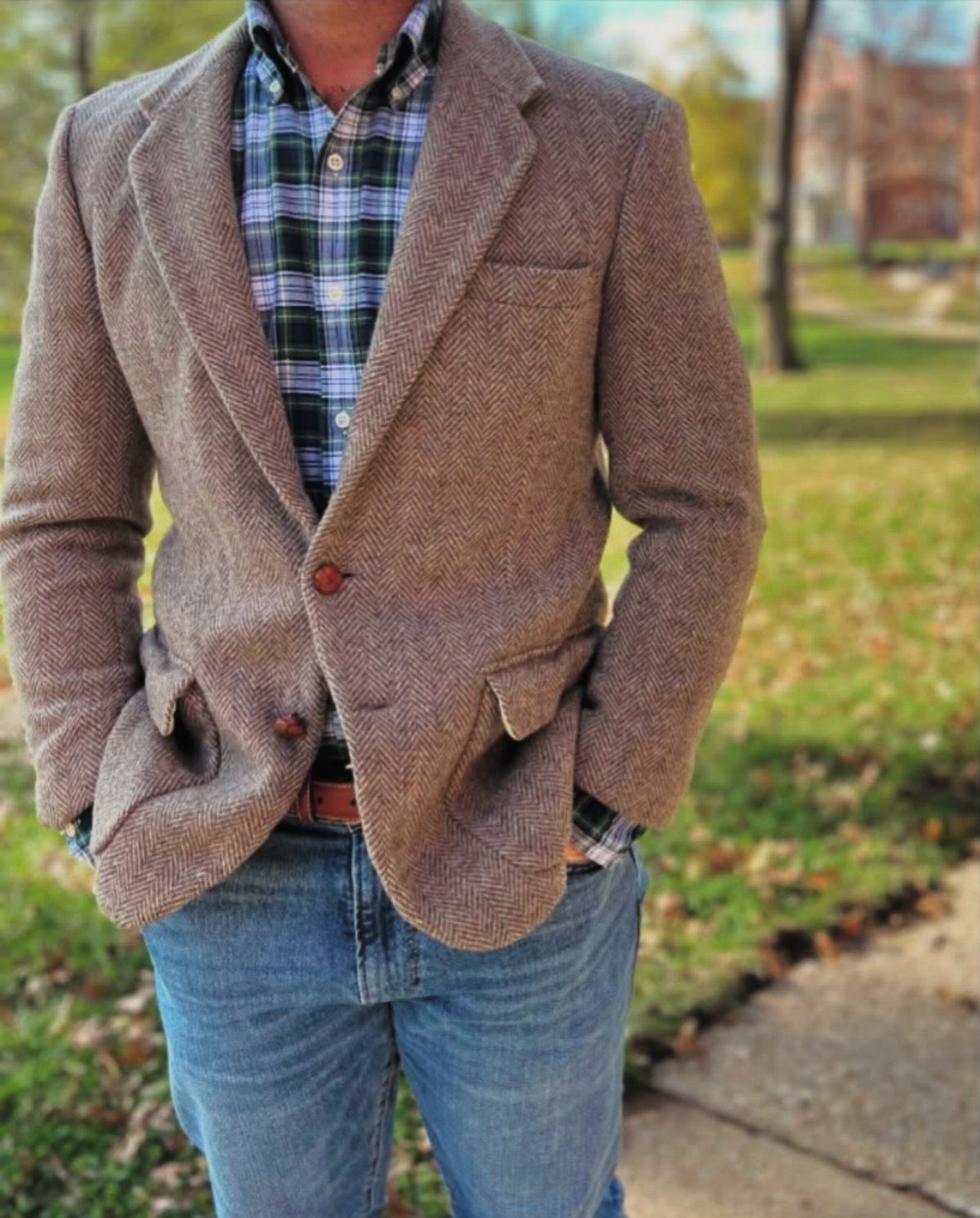
Herringbone tweed gives a plain plaid shirt and blue jeans some authority. A brown jacket in that weave is the one piece that pushes a look toward smart-casual.
Keep the shirt’s pattern bolder or quieter than the tweed, not equal to it, so the two don’t fight. Jeans in a solid blue wash do the rest.
I would pick a jacket that fits cleanly through the shoulders, since that’s the one spot a tailor can’t easily fix.
9. Neutral Button-Down Overshirt Layer
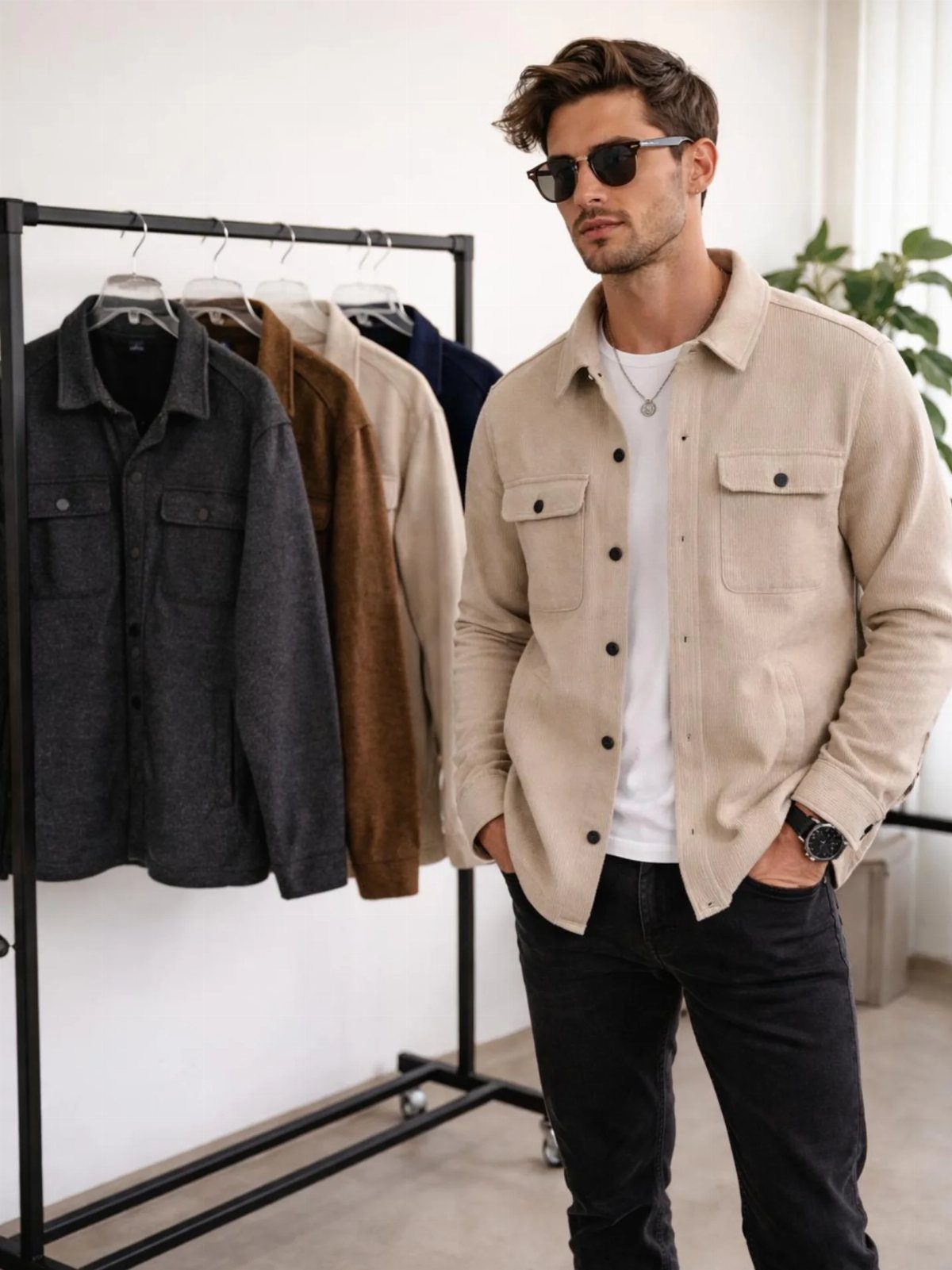
Worn open, a beige overshirt works like a light jacket over a white tee and black trousers. The tonal contrast stays calm, and nothing in it needs matching.
Leave the buttons undone and let the hem fall past the tee for a layered line. Black trousers anchor the pale top, so you can skip a belt statement or loud shoes.
I would choose a fabric with some body, since thin cloth hangs limp when open.
10. V-Neck Sweater Over Tee
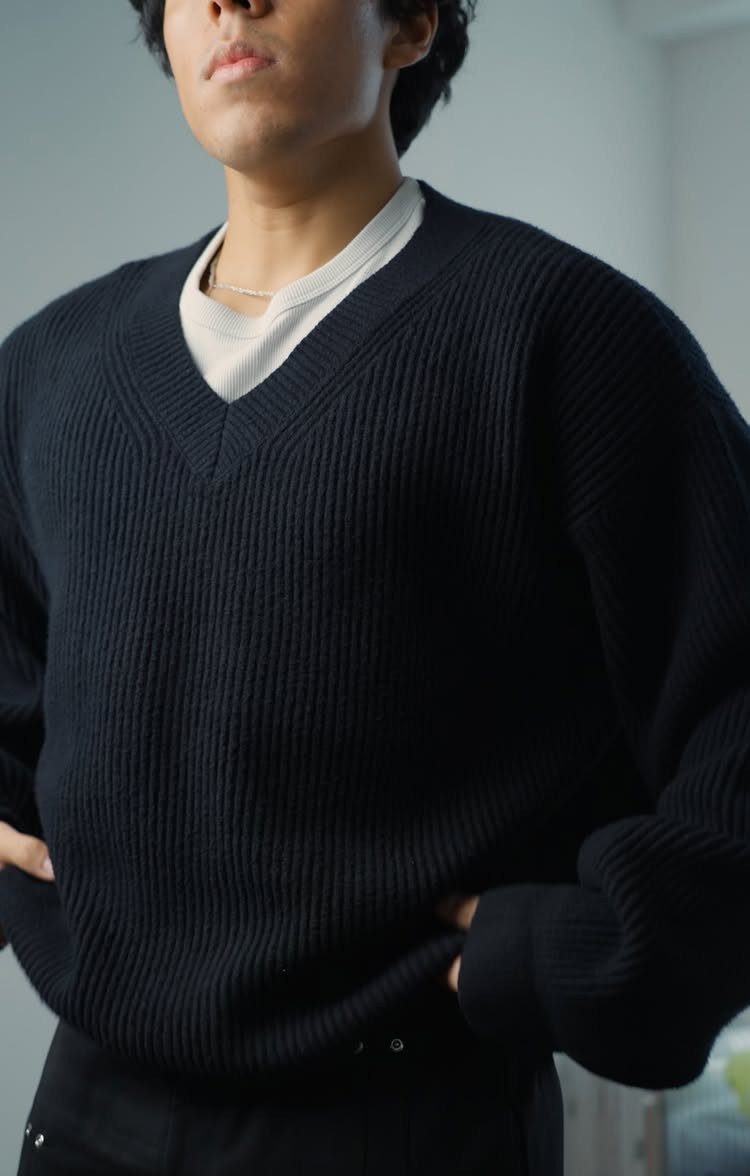
A ribbed V-neck pulled over a white tee shows a small triangle of white at the neckline, which is all the detail this outfit needs. Black on top with black trousers keeps it sharp.
Pick a tee with a crew neck that sits below your collarbone, so a small triangle of white shows at the neckline. Ribbing hugs the body, so choose a size that skims your torso rather than clings.
It works for a casual dinner as easily as an office day.
11. Layered Jacket with Wide Trousers
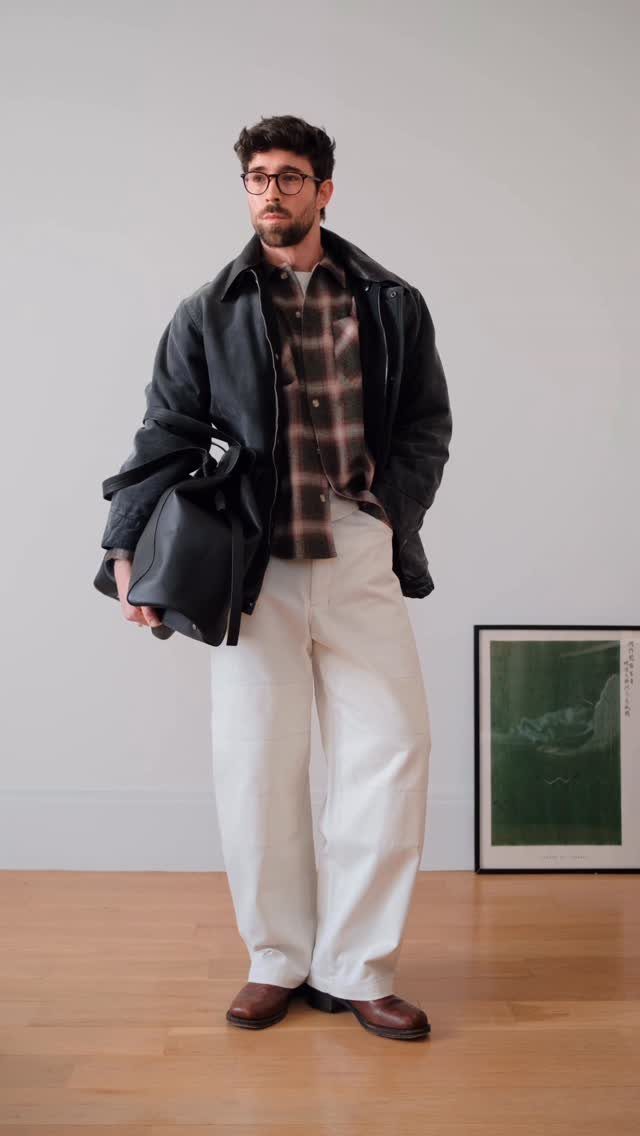
Wide white trousers need a jacket that keeps the top half tidy. A black jacket over an untucked plaid shirt does that, and the dark layer balances the pale, loose legs.
Let the shirt hem sit just below the jacket, no longer, or the outfit goes shapeless. Keep the trousers at a length that grazes your shoes.
White shows dirt quickly, which is the price of this look; I’d still pick it over gray for contrast.
12. Leather Bomber Jacket
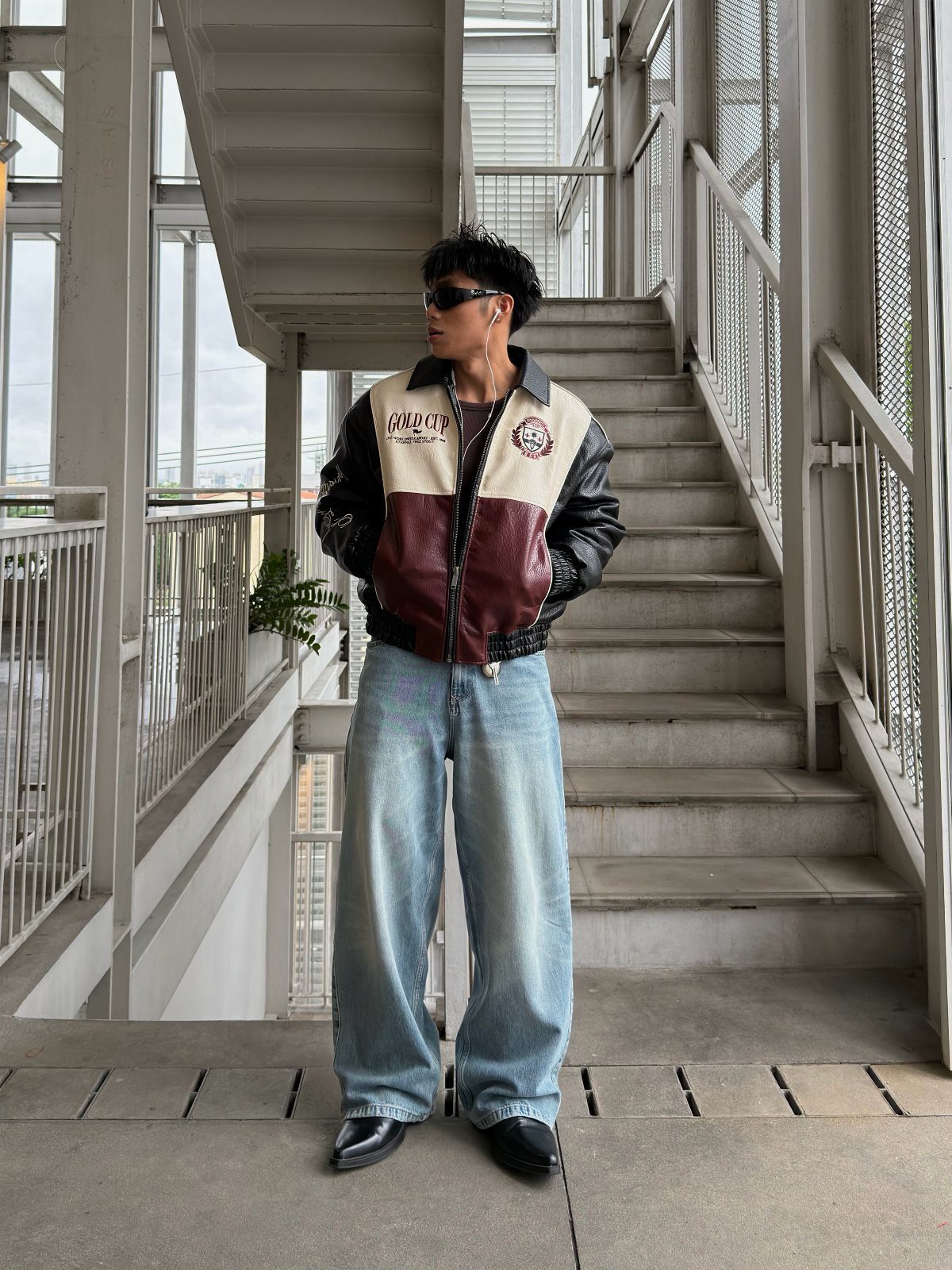
A leather bomber over wide-leg light-wash jeans gives a short, structured jacket a loose, relaxed bottom half. The proportion is the appeal: cropped on top, roomy below.
A bomber that stops at the waistband keeps its shape against wide jeans instead of getting lost in them. Black shoes and a simple tee underneath let the jacket carry the outfit, especially one with color or lettering.
Leather holds up best when you wear it often, so make it a regular layer.
Color Trends for Fall
Fall color is not limited to rust and brown. Pink, light blue, crimson and purple are all in play this season, and brown is still on the list too.
Earthy tones such as olive green, mustard yellow, burgundy and brown work well on sweaters, jackets and pants. To try something brighter, pick one piece, say a rust overshirt or a mustard knit, and let everything else stay neutral.
Pink is the easiest way in.
Designers have used a pale shade on classic military and bomber jackets, and on quieter pieces like dress shirts and knit vests. A pale pink shirt under a navy or gray layer reads sharp, not sweet.
Keep to one loud color per outfit. Let everything else stay neutral.
Bid farewell to the neutrals of the quiet luxury era. This season’s outerwear MVPs are all about bold colors, big patterns, and dramatic details.
— GQ
Layering Techniques
Layering without bulk comes down to thickness.
Thin layers in colors that sit close together will stack without bulk, so the outfit still reads as one look.
Three thin pieces trap heat better than one heavy one and look cleaner, since you can peel one off when the afternoon warms.
Spend where it shows. The outer layer is what people see, and prices run wide: one runway-level look pairs a $1,600 jacket with a $200 sweater and $169 pants.
The exact figures matter less than the idea behind them: spend most of the money on the jacket, and keep what goes under it plain.
Mix and Match
Buy pieces that work with at least 3 things you already own.
Before adding something new, picture it with your darkest pants, your lightest shirt and your usual shoes. If it fails with any of them, pass.
Build around a base of neutrals: navy, gray, brown, olive and white. Then add one or two pieces in a stronger color, like burgundy or mustard, so they can swap in and out without clashing.
Five tops and three bottoms that all mix give you 15 outfits. That’s a better return than 10 statement pieces that only pair with each other.
Frequently Asked Questions
What do I wear in the fall?
Build from layers that mix well: a crewneck or V-neck sweater, an overshirt or light quilted jacket, and boots or clean sneakers.
Close colors let thin layers sit together without bulk, and the top one comes off easily once the afternoon warms up. Keep the outer layer the best piece and the pieces under it plain.
What are the must-have essentials for men in fall fashion?
A light jacket, a crewneck sweater, dark denim or gray flannel trousers, and a pair of boots cover most days. A neutral overshirt in beige or similar works as a jacket over a tee.
What is the latest dress fashion for men?
Right now the look is wide-leg trousers and jeans under structured, cropped or layered tops, like a leather bomber over light-wash wide jeans. Herringbone tweed jackets and shawl collar cardigans cover the smarter side.
How can I layer clothes for fall without looking bulky?
Pick layers that are thin and close in shade, so the outline stays slim. Heat gets trapped between layers, so 3 thin pieces keep you warmer than 1 heavy one, and they hang better too.
Put the biggest share of the budget into the outer jacket; plain, fitted pieces underneath can skim the body and cost less.
How do I build a fall wardrobe that mixes and matches?
Buy a piece only if it works with at least 3 things you already own, and test it against your darkest pants, lightest shirt and usual shoes.
Neutrals come first; a stronger color or two, such as burgundy or mustard, can follow. Five tops and 3 bottoms that all pair give you 15 outfits.