Which black overalls outfit suits you depends on where you’ll wear it: a job with safety rules, a casual office, or a weekend out.
The looks in the list run from overalls with boots and a white tee to a winter layered version, an all-black outfit, and 2 beanie pairings, and the fit section covers rise, straps and inseam for all of them.
1. Work and Casual Use
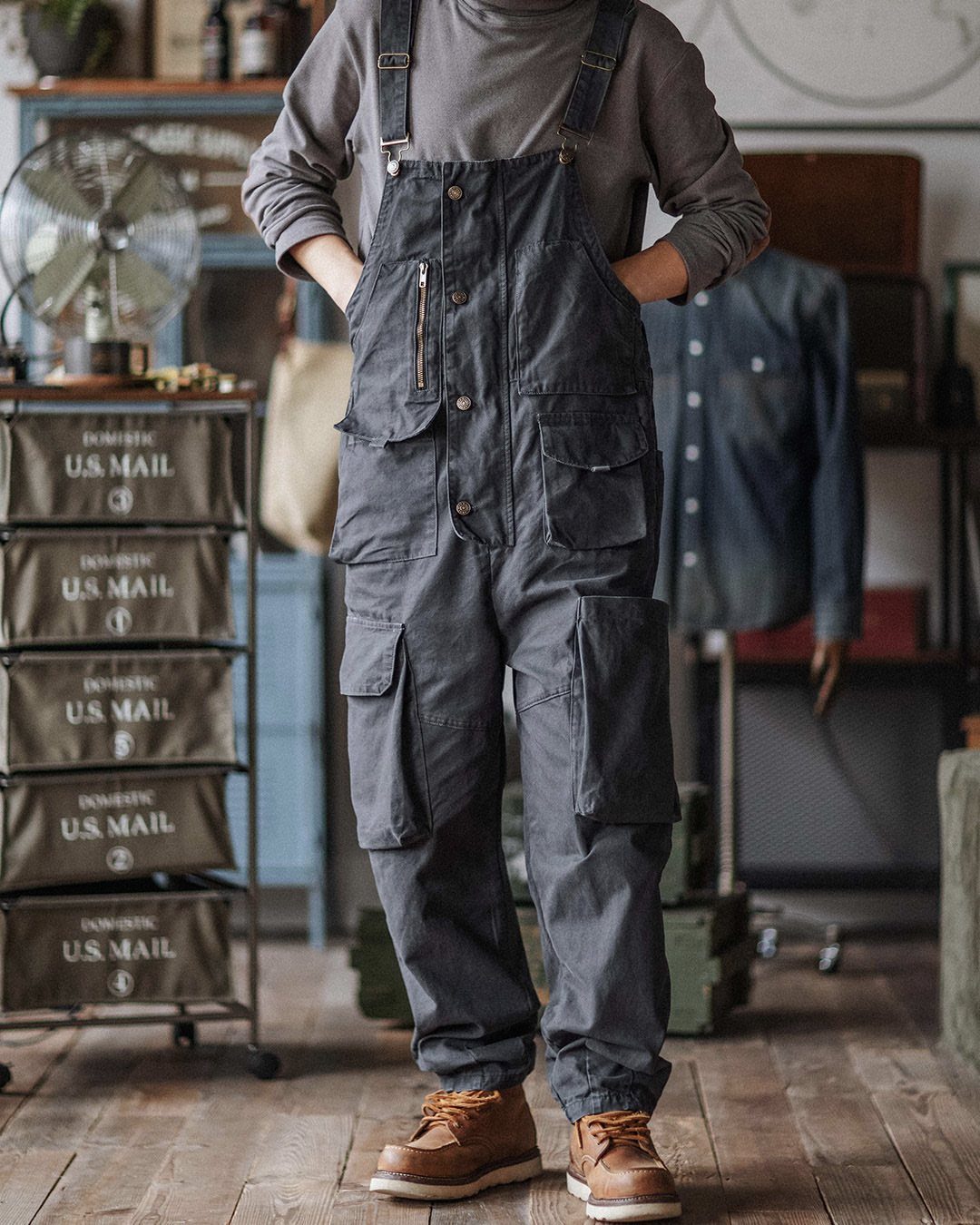
Dark grey overalls read as workwear first, which is why they slide so easily into a regular weekday. Over a long-sleeve shirt, the bib adds a layer of pockets without adding bulk.
Brown boots keep the look grounded and a little rugged. I’d stay with a plain shirt in a solid color, since the overalls already supply the texture and the story.
If you want the same outfit for both a job and a night out, black or charcoal is the safer shade.
2. Men Black Overalls with Boots

Tan boots are what stop black overalls from looking heavy. The light leather breaks up all that dark denim at the ankle, and it pulls the eye down to the shoes.
A white tee on top keeps the contrast clean, and a black beanie ties the top back to the overalls. I like this combination because it comes together fast and nothing in it clashes.
Cuff the hems once so the boot shows. Overalls that bunch over the laces look sloppy.
3. Men’s Black Overalls
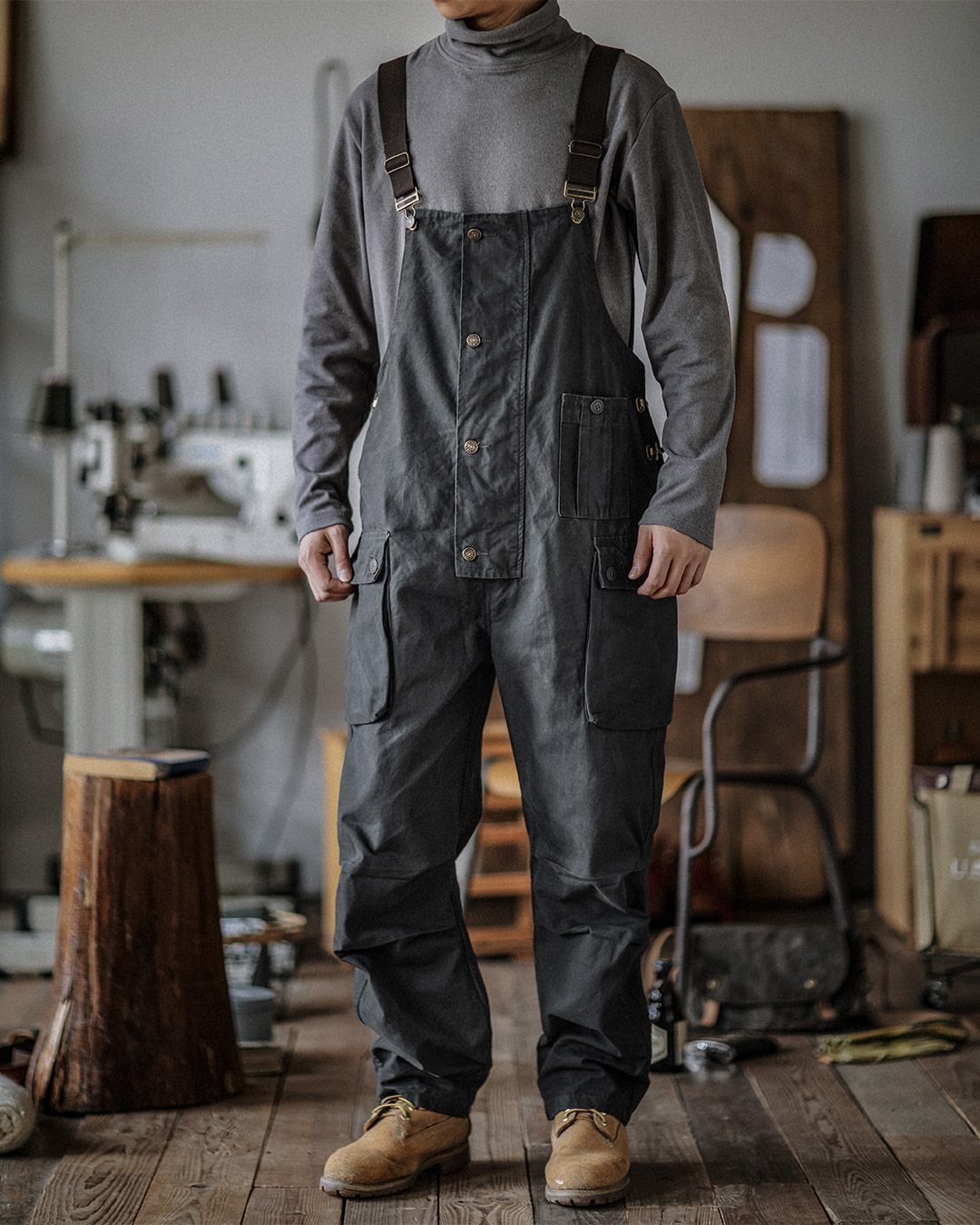
A grey turtleneck under black bib overalls is the quiet version of this style. The neckline fills the gap where a tee would leave your collarbone exposed, so the outfit feels finished, and it also adds warmth.
Tan boots work here for the same reason they do elsewhere: they lighten the base. Choose a fine-knit turtleneck rather than a chunky one, or the bib will push it into a lump at your chest.
This is the pairing I’d wear to a casual office or a weekend market.
4. Overalls with White T-Shirt
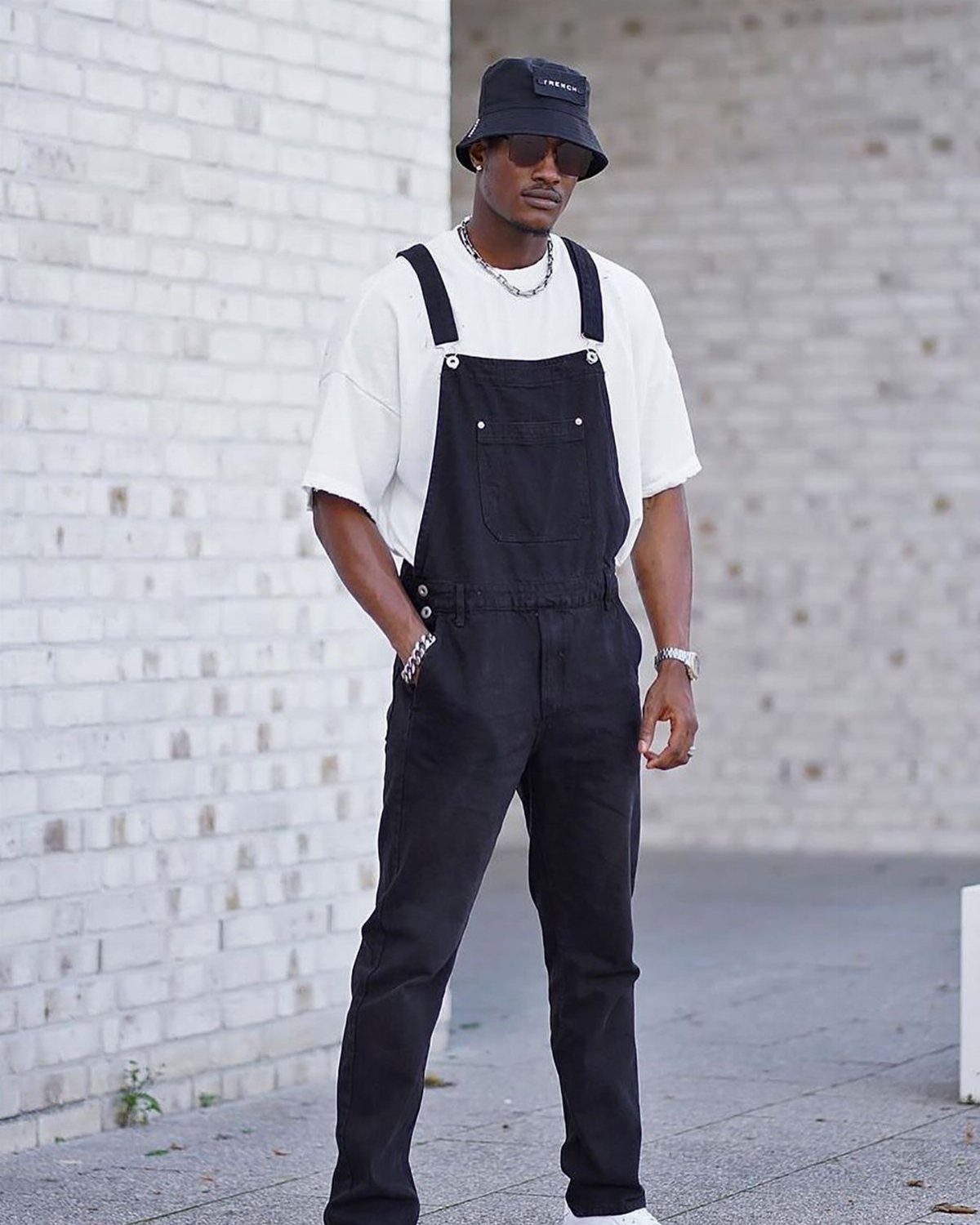
White tee, black bibs: it’s the simplest contrast you can wear, and it works because nothing competes. Buy the tee in a heavier cotton so it holds its shape under the straps and doesn’t wrinkle at the bib.
Keep the accessories minimal. A black bucket hat and sunglasses push overalls toward streetwear; skip them and the look reads as plain workwear.
Tuck nothing. Let the tee hang straight under the bib and drape naturally at the sides.
5. Winter Layered Black Overalls
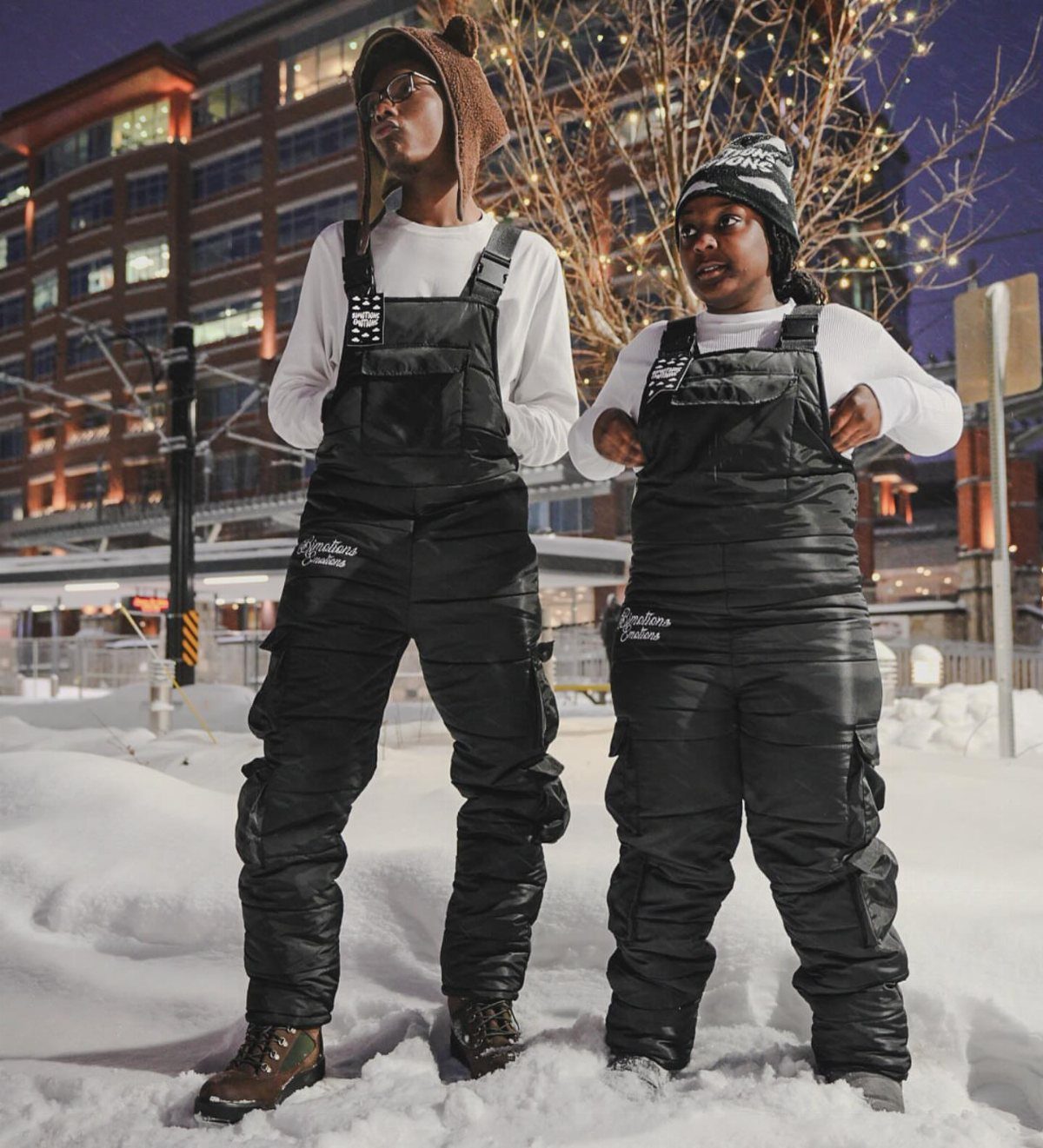
Snow calls for layers, and a white long-sleeve under black bibs gives you a base that still looks sharp. The knit hat covers your head and ears, which is where cold gets in fastest.
Wear the long-sleeve snug so it doesn’t bunch under the straps. If it’s colder than the outfit can handle, I’d add a coat over the whole thing instead of swapping the shirt for something thicker.
Dark overalls against white sleeves also photograph well at night, in case that matters to you.
6. All-Black Overalls Outfit
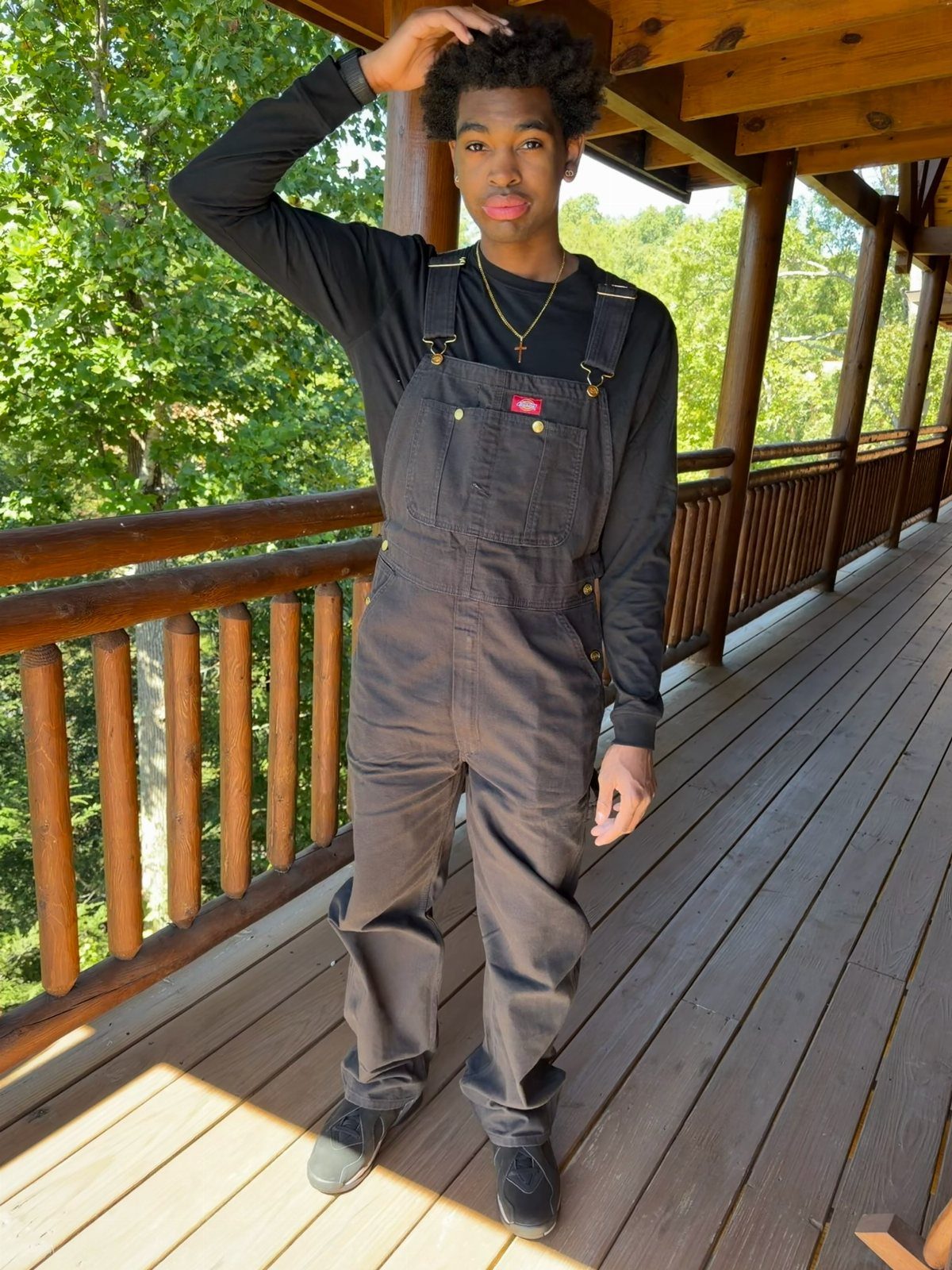
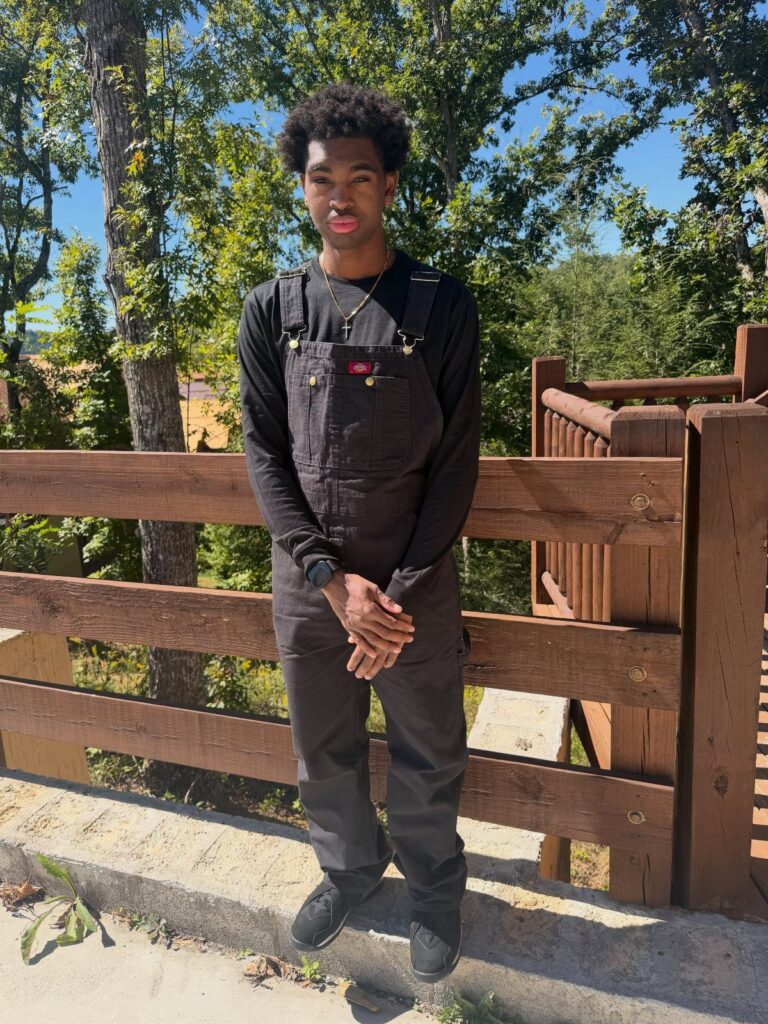
Black on black is the simplest way to make overalls look deliberate. A black long-sleeve under the bib removes the break between shirt and straps, so everything you’re wearing reads as one long line.
Black shoes finish it. The gold necklace is the right idea: one metallic piece gives the dark palette a point of interest without adding color.
Texture does the rest. Pick a matte shirt against the overalls’ denim or twill, and you avoid the flat, uniform look that all-black outfits sometimes get.
7. Overalls with Hoodie and Beanie
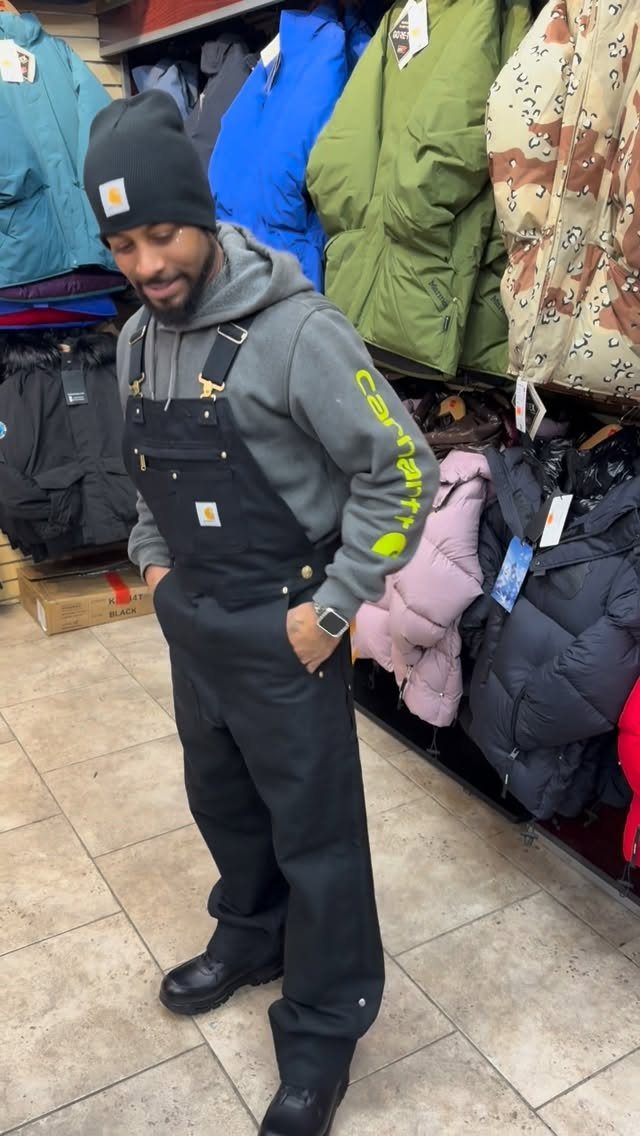
A grey hoodie under black bibs is the easiest cold-weather version of overalls. Soft fleece fills the space behind the bib and gives you padding without any stiffness.
Black beanie on top, and the head matches the overalls while the grey sits in the middle as a neutral. Keep the hoodie plain, with no big graphics, so the bib stays the focus.
Pull the hood out over the straps instead of tucking it under them, or it bunches at the back of your neck.
8. Overalls with Grey Tee and Beanie
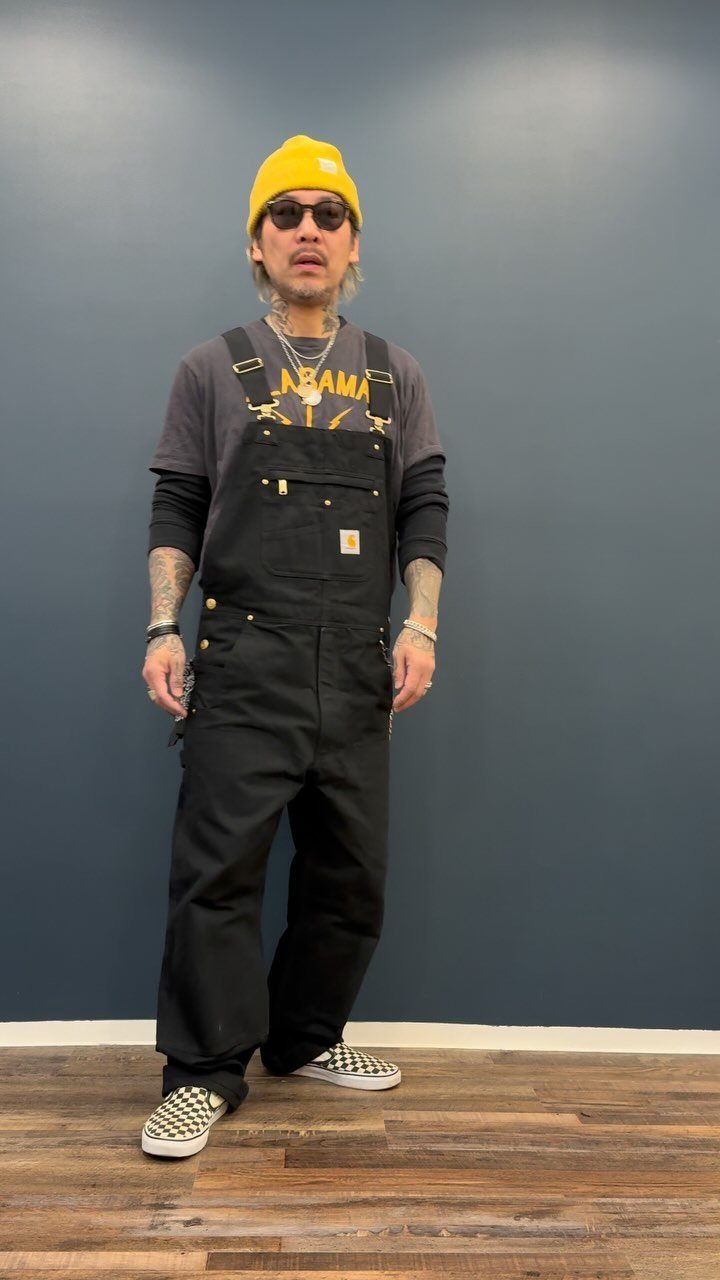
Yellow beanie, and the outfit has a single loud note against black overalls and a grey tee.
One bright piece is plenty. Everything else stays quiet so the hat reads as a choice rather than a clash.
The checkered slip-ons repeat that playful streak at the other end. I like the balance, though patterned shoes work best when the tee is plain, and here the grey "ALABAMA" lettering is the only graphic.
If a yellow hat feels like too much, a black one keeps the same outfit calmer.
Choosing the Right Fit
Start with the rise, the distance from the crotch seam to the waistband, because it decides where the overalls sit on your body.
Sit down and reach forward in the fitting room: if the seat drags or the bib pulls off your chest, size up or look for a longer rise.
Check the straps next. They should sit flat on your shoulders without digging in, and the adjusters should land near the middle of their range, so you have room to change them later.
Inseam matters more than most men expect. Aim for a hem that touches the top of your boot or sits just above it, and remember that cuffing shortens the leg.
Fabric should skim your legs and let you squat without strain. If you see horizontal creases across the thigh while standing, the leg is too tight; pooling at the knee means it’s too loose.
Workplace Requirements
Before you buy, find out what your job requires. Some sites mandate flame-resistant fabric, high-visibility colors, or reflective trim, and plain black denim meets none of those.
Ask a supervisor or check the safety policy. If the rules call for a rated garment, look for the label that says so, since a style that merely resembles workwear won’t count.
Then check function. Look for reinforced knees, a hammer loop, and pockets deep enough to hold tools without spilling when you bend over.
Fit matters for safety too. Loose legs and dangling straps can catch on machinery, so pick a closer cut if you work near moving parts.
Durability, comfort and looks are worth weighing, but the job’s rules come first. If you only need a sharp weekday piece, none of this applies.