Which fits depends on where you’re going: grey suits work for interviews and funerals, peacoats handle wet commutes, and a white blazer carries an evening out.
The list runs from single-breasted suits to white blazers over black trousers, with topcoats, peacoats and fabrics in between.
1. Single-Breasted Suits
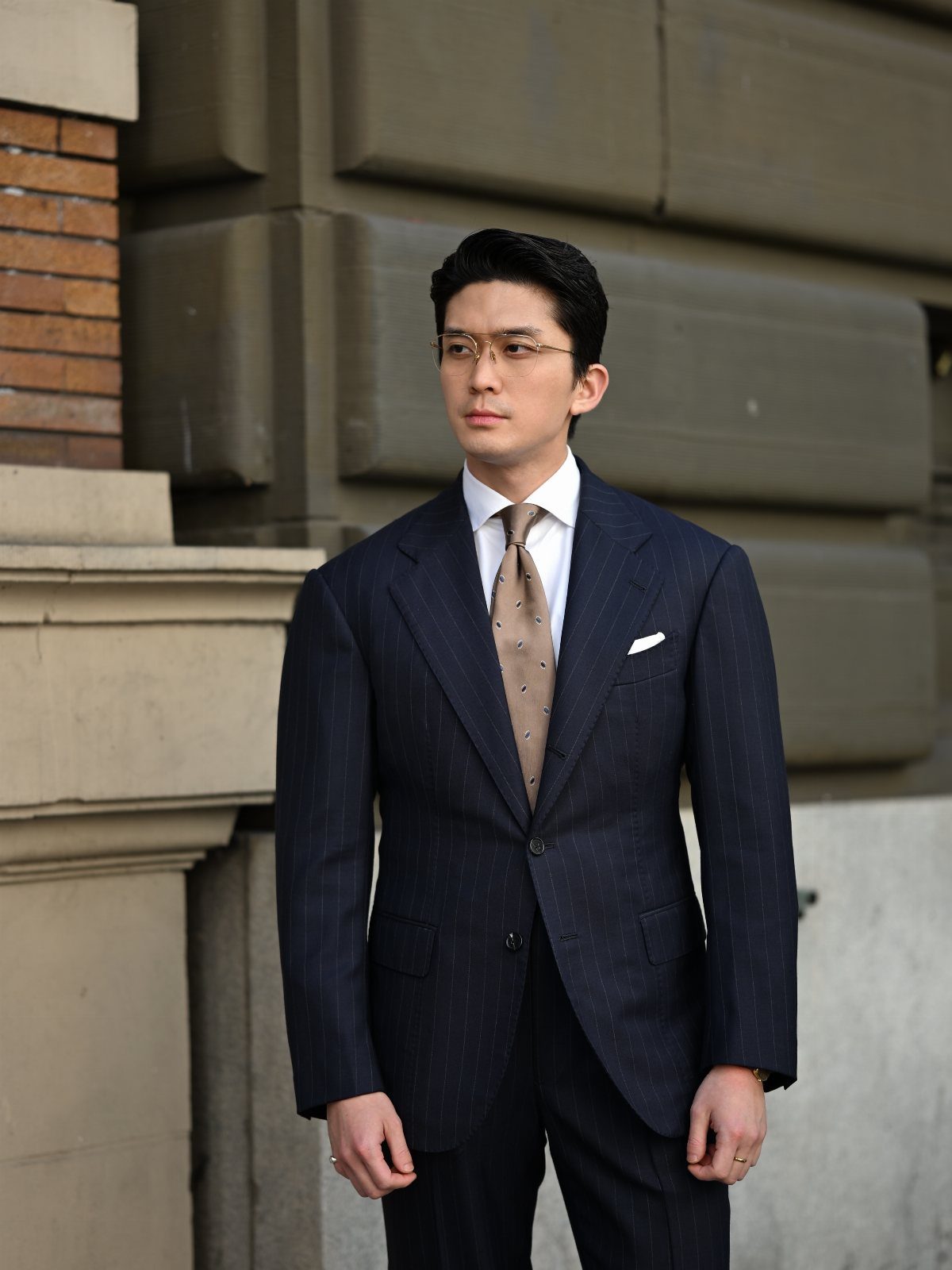
A single-breasted jacket with one to three buttons is the safest suit shape a man can own. It sits flat, reads as sharp at the office or a wedding, and works with nearly any shirt and tie.
Pinstripes add some life to navy without making the suit loud. Brown shoes suit a navy suit well.
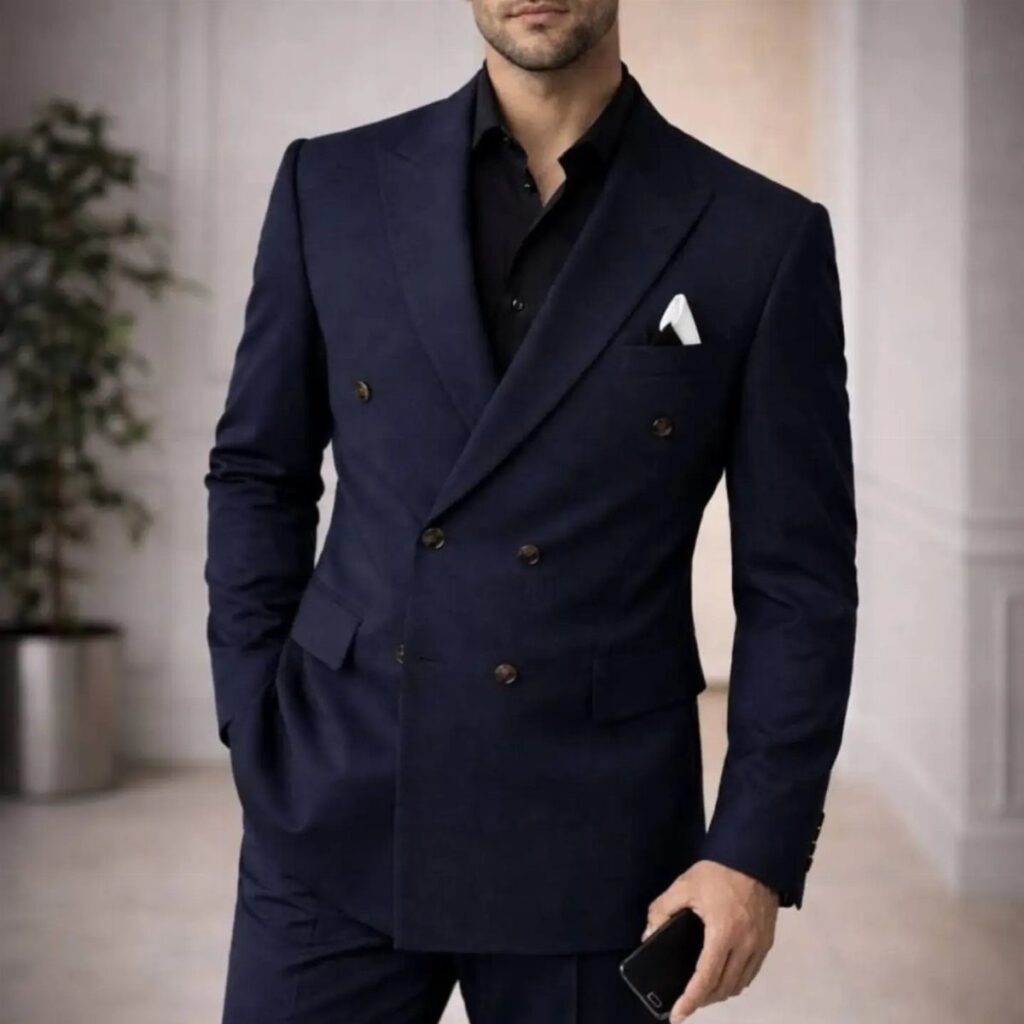
2. Double-Breasted Suits
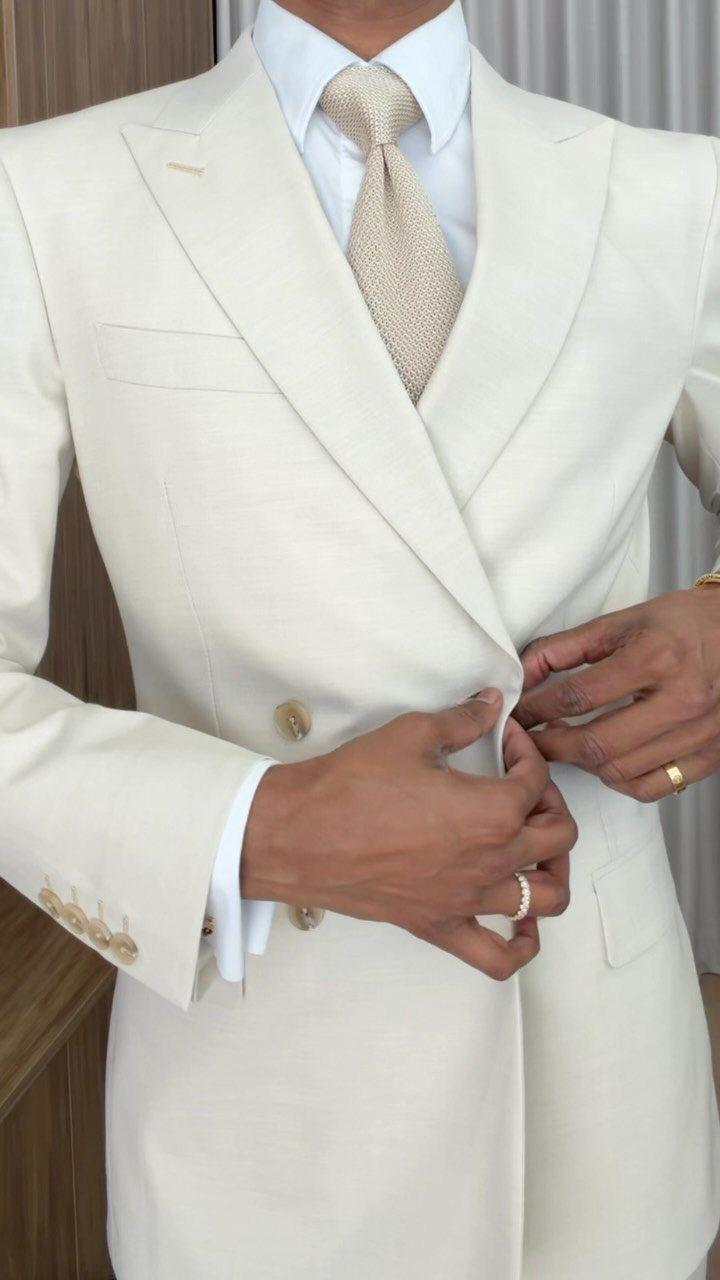
Overlapping fronts and a row of buttons across the body give a double-breasted suit more presence than a single-breasted one. A cream version like this one is a bolder pick than navy or grey.
Keep everything else quiet: a white shirt and a beige tie, nothing patterned.
The jacket is already the statement. Button it when you stand.
3. Formal Suits
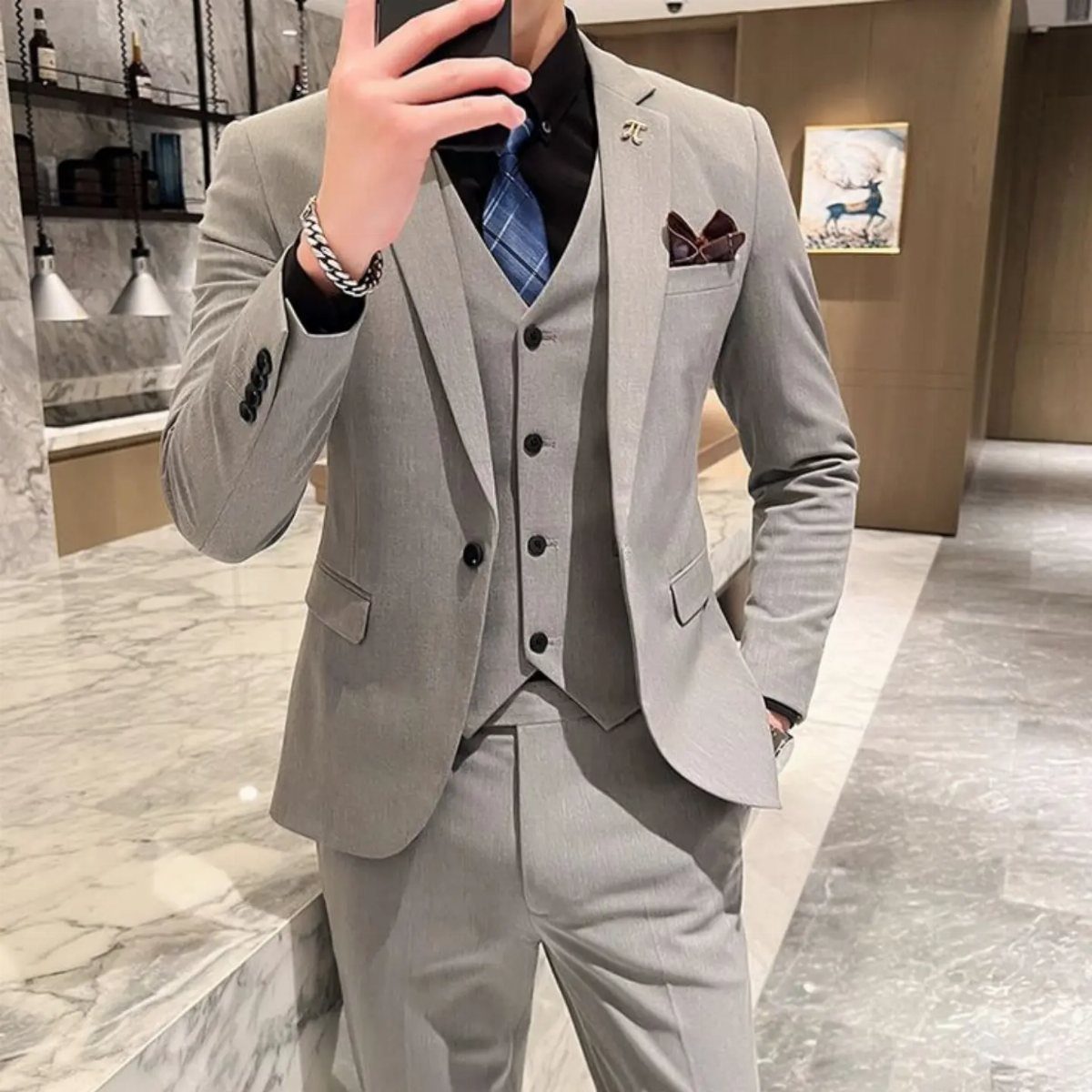
For a job interview, a funeral or a formal dinner, a suit in grey is the one I’d reach for. A three-piece adds a waistcoat, which makes the look feel finished.
A black shirt under light grey is a sharper, more evening-leaning choice than white, and a blue tie keeps it from looking severe. For daytime work, I’d go back to a white shirt.
4. Topcoat Over Suits
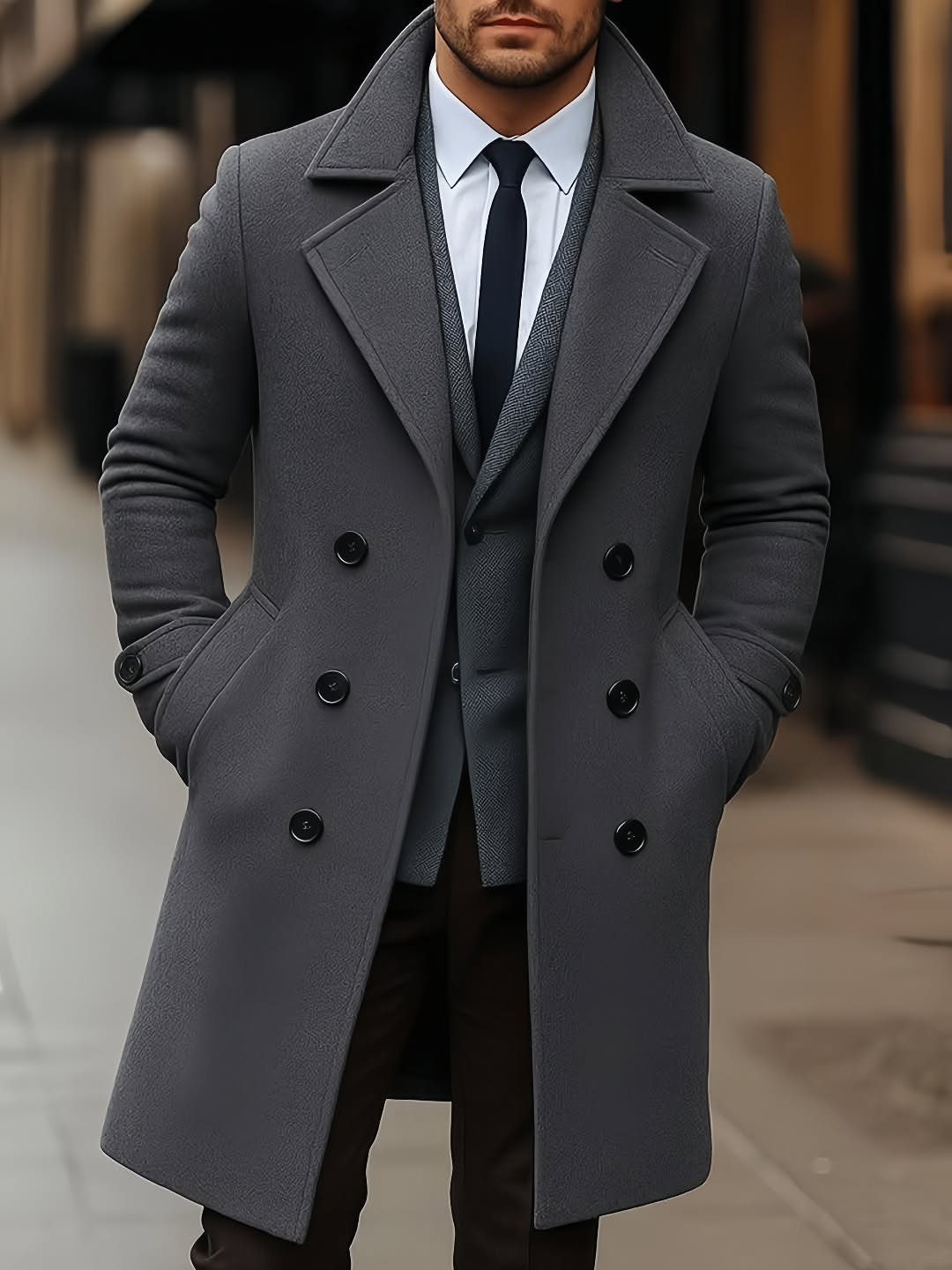
A grey wool overcoat worn over a suit solves the cold-morning problem without hiding the tailoring. Choose a coat in a shade close to the suit’s so the two read as one outfit.
Size the coat so it fits over the jacket, not just over a shirt. Try it on while wearing a suit jacket, and check that the shoulders don’t pull.
5. Peacoat
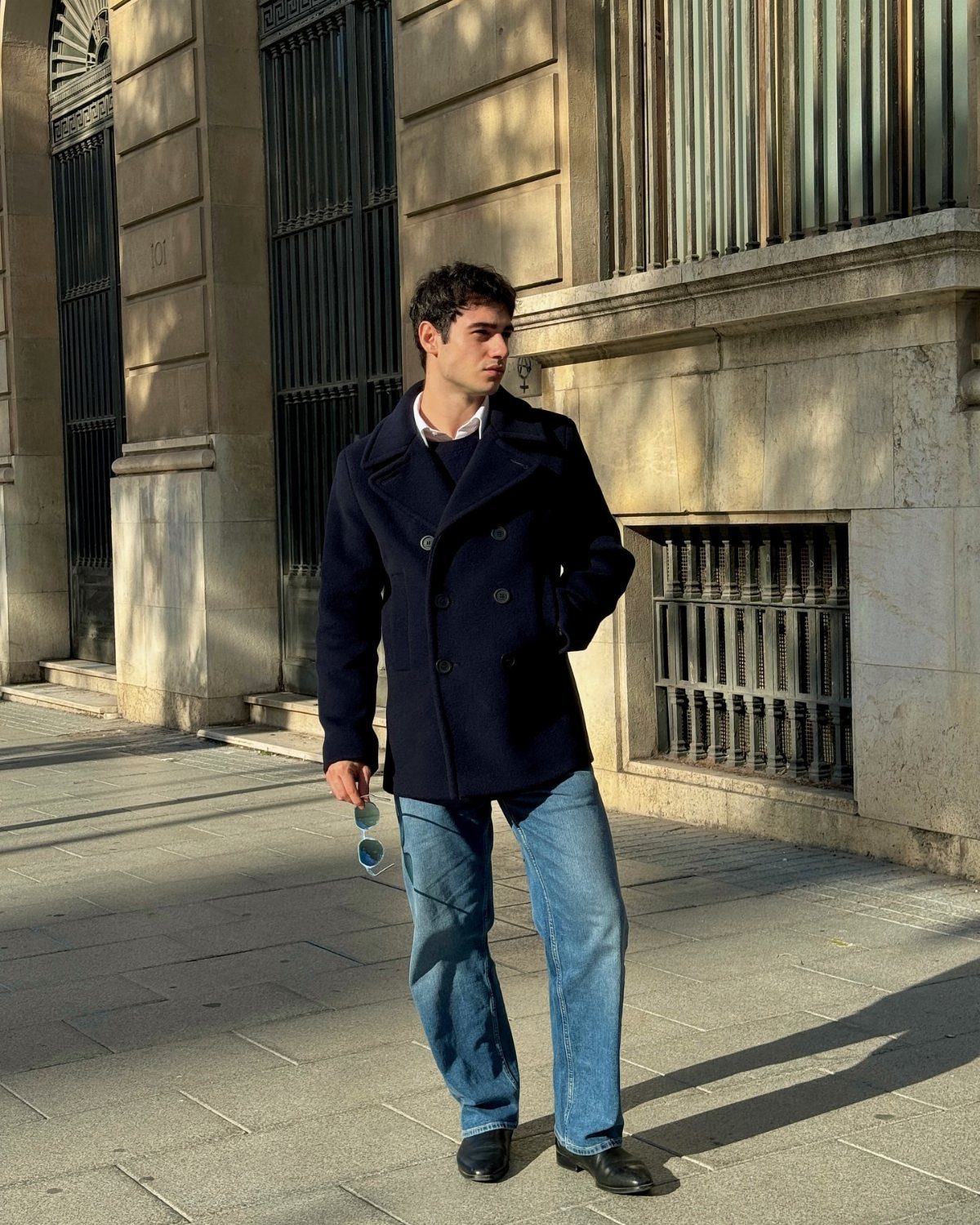
Shorter than a topcoat, a navy peacoat stops around the hip and keeps its double-breasted front. That length makes it easy to wear with jeans, which is why it works for a normal weekday.
A white shirt and mid-blue denim sit well under a peacoat, and neither fights the navy wool. Navy goes with almost everything in your closet, so one coat covers a lot of outfits.
6. Blazer with Contrasting White Trousers
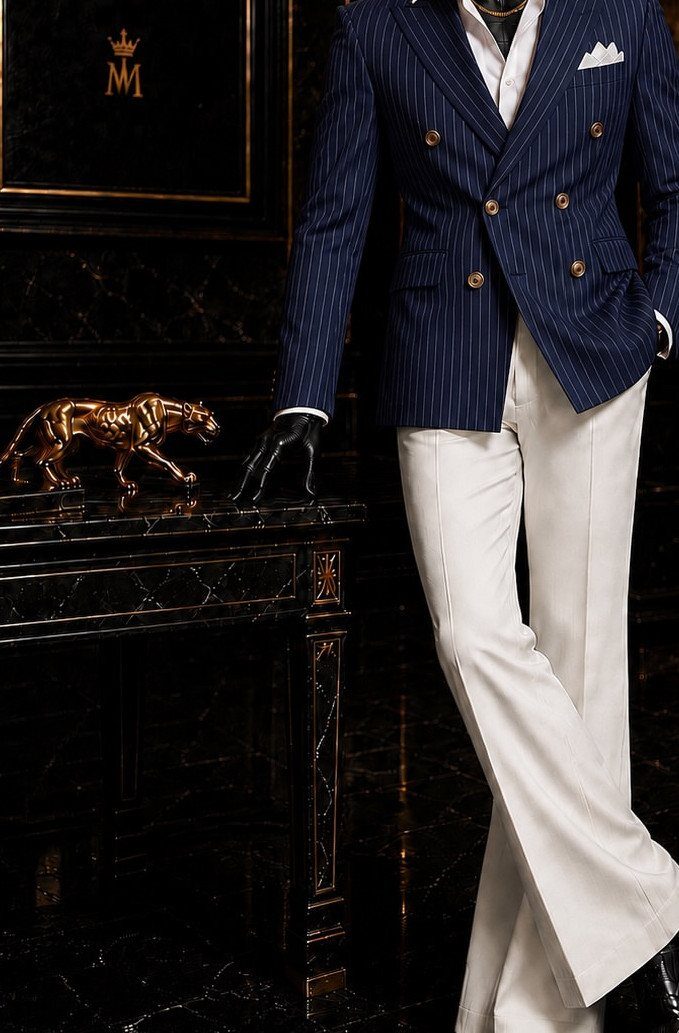
White trousers need a dark jacket to look deliberate, and a navy pinstripe double-breasted blazer gives them that contrast. The sharp split between a dark blazer on top and white trousers below carries the look on its own.
Crisp is the word that matters.
Press the trousers before you wear them, and keep the shirt simple so the blazer stays the focus. White shows every stain, so I save this look for dry, easy days.
7. Three-Piece Suit
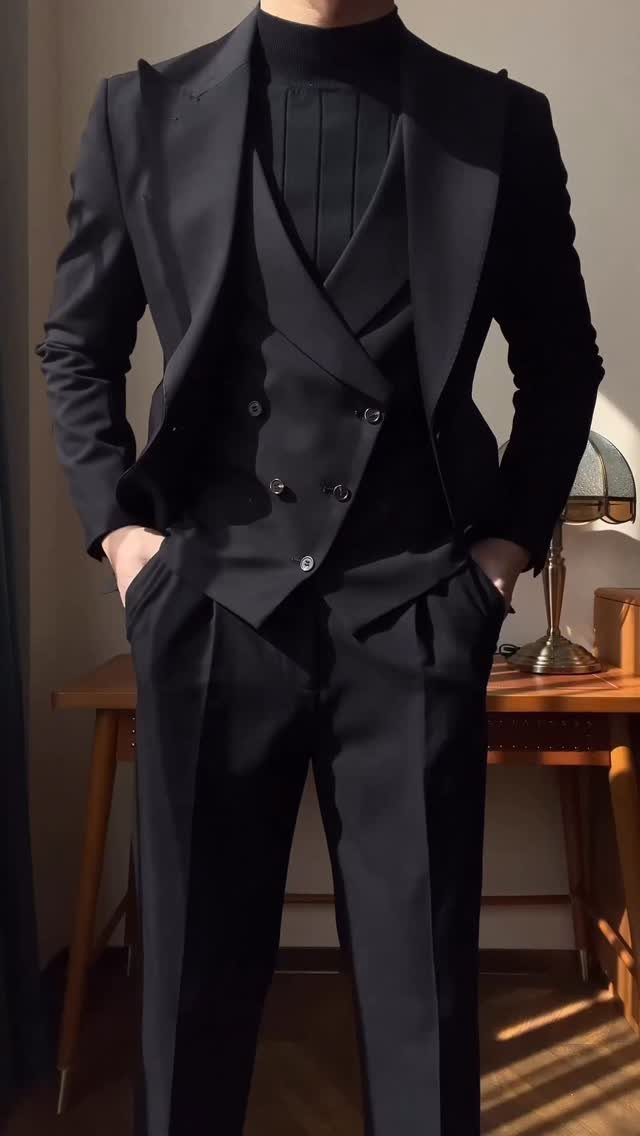
Vest, jacket and trousers cut from the same cloth make a three-piece suit, and a dark turtleneck underneath takes the place of the shirt and tie. Black or navy both work, and the all-dark look reads sleek without trying hard.
Keep the turtleneck fine-knit so the vest lies flat against it.
Button the jacket when you stand, and leave the vest’s bottom button undone. If an evening calls for more than a plain suit, this is the version I’d pick.
8. White Blazer with Black Trousers
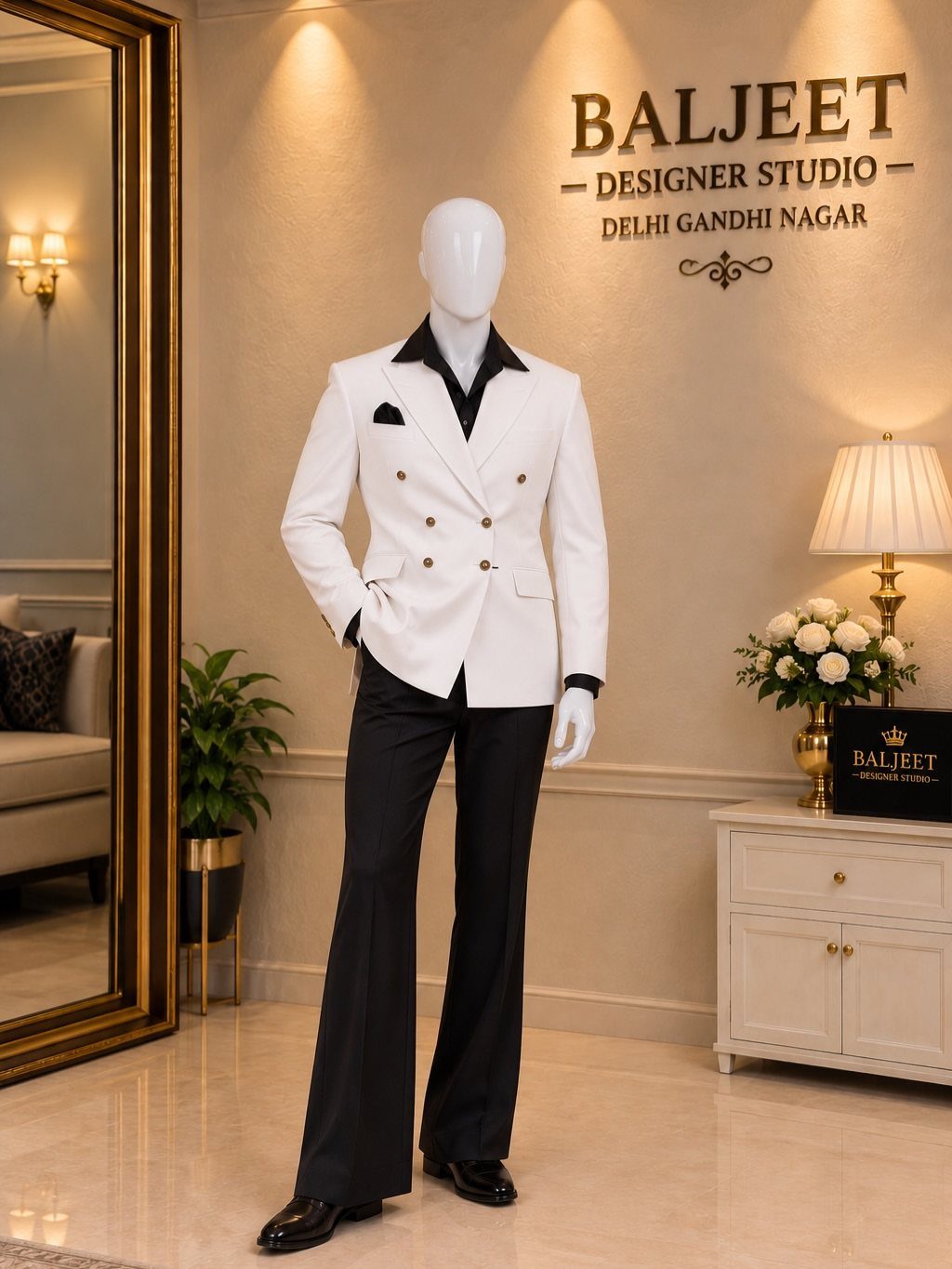
A white double-breasted blazer with gold buttons stands out most against black trousers, because the contrast does the styling for you. The gold buttons are the only detail the jacket needs.
Choose black trousers with a clean, straight line and skip a pattern, so the blazer stays the focus.
A black shirt or a plain tee keeps the palette tight. I’d save this for evenings and events, since white shows every mark.
Coat Fabrics
Fabric decides how warm a coat is, and how it wears, before cut ever comes into it. Wool, cashmere blends, camel hair, cotton and polyester are the common choices, and each behaves differently.
Wool is the safe foundation: warm, durable, and it drapes cleanly over tailoring.
A cashmere blend feels softer and looks a little richer, though I’d expect it to wear faster than straight wool. Camel hair is warm and smooth, and it makes a statement through its color alone.
Cotton is lighter and suits mild, damp days. Polyester shows up mostly in cheaper coats and blends; it holds up to wear, but check the label and favor a coat that is mostly natural fiber when you can.
Temperatures swing, so I’d pick the fabric for the coldest stretch you commute through, not the average day.
Choosing the Right Coat
Start with the day you’ll wear it. A snowy morning commute calls for a heavy wool coat, while a damp, windy spring day is better served by a trench in cotton or wool, which blocks rain and wind.
The occasion decides which coat works. A coat that looks right at an interview should be plain in cut and quiet in color; for casual days, you can relax the fabric and the length.
If you only buy one, I’d pick the trench for the broadest range. It works over a suit and over everyday clothes, and it lets you skip the bulk of a winter coat in cool months.
A coat that closes comfortably over it is one you’ll actually reach for.