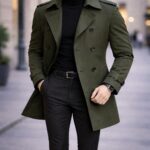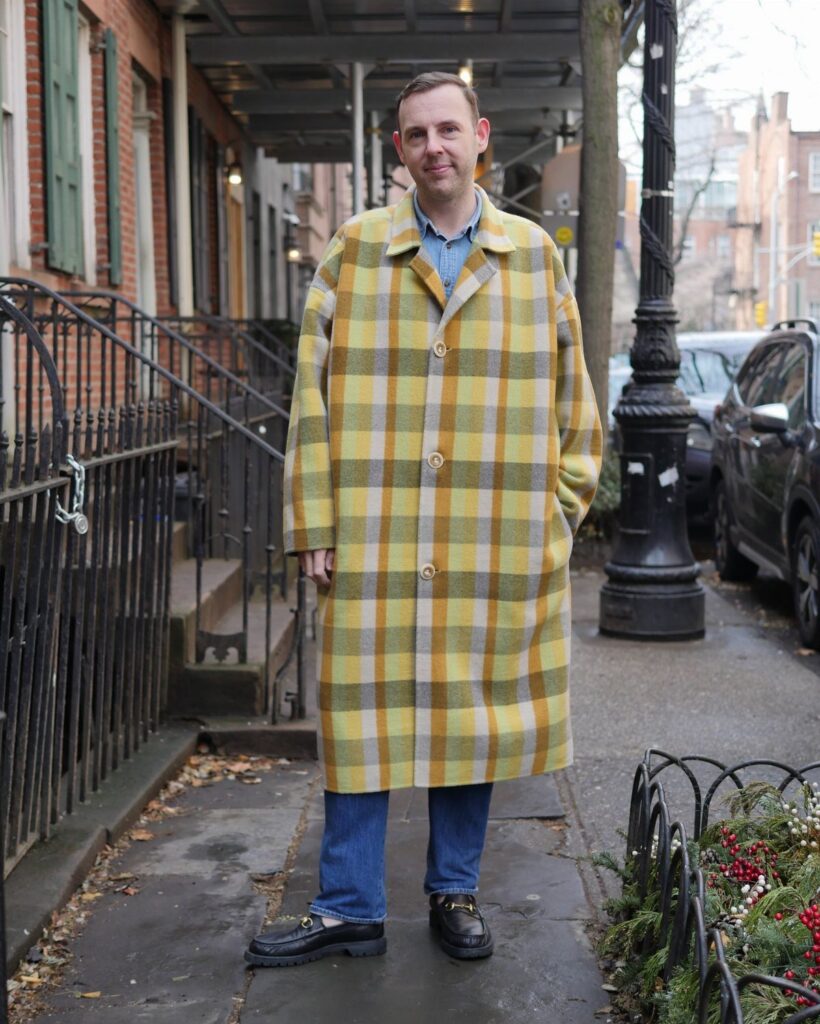
A plaid trench coat can run from a loud, large-scale check to a quiet accent on the collar or lining, and the right amount of pattern is the amount you can wear before the outfit starts to feel like a costume.
The list runs from a grey coat with plaid only on the collar and cuffs, to a brown plaid trench over a matching brown plaid suit, and the louder the coat, the quieter everything under it has to be.
Pick the trim if you worry about looking loud, and the full check if you wear solids most days.
Trench Coat Materials is one of the sections below, and it covers the fabrics that decide how a plaid trench wears, from weight to water resistance.
1. Larger Checks Plaid Trench Coat
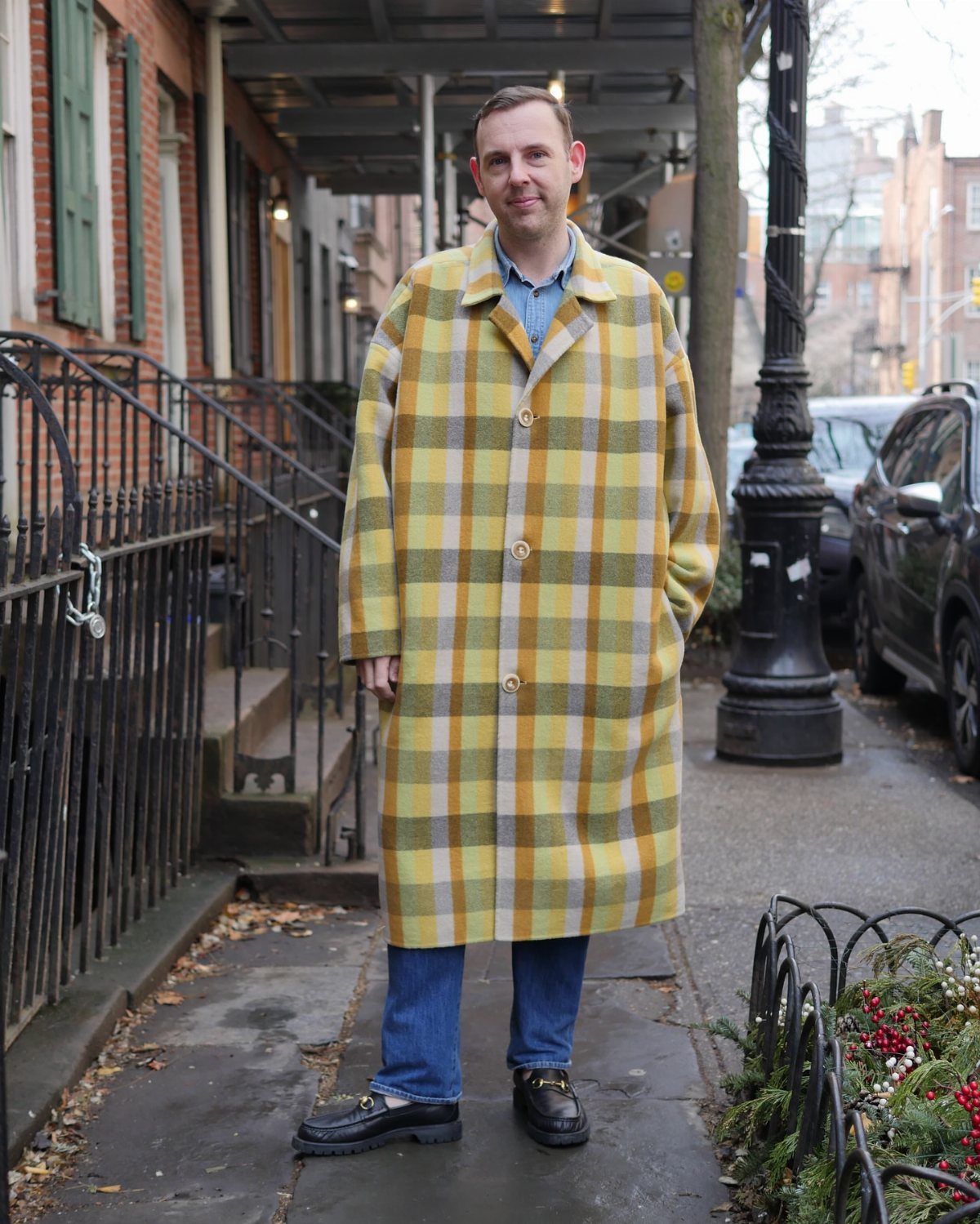
Large checks work best when the rest of the outfit stays quiet. A blue shirt and plain jeans do that job here, because the coat already carries all the pattern the look needs.
Keep everything under it solid and in one or two colors that already sit inside the plaid. Yellow and grey checks pull toward blue and denim without trying hard.
Larger checks also read louder from a distance than small ones, so I would pick the muted version over the bright one if the coat will be worn often. Long length keeps the pattern from looking chopped up.
2. Oversized Brown Plaid Trench Coat
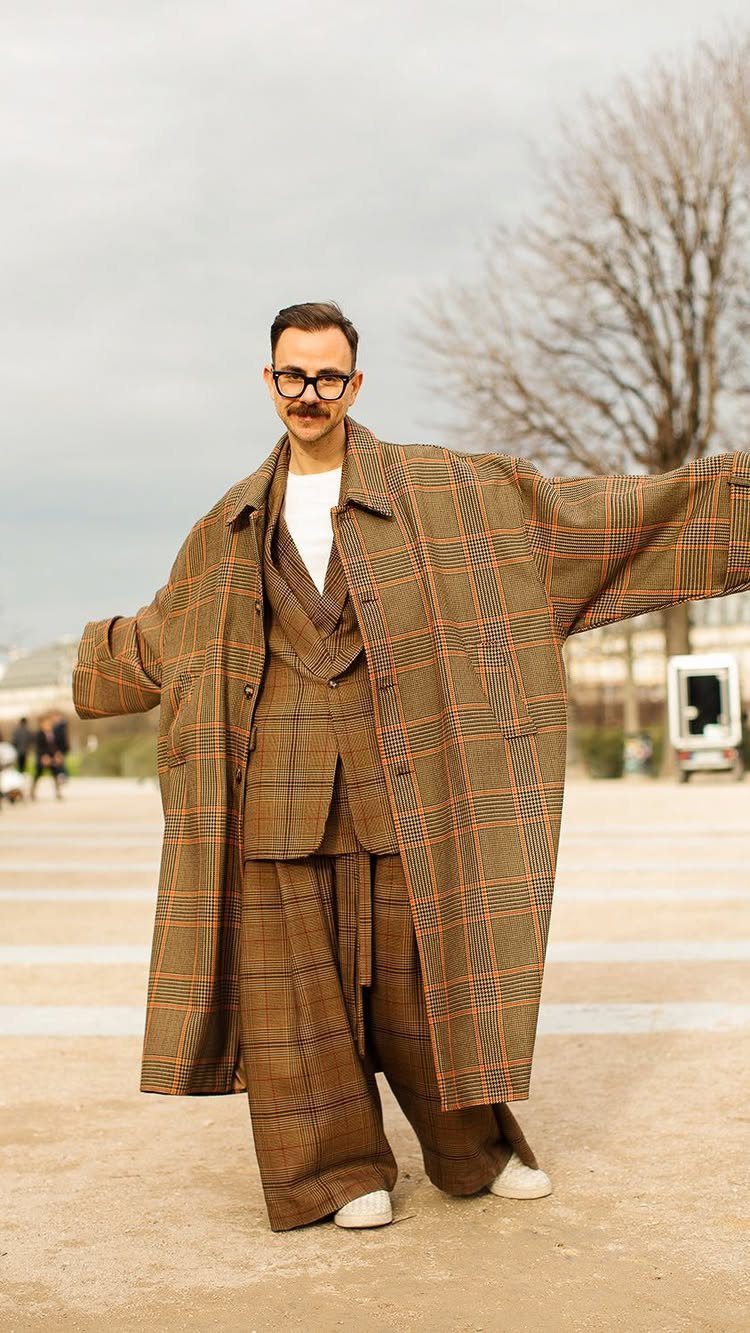
A brown plaid suit under a brown plaid trench is a bold move, and it only works because the pieces match in color and scale.
Buy them as a set, or at least from the same pattern family, since two near-misses will look like an accident.
The white t-shirt is the right call. It breaks up all that brown and keeps the look casual enough for a normal weekday.
Oversized cuts hang loosely, so I would keep the suit trousers slim to hold the shape together. If the coat swallows you, size down before you reach for a belt.
3. Trench Coat with Plaid Accents
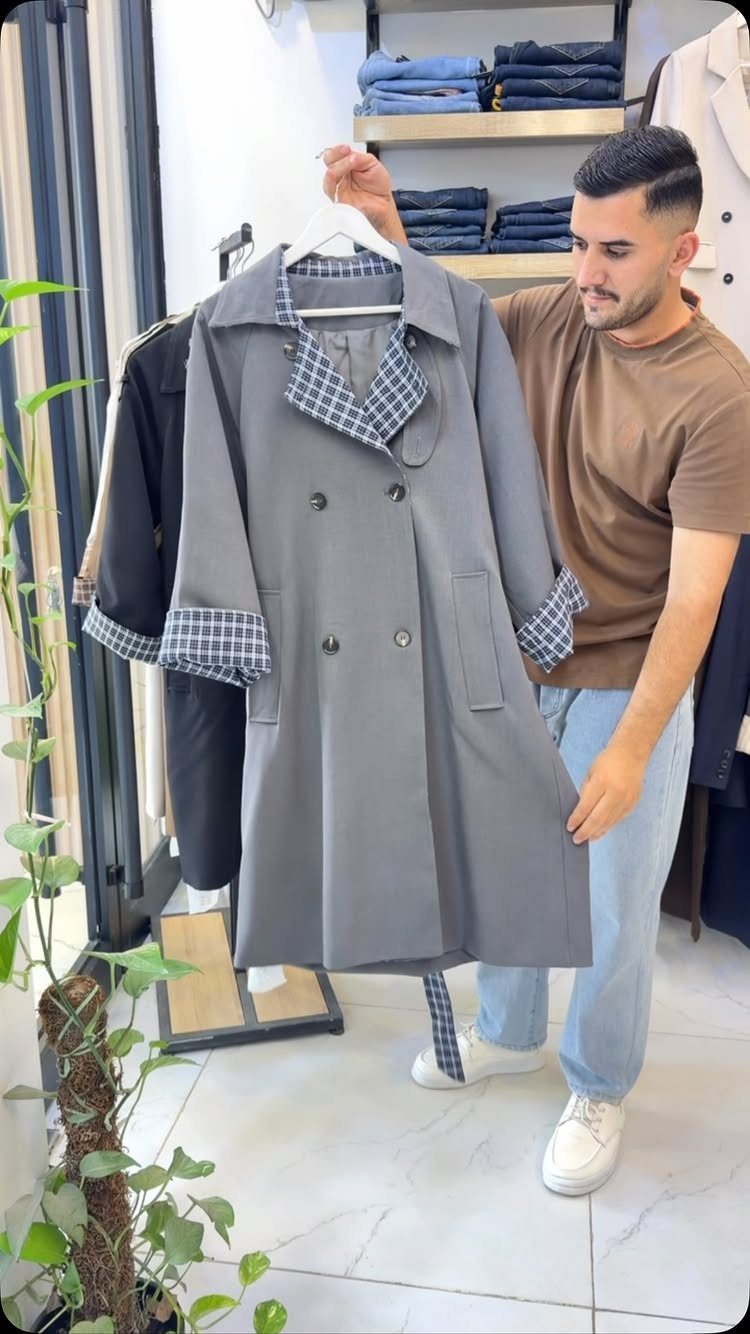
Plaid on only the collar and cuffs gives you the pattern without the commitment. A grey trench with blue plaid trim wears like a plain coat from a few feet away, then rewards a closer look.
This is the safest entry on the list for a man who worries about plaid being too loud. Grey goes with nearly everything in a closet, so the coat needs no special outfit built around it.
Try it on in person if you can. Trim details are easy to judge by eye, and the blue should sit well against your usual shirts and jeans.
4. Monochrome Outfit with Plaid Trench
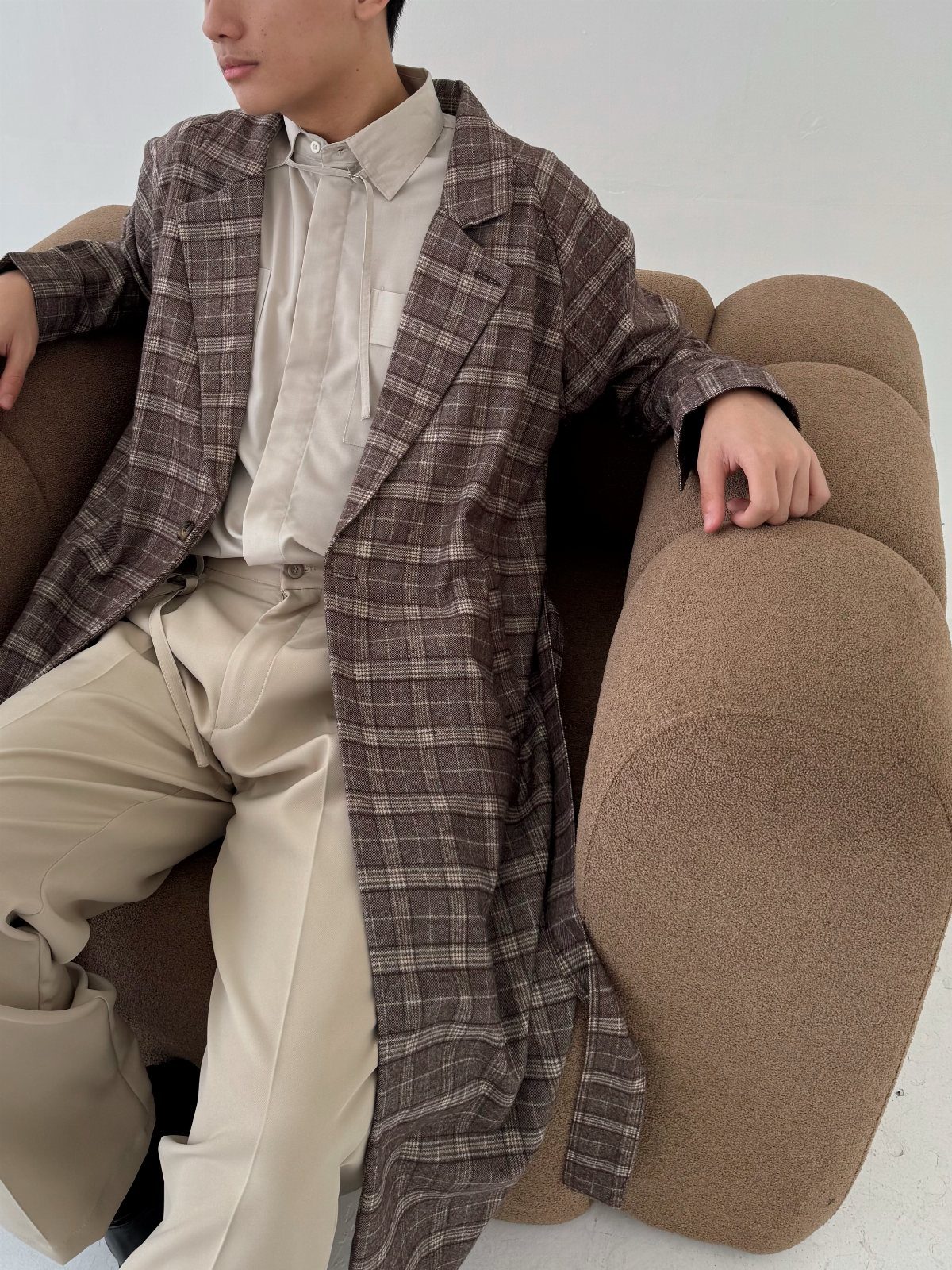
Beige on beige on beige, with a brown and white plaid coat on top, is an outfit that looks planned without much effort. Matching the shirt and trousers means the coat is the only thing doing the talking.
Stay within one color family and vary the texture a little, such as a knit shirt with smooth trousers, so the look does not go flat.
I like this for a day when you want to look sharp and not think about it.
Shoes in brown or white keep the palette clean. Tan is lighter than it seems, so keep it away from anything that stains easily.
5. Long Tan Plaid Trench Coat
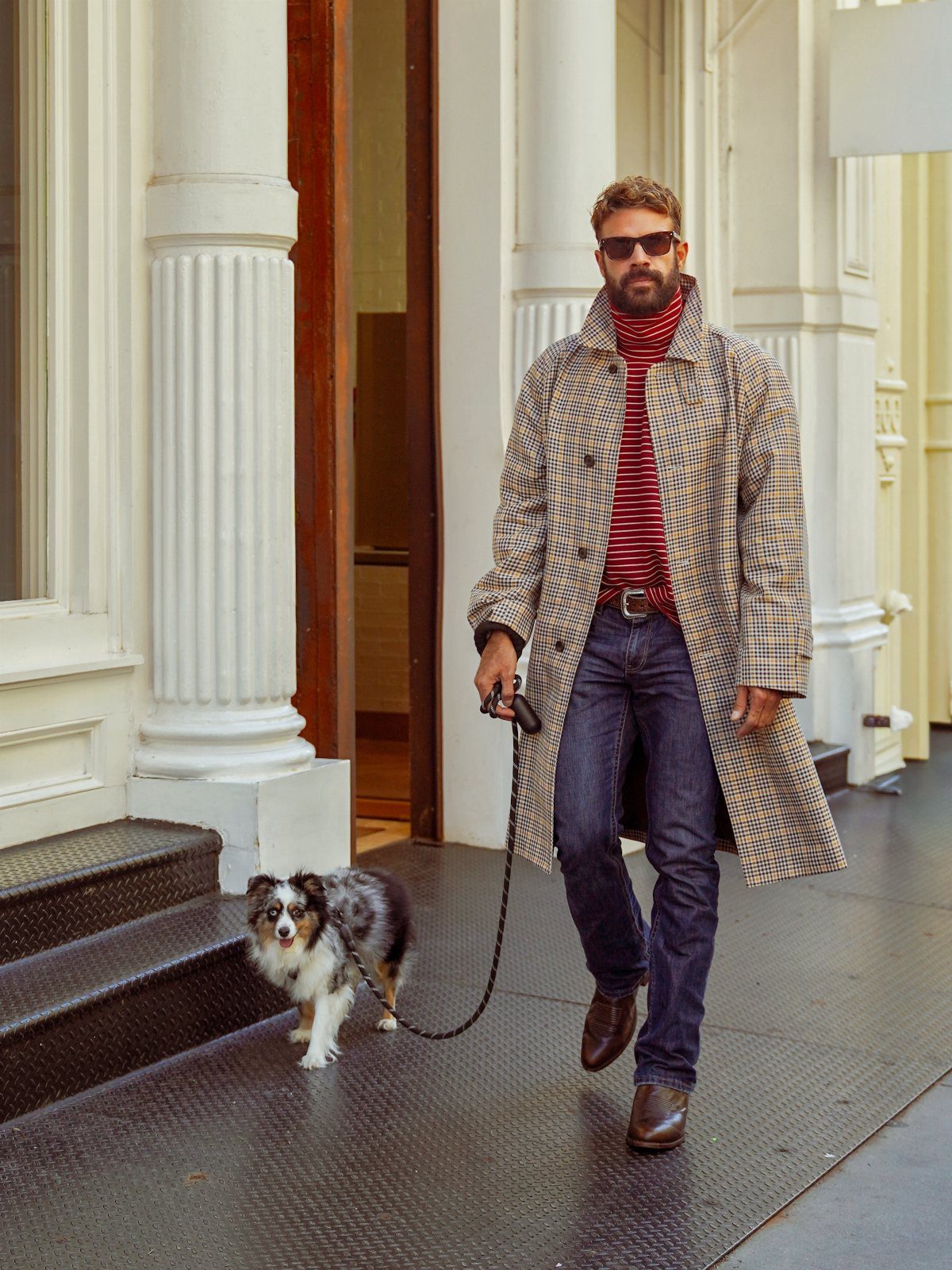
A long tan and brown plaid trench pairs well with dark jeans, and that contrast is what keeps the coat from feeling dated. Dark denim grounds the lighter plaid and stops it from drifting too beige.
A red striped sweater underneath adds one clear color without fighting the checks, because stripes in a single hue are calmer than a second pattern. Sunglasses finish it and cost almost nothing.
Long coats ask for a little more care with proportion. Hem length should clear the knee, and slim or straight jeans keep the silhouette tidy.
6. Plaid Trench Over Cream Suit
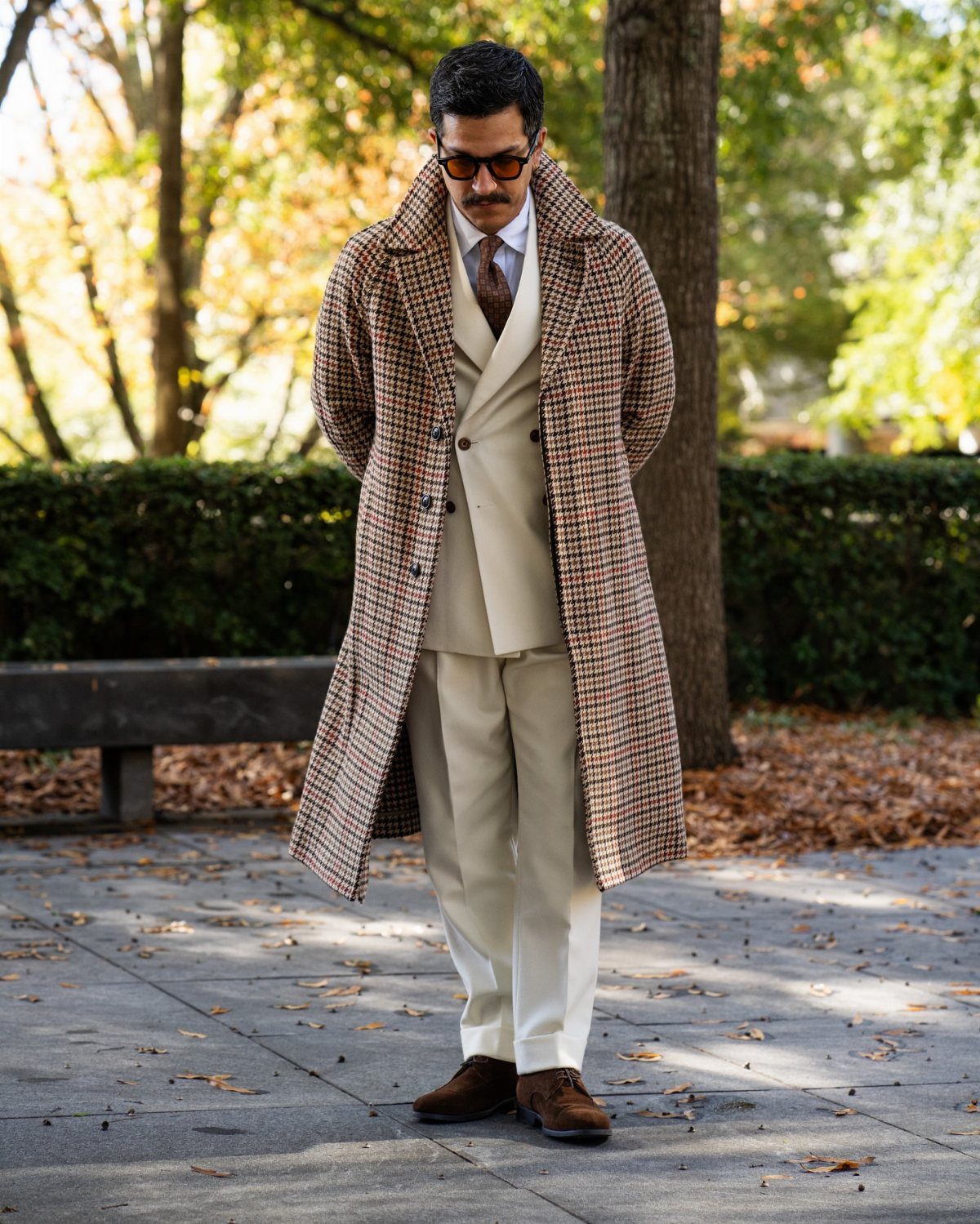
A brown and beige plaid trench over a cream suit and tie is the most dressed-up use of plaid here. The cream stays light and the coat adds warmth, so the two never compete.
Keep the tie plain, in a dark or earthy shade that picks up the brown in the coat. Add a patterned tie and you have 3 things fighting for attention.
For work or an event, this is the version I would choose. Cream shows dirt, so you need a dry cleaner and a clear forecast.
7. Plaid Trench with Colorful Sweater
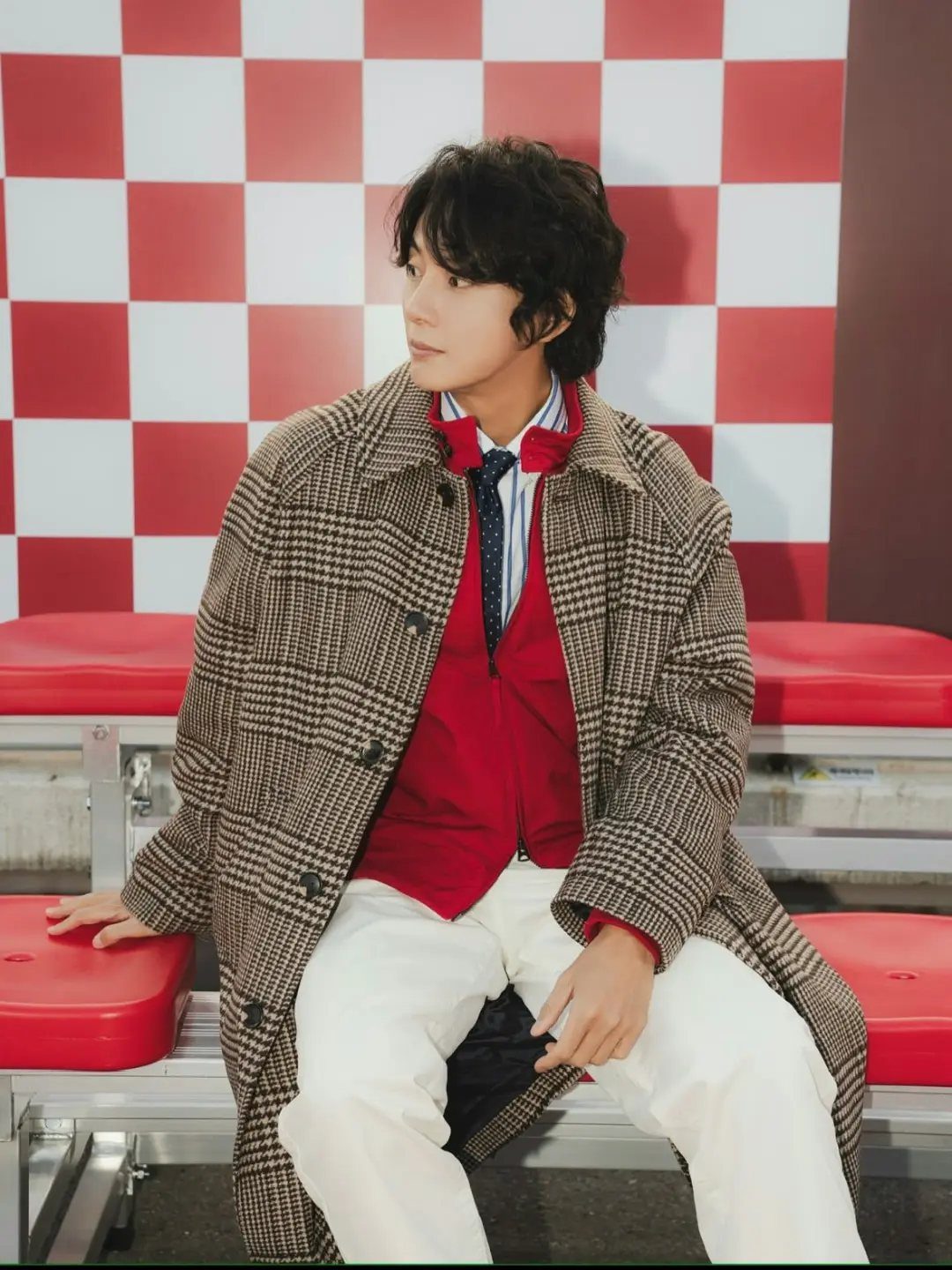
Red under a tan and brown plaid is a warm pairing, since the sweater picks up the reddish brown already in the coat.
White trousers keep everything below the waist bright, so the sweater gets to be the loud piece and nothing else competes.
The blue tie is the smart addition. Blue sits opposite red and orange on the color wheel, so it cools the look down and gives the neck area a clear focal point.
White trousers are the weak spot for daily wear. They show every scuff, so I would save this outfit for dry days, or swap in cream or light grey if you want the same effect with less worry.
8. Plaid Trench with Wide-leg Trousers
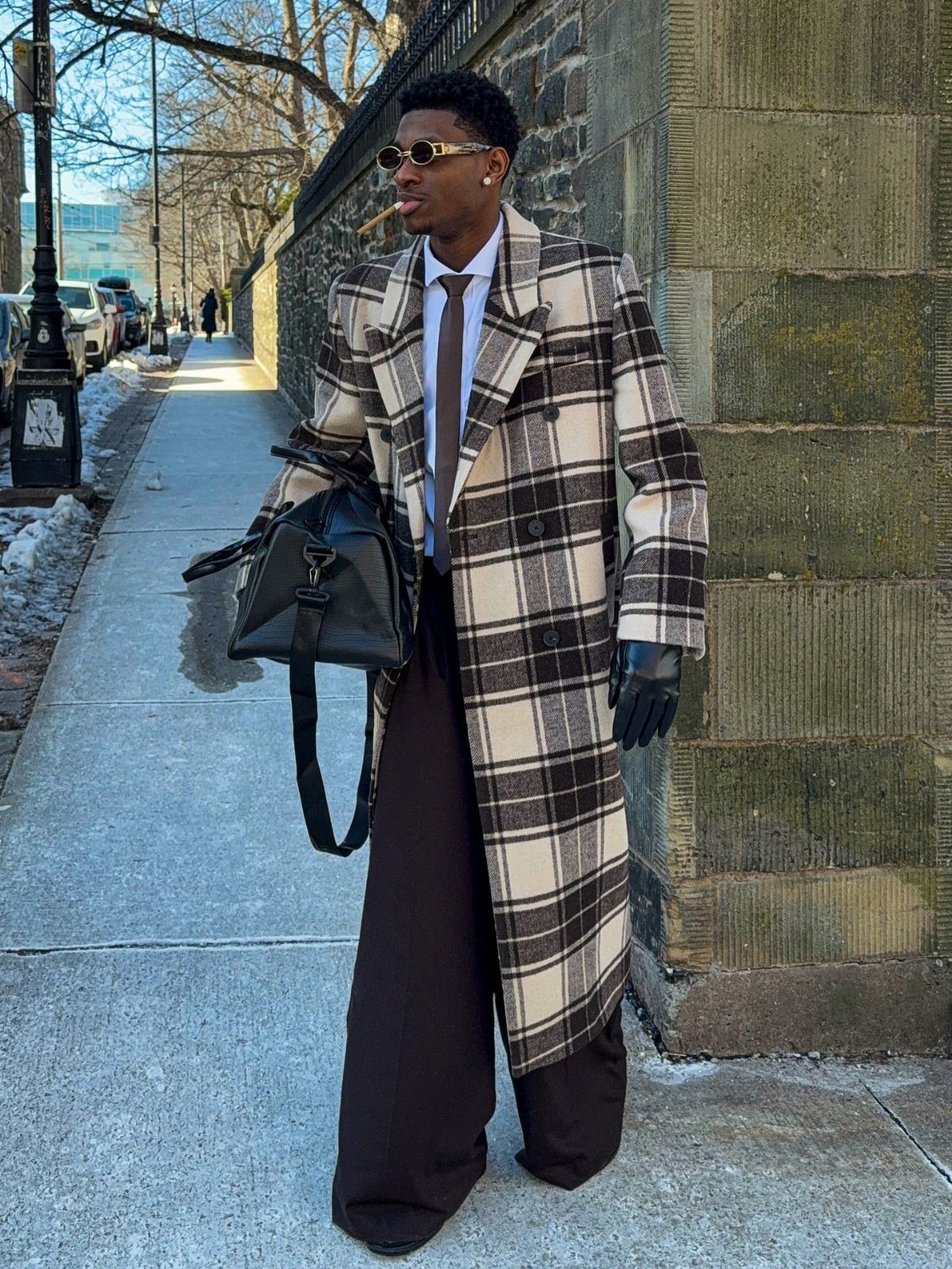
Wide-leg trousers in the same brown as the coat turn a long plaid trench into one tall, unbroken shape.
Matching the tones means the plaid reads as part of a single outfit and not as a coat thrown over something unrelated.
Black leather gloves and a black bag add a sharp contrast to all that brown, and sunglasses finish it. A tie keeps the look closer to work than weekend.
Wide legs need room to hang, so I would choose trousers that reach the top of your shoe and not pool at the ankle.
Shorter men should keep the coat hem close to the trouser break, which keeps the line long and clean.
Trench Coat Materials
Gabardine cotton is the traditional fabric for a trench, and it earns that spot: it is durable and water-resistant, which is what the coat was built for. If you wear a trench in actual rain, start with that fabric.
Burberry is the name tied to it, since Thomas Burberry patented gabardine. The design dates back more than 100 years, and the maker backs it with a 2-year warranty, then offers repairs for life at a charge once that runs out.
The price of that history is a higher cost, so decide whether the repair service matters to you.
Custom makers fill the gap if you want another color or cut: they work with several water-resistant fabrics, and the colors run from classic beige to navy and black.
Belt style, hem length and the smaller details are all yours to pick. Navy and black are easier to keep clean than beige.
Trench Coat Features
Double-breasted fronts, storm flaps and epaulettes are the common trench features, and each one is optional in practice.
Epaulettes are the shoulder straps with buttons. They are decoration for most men, so a coat without them looks cleaner and a little more modern.
A minimal version can also drop the storm vent and go single-breasted with a button vent. That suits a man who wants one coat for the office and for dinner afterward.
Before paying, pull on the belt and the cuff tabs to confirm they actually adjust and hold.
Tightening the cuffs keeps wind and rain out and protects a good watch. Raglan sleeves, which run in one line from collar to underarm, also make the coat easier to layer over a jacket.
Sizing matters too. One Burberry style runs 32–50 in three lengths, so pick the length first, then the chest.
To help replicate that formative experience, GQ Recommends went deep on the absolute best men’s trench coat for stylish fellas of every stripe, each one ready and raring to stylishly dodge rain, snow, and all manner of sludge for years to come.
— GQ
Frequently Asked Questions
What is a trench coat?
Picture a raincoat cut with a double-breasted front, a belt at the waist, and a hem that lands at the knee or a bit lower: that is a trench.
Gabardine, the tightly woven cotton that breathes yet sheds water, came from Thomas Burberry, and British army officers wore it in the trenches in the early 1900s. That is where the name comes from.
Is a trench coat a raincoat?
It works as a raincoat, but only up to a point: the fabric resists water without being fully waterproof, so a long downpour will eventually get through.
Traditional gabardine cotton earns its place because it is tough and turns water away, the job the coat was designed for.