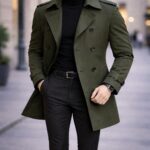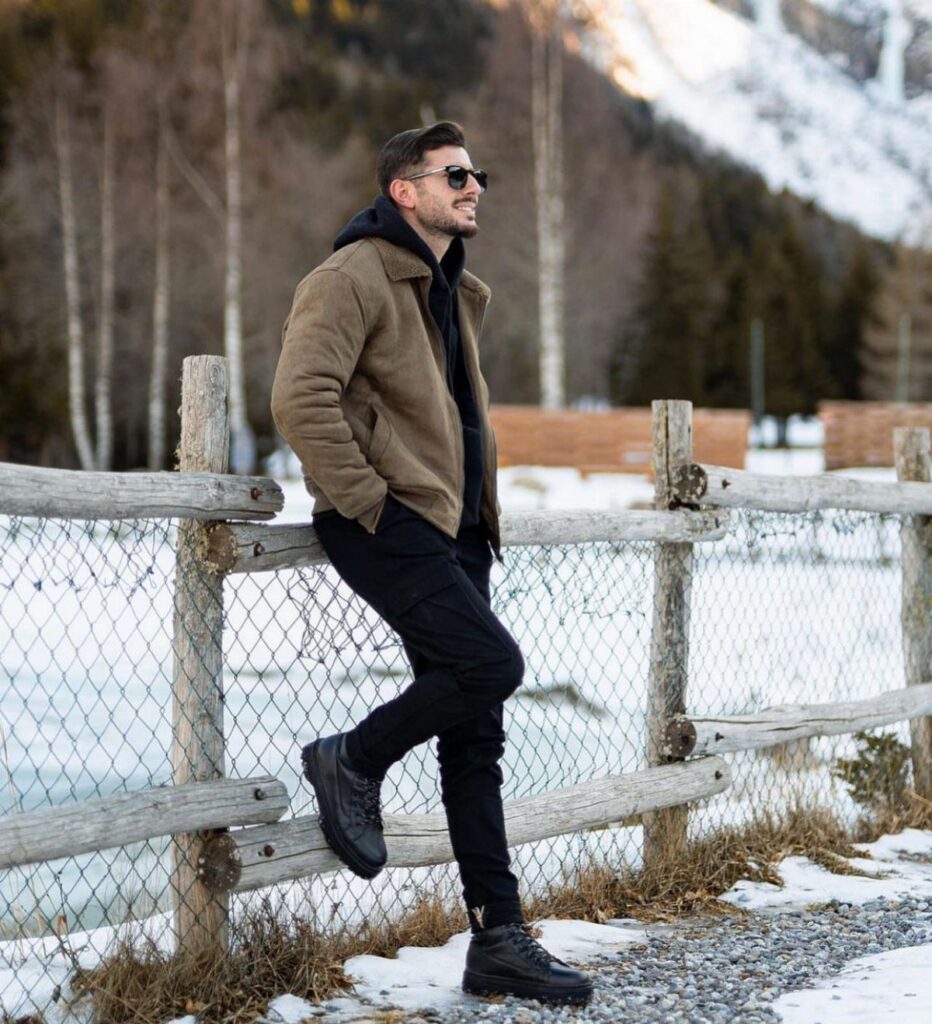
Your climate decides which of these jackets is yours: down wins on cold, dry days, while synthetic fill costs less and keeps insulating after a wet commute.
The list runs from a structured wool pea coat to a thin technical shell that needs a fleece underneath, and from a hooded parka to a long leather coat with a fur collar that I’d only wear on days I want to be noticed.
Weather decides the material, so start with the cold you actually get, then let fit and build pick the cut.
1. Pea Coats
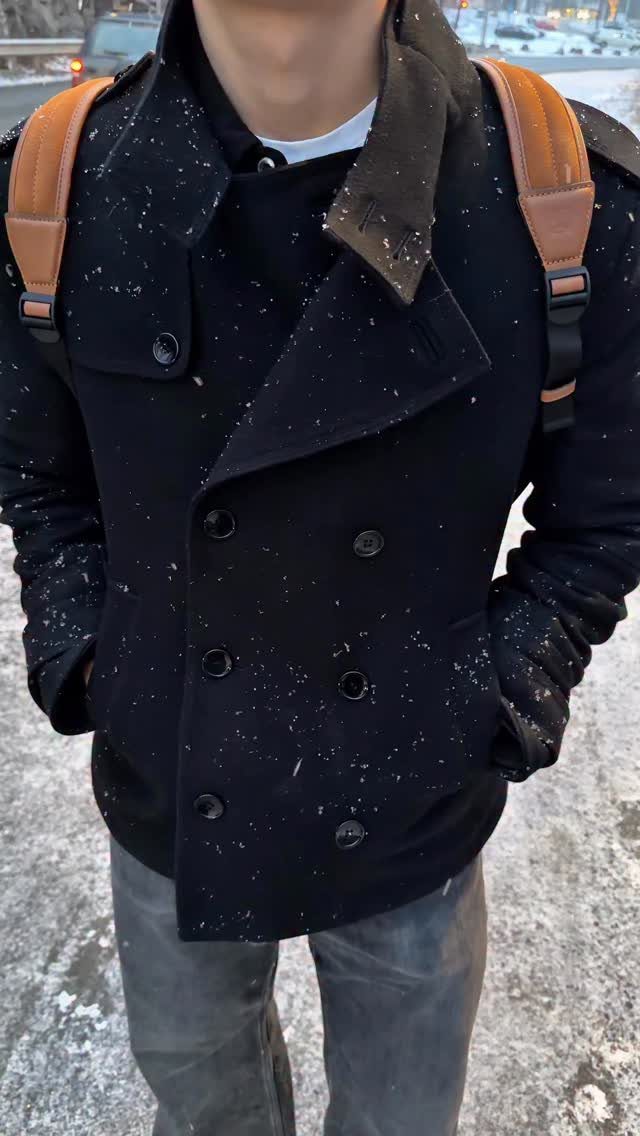
A black double-breasted pea coat does more than most coats to make plain grey jeans look deliberate. Wool is the classic material here, and the short, structured cut keeps everything tidy without looking dressed up.
Black repeats well across a week, since it sits with denim, chinos and boots. I would pick a coat that ends around the hip, so it layers over a sweater and still lets your jeans show.
A brown backpack softens the formality. One practical limit: a pea coat is a style piece first, so check that you can fit a thick knit under it before you buy.
2. Fleece Jackets
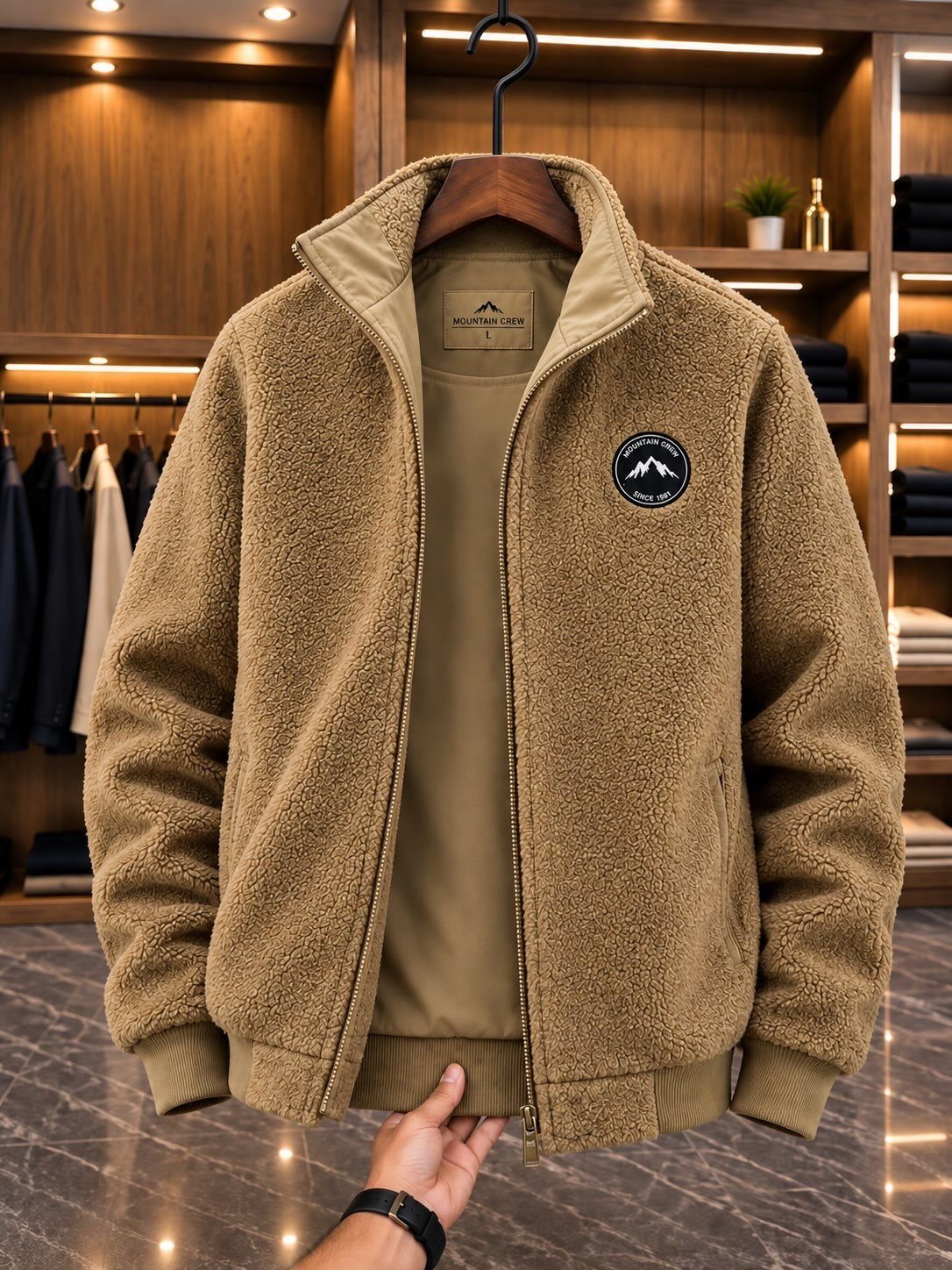
Fleece earns its place in a closet because it is soft, warm and takes no effort to wear.
A tan fleece with a small chest patch reads casual, so I treat it as a weekend layer rather than a work one.
Tan is a smart color choice. It pairs with dark jeans, olive pants and black boots, and it brightens a winter wardrobe that leans heavily on black and navy.
Wear it as a mid layer under a shell or parka when the temperature really drops. On milder days it can be the only layer you need.
Hang it rather than stuffing it in a drawer, so the pile keeps its loft.
3. Casual Hooded Parkas
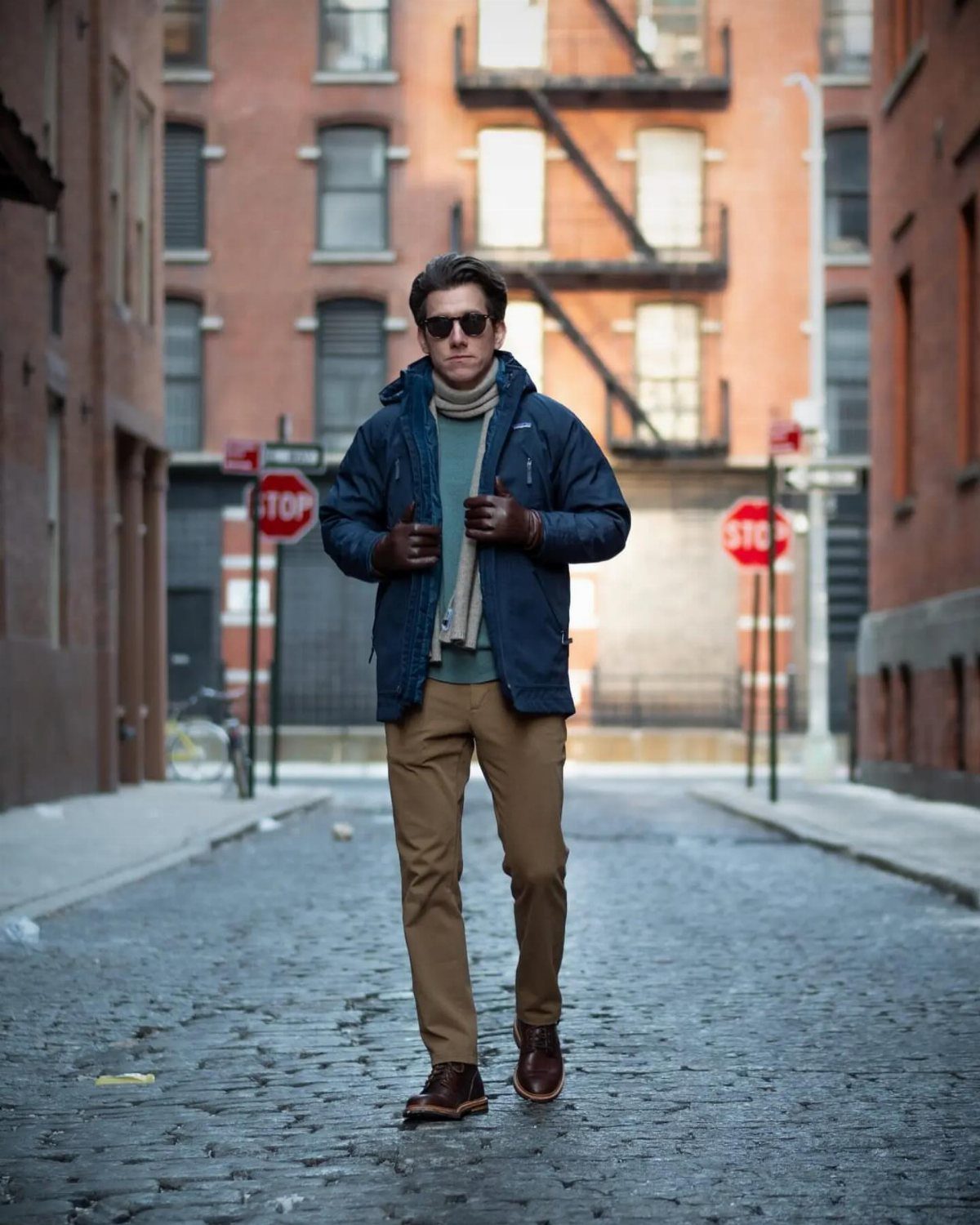
Hood up or down, a navy parka with tan trousers and brown boots is a combination I would copy as is. The navy is dark enough to look clean, and the tan keeps the outfit from feeling heavy.
A parka suits men who walk, commute or wait for buses in cold air and don’t want to think about it. The hood does the job a scarf and hat would otherwise share.
Choose brown boots over sneakers when streets are wet, and keep the trousers a little relaxed so the parka’s bulk doesn’t overpower your legs.
Navy is the most flexible color you can buy in this style.
4. Classic Wool Overcoats
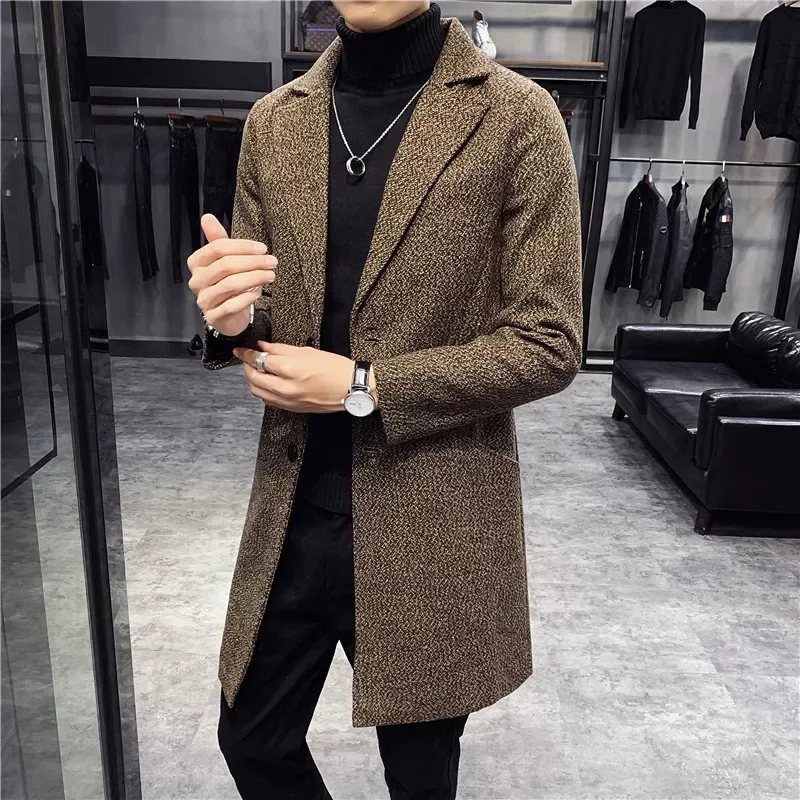
Long wool overcoats are the one piece that makes a simple outfit look finished.
Texture matters more than pattern. A coat with visible weave adds depth, so the layers beneath can stay plain and dark.
Fit is where I’d spend my attention: the shoulders should sit flat, and the sleeves should leave room for a knit. The length should land somewhere around the knee.
Brown is a nice break from the usual charcoal and navy, and it still works with black underneath. Wool needs more care than a synthetic jacket, and heavy rain works against it.
5. Everyday Quilted Puffer Jackets
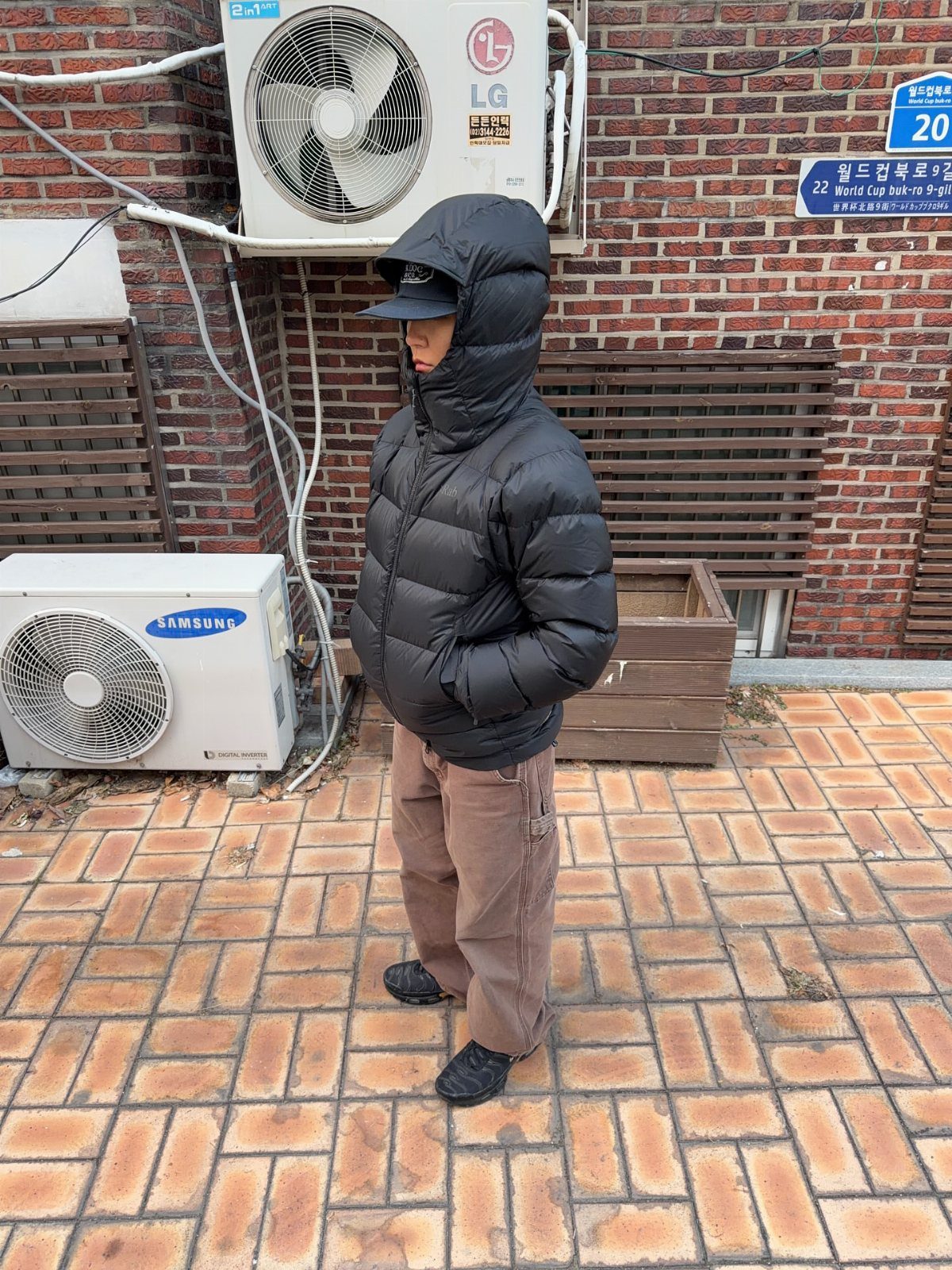
A short black puffer with a hood is the winter jacket I’d hand to anyone who wants zero effort. Quilted baffles hold warmth in, and the cut stops at the hip, so it moves easily with you.
Keep the rest simple: one color for the jacket, one for the pants, and let the cap repeat the jacket.
I prefer a hooded version because it adds cover without adding another accessory.
It’s casual, so it won’t suit a formal office. For that, swap to a wool coat and keep the puffer for everything else.
6. Leather Shearling Jackets
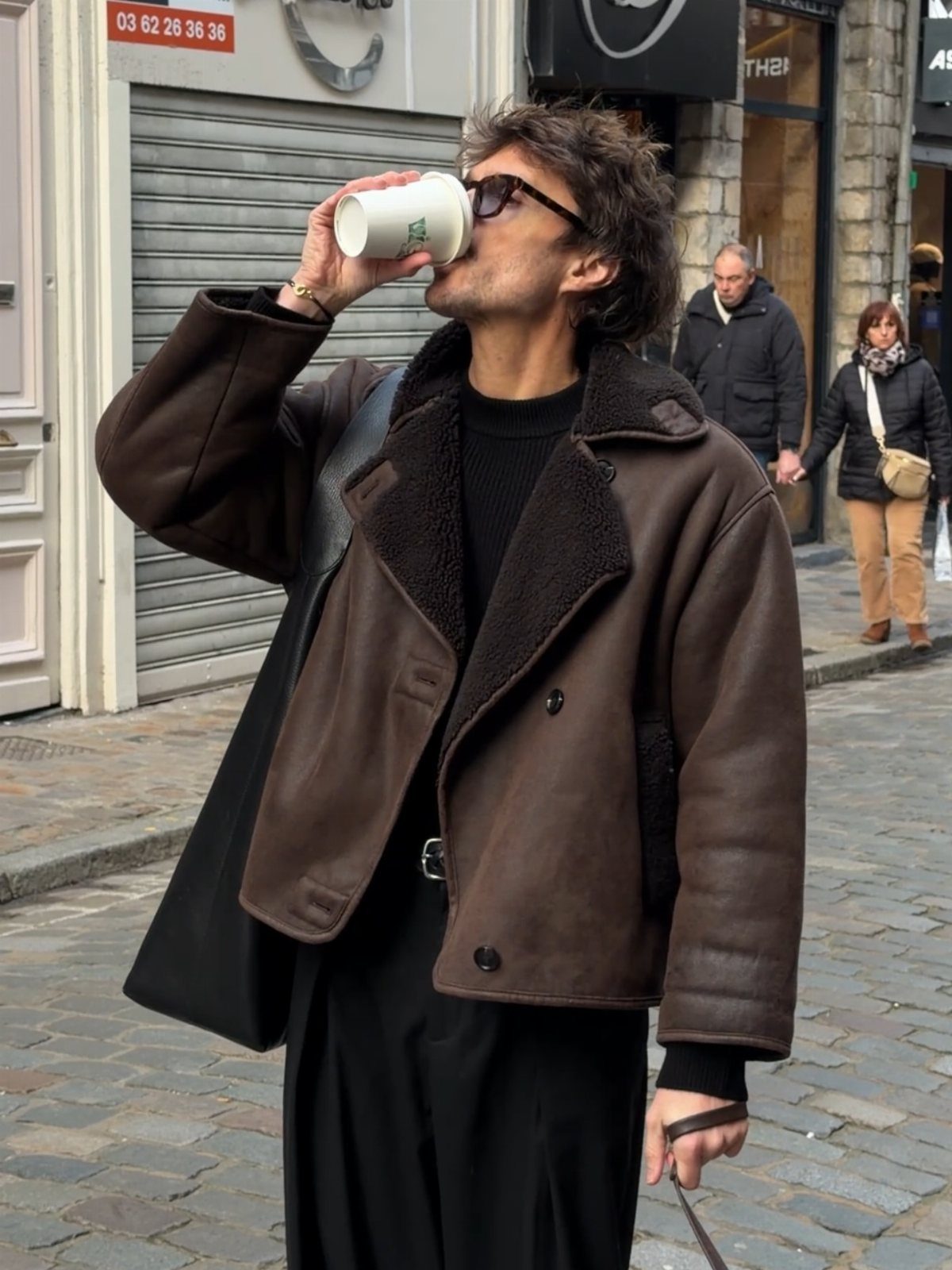
Shearling jackets bring leather’s sharp look and a warm lining together. A brown one with black trousers is simple, and the color alone gives it a rich, lived-in feel.
Dark trousers are the right partner because they let the jacket be the one piece with character. Add a plain sweater or tee underneath and you’re done.
Expect it to cost more than a nylon puffer; this is a piece you buy once and wear for years. Leather also dislikes soaking rain, so I’d keep it for dry, cold days around town.
Brown is more forgiving than black, since scuffs blend into the color.
7. Long Black Puffer Coats

A full-length black puffer works like a sleeping bag with sleeves, and it hides whatever you wear under it. That makes it easy: black pants, white sneakers and a white scarf are all the outfit needs.
The scarf does the styling work here. White against black draws the eye up and breaks the long dark column of the coat.
Length is the choice to think about. A coat this long covers your legs on a cold walk, but it can swamp a shorter frame, so try it on and check that the hem doesn’t swallow your knees.
Keep the shoes clean and light, and the whole look stays sharp.
8. Long Leather Fur-Collar Coats
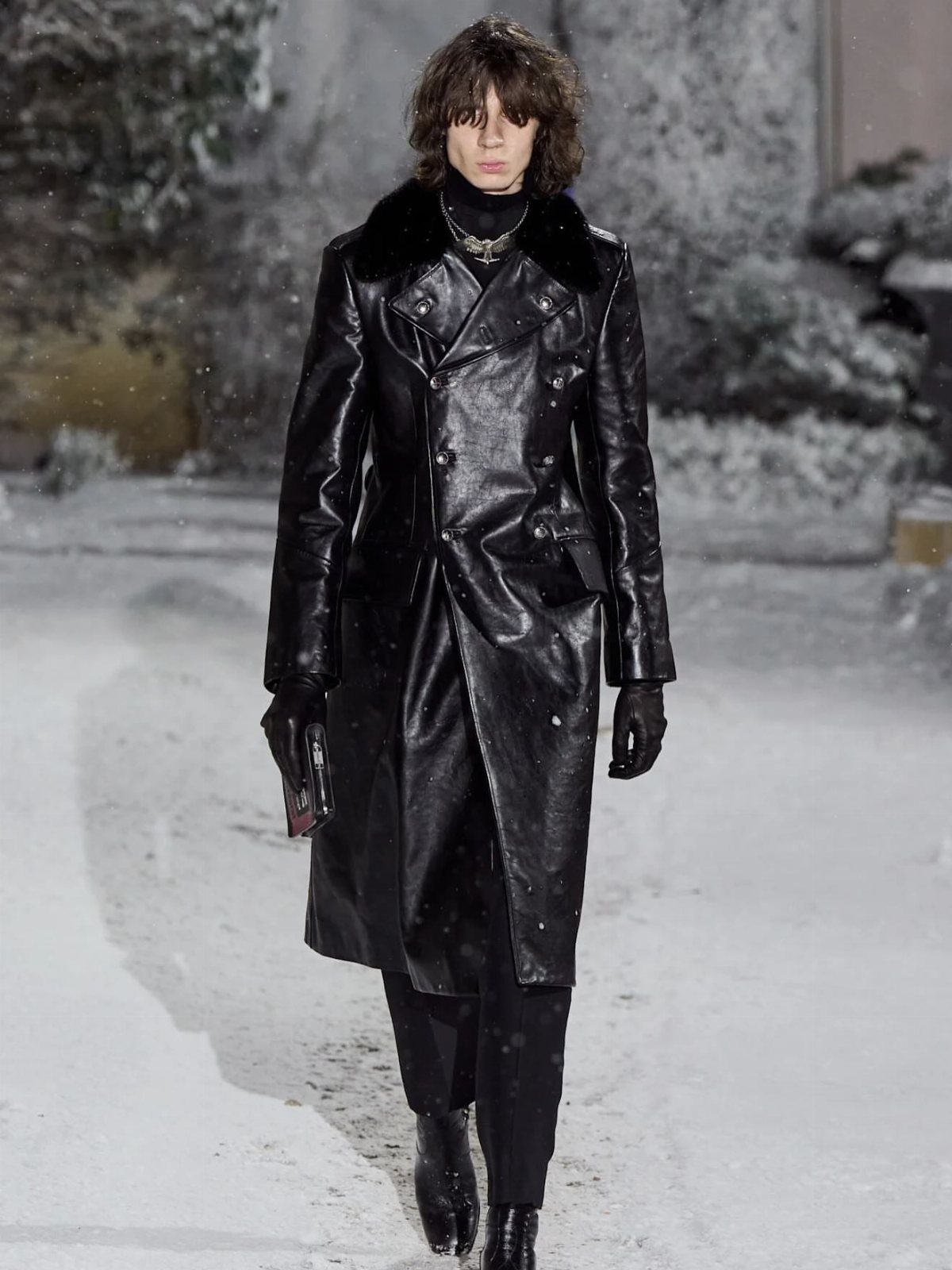
Black leather with a dark fur collar is the most dramatic coat of the bunch, and I’d only wear it on days I want to be noticed. The collar frames the face and keeps the neck covered without a scarf.
Let the coat be the only loud thing: plain dark knits, slim trousers, and simple boots. Black trousers and boots let the coat carry the outfit, and a plain knit underneath is enough.
Leather dislikes soaking, so snow is fine when it stays dry and powdery, but a wet slush day is better spent in something else.
I’d also expect to pay more for this than for a nylon coat, since it combines leather and fur.
It suits a man who wants one statement piece, not a closet of them.
The stylish know there’s no such thing as bad weather as long as the best men’s winter coats are involved. Sub-zero windchills, sheets of ice falling from the sky, sideways snow: The right coat will have you feeling blissfully unaware.
— GQ
9. Technical Shell Jackets
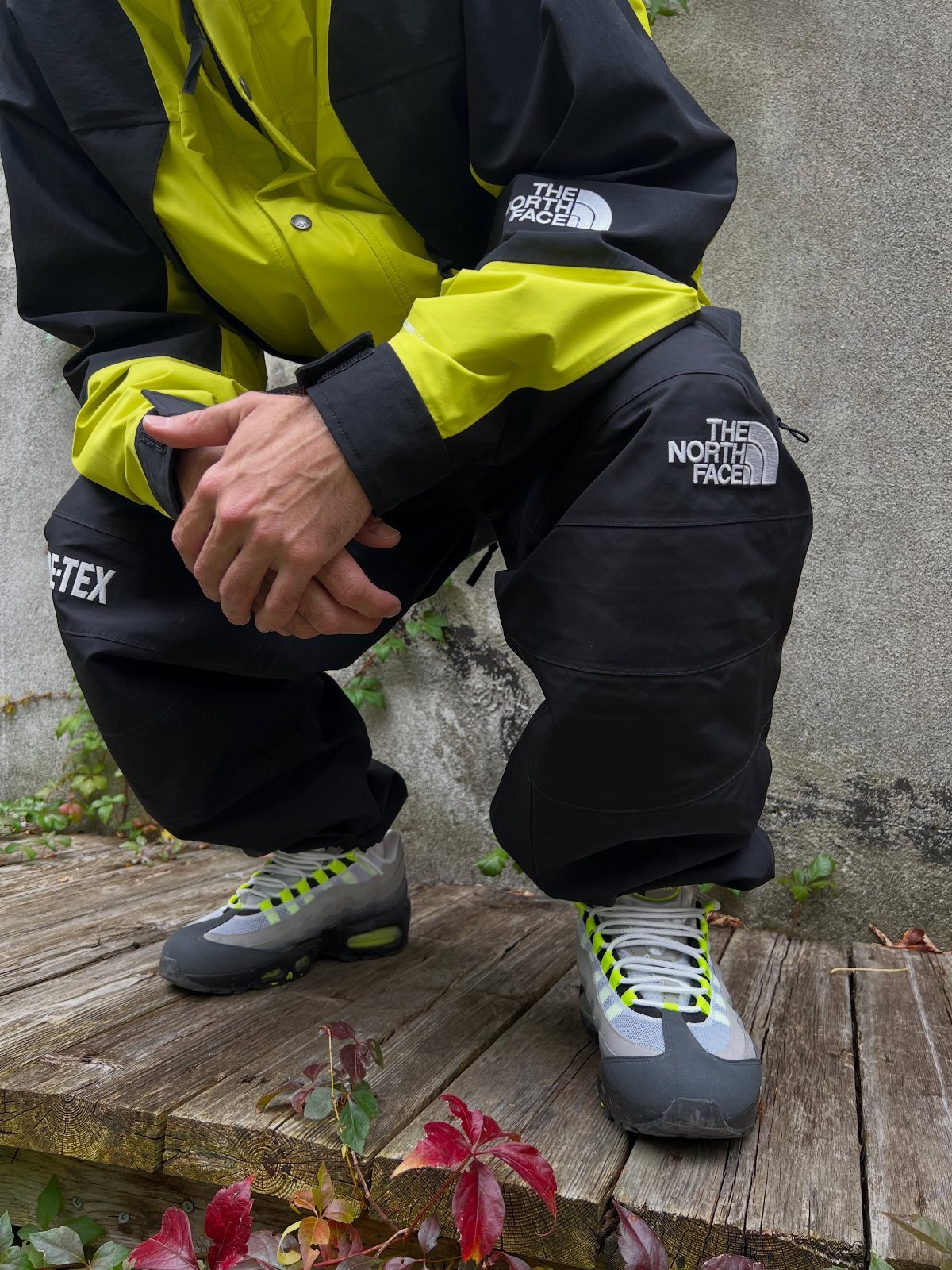
A technical shell is built for weather first and looks second, and the yellow and black version here shows that bright color is part of the appeal. It stands out on gray days and keeps you easy to spot.
Match the function. Waterproof black pants keep you dry in rain or wet snow, and grey sneakers with a neon accent pick up the jacket’s loud color.
A shell is thin, so it won’t warm you alone. Put a fleece underneath when it’s cold, as in entry 2, and the two make a flexible pair.
This is the right pick for hiking, wet commutes and anyone who values dry over dressy. It isn’t an office coat.
10. Grey Hooded Utility Jackets
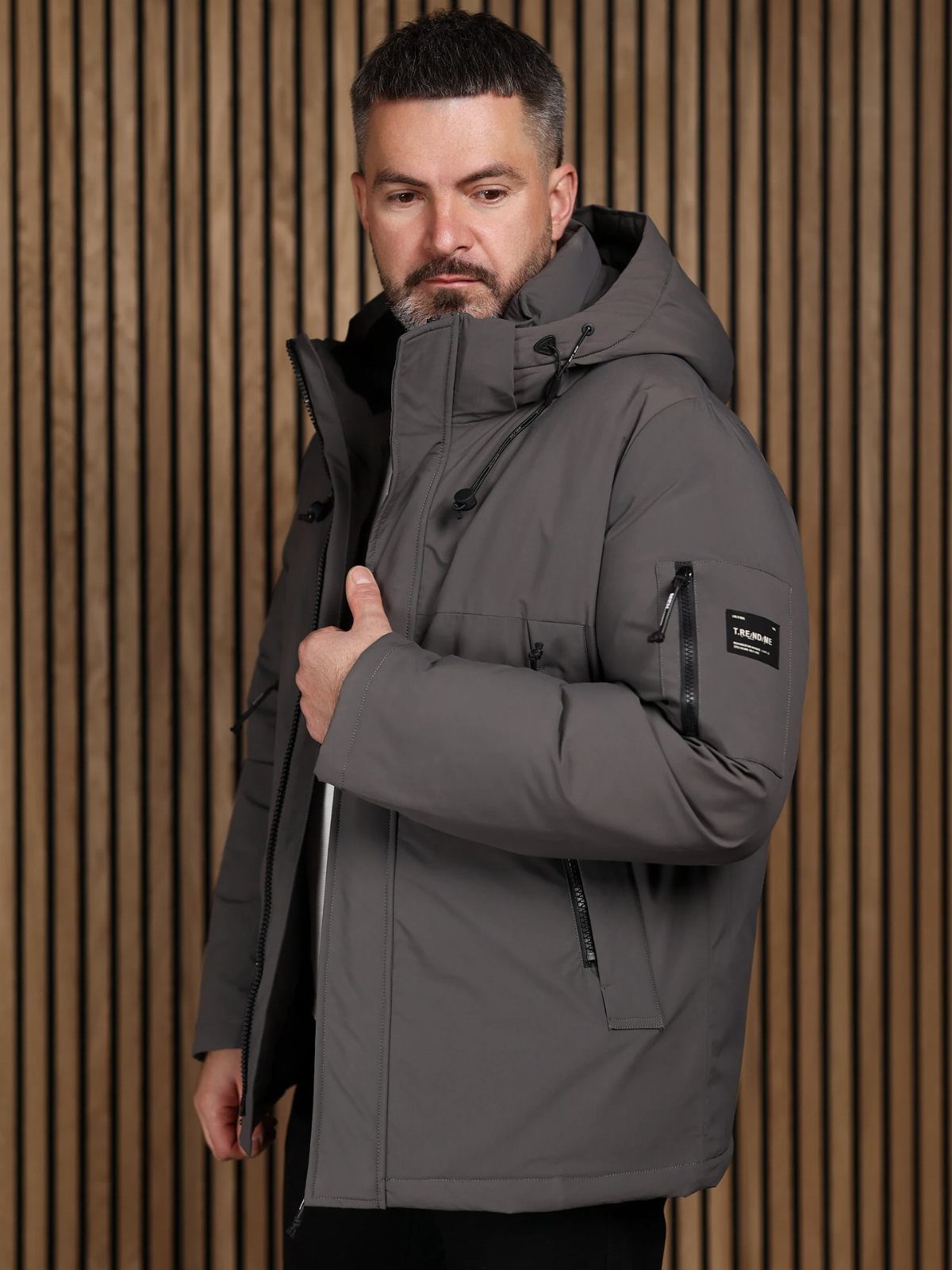
Grey is the quiet choice in a utility jacket, and it goes with nearly everything you already own. The hood and zip details give it a practical edge, while the sleeve pocket adds a small, useful bit of character.
Pockets are the reason to buy this style. Having somewhere for keys, a phone or a transit card on the sleeve means fewer trips into your pockets in the cold.
Wear it with dark jeans, black boots or plain sneakers and a simple tee or sweater. I’d keep the rest of the outfit solid, since the jacket already has enough going on.
It’s casual, so save it for weekends and errands.
How to Choose a Winter Jacket
Insulation is the first decision.
Down gives you more warmth for every ounce, which is why it wins for cold, dry days; synthetic fill costs less and still insulates after a wet commute, so I’d pick it if your winters run damp.
If your winters are wet, that second point can outweigh the weight savings.
More insulation isn’t always better. Linings such as flannel, wool, fleece or corduroy help trap heat, but the fill does the heavy lifting, so match it to your actual climate rather than the coldest day you can imagine.
Then check fit against your build. On a lean frame, structured cuts like pea coats or bombers add shape.
Broad shoulders do well in an overcoat with defined shoulders. If you have broad shoulders and a trim waist, a puffer suits you well, and it leans sporty in a way that looks good on that frame.
Tall men can carry a longer parka, and shorter men look better in a jacket that ends above the hips, which lengthens the legs.
A poorly fitted jacket looks bad no matter how good the style is.
Layering for Warmth
Start with a thermal base layer against your skin, then add fleece on top. Each layer traps its own pocket of warm air, which works better than one thick garment.
A fleece mid-layer has 2 limits.
A fleece mid-layer is rarely waterproof, so a winter downpour will leave you cold and uncomfortable, and it can be bulky, which makes it a poor choice when you need to carry a layer in a bag.
For that reason, I put fleece in the middle and let the jacket handle the weather.
Leave room in the jacket for the extra layers, because a tight fit compresses the insulation and cuts the warmth you were trying to add.
Sustainability in Winter Jackets
Many current winter jackets are made with recycled or upcycled materials, and some use ethically sourced down.
Check the tag or the product page for those claims before you buy, because they are easy to spot when a brand is proud of them.
If you choose down, look for a statement about how it was sourced.
If you prefer synthetic, look for insulation made from recycled content. Synthetic also costs less and keeps its warmth when soaked, so the greener pick doesn’t have to be the weaker one.
The most sustainable jacket is also the one you wear for years, so favor sturdy construction and a cut you won’t tire of.
Frequently Asked Questions
What should I look for in a winter coat?
Start with insulation, then check water resistance and fit. Down packs the most warmth into the least weight and does best in cold, dry air; synthetic fill is cheaper and holds its heat when it gets wet.
More fill isn’t always better, so match it to your real climate, and let linings like flannel, wool, fleece or corduroy add a little extra heat.
How do I choose the right winter jacket for my body type?
Pick the cut that suits your frame. Lean builds look good in structured styles like pea coats or bombers, and broad shoulders suit an overcoat with defined shoulders.
Broad shoulders with a trim waist work well in a puffer. A longer parka suits a tall frame, but if you’re on the shorter side, pick a jacket that stops above the hip so your legs read longer.
Is down or synthetic insulation better for a winter jacket?
Down wins for cold, dry weather because it gives more warmth for its weight.