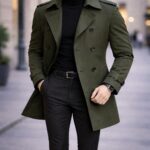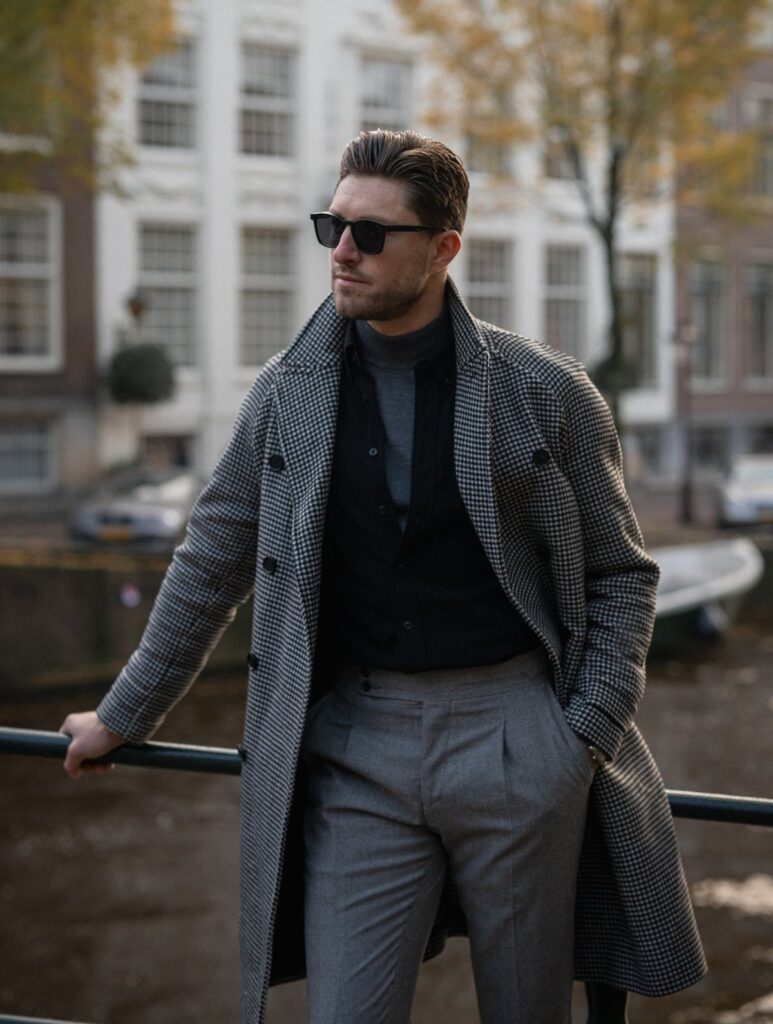
A coat for the office and a coat for Saturday are cut differently: over a jacket you want a clean, structured shoulder, and for weekends a roomier fit is fine.
The list covers navy, grey herringbone, black and olive shearling-lined versions, styled with everything from a turtleneck and jeans to wide-leg trousers. Before color, check the label and the weight, since a good peacoat is usually 24–32 ounces of Melton wool.
1. Double-Breasted Heavyweight Wool Peacoat
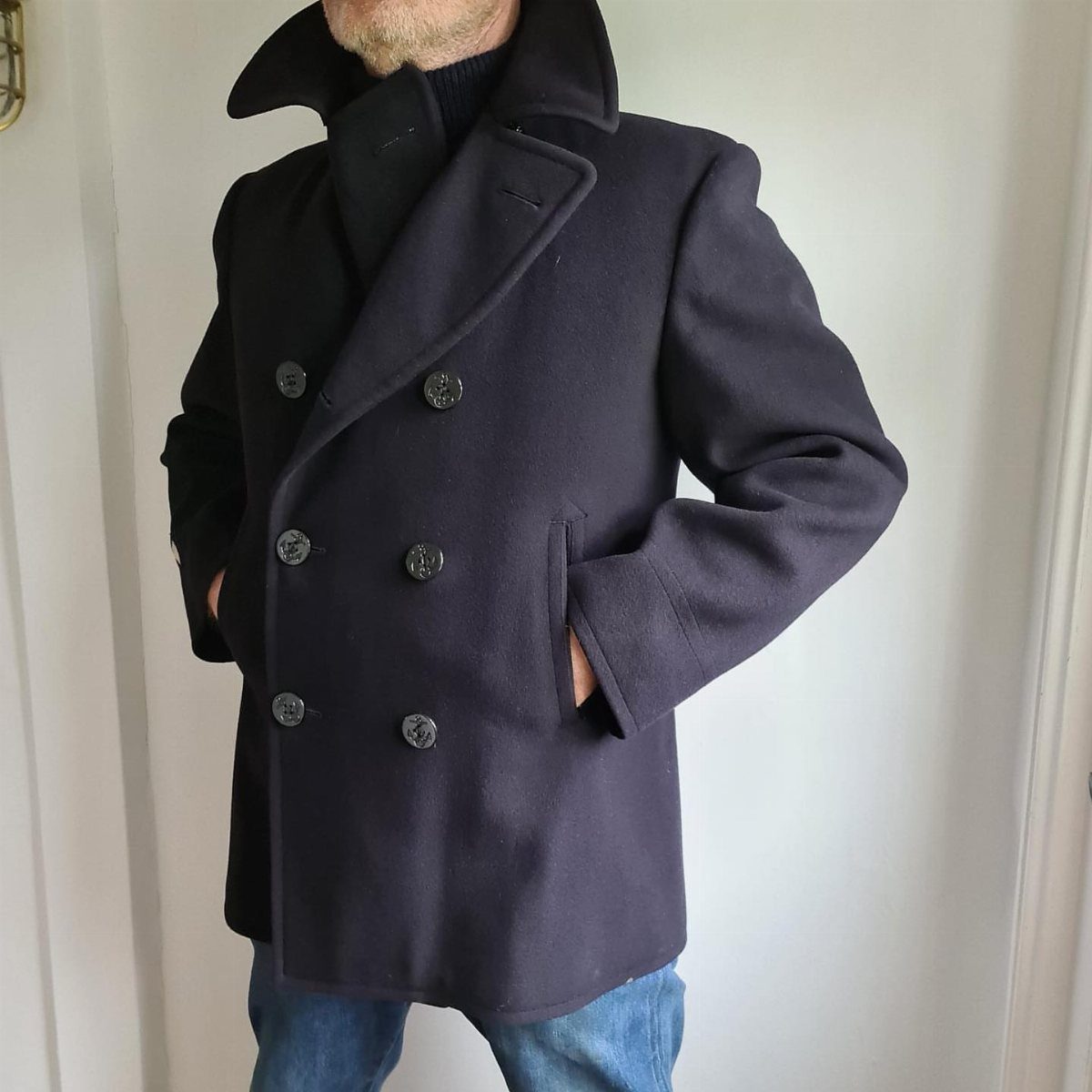
Heavyweight wool is what makes a peacoat work as a real winter layer, and the double-breasted front is what makes it look like one.
Keep everything underneath simple and let the coat do the talking. Button it fully on the coldest days; leave the top button open when it’s mild.
Heavy cloth hangs better, but it weighs more, so try it on and move your arms before you buy.
2. Peacoat with Turtleneck and Jeans
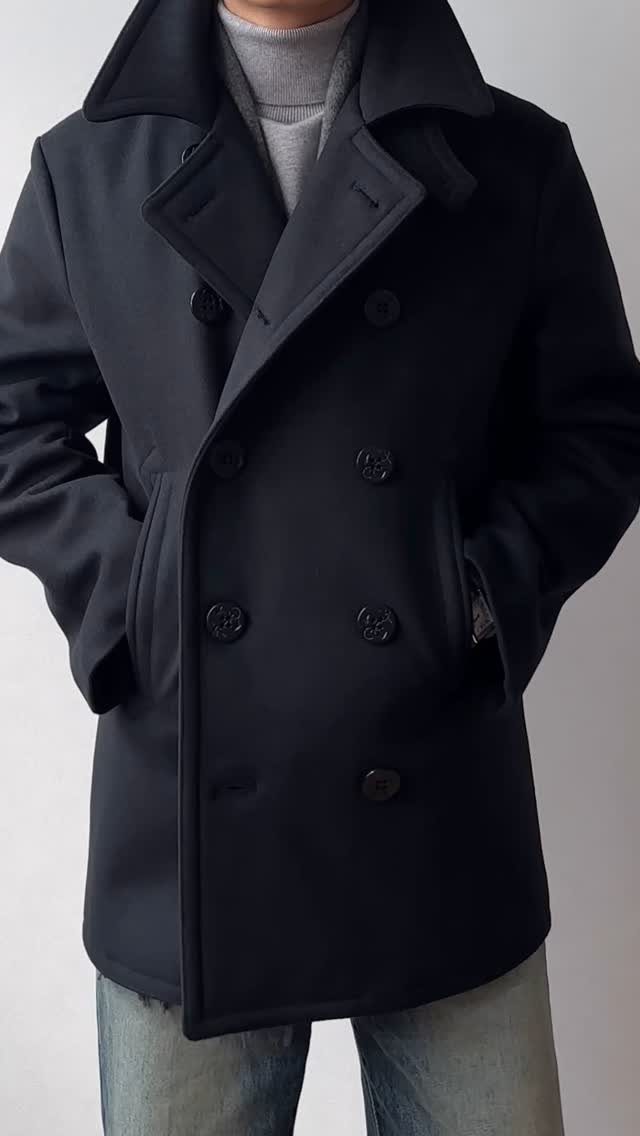
A light grey turtleneck under a navy peacoat softens the whole look. The contrast is gentle: dark coat, pale knit, blue jeans, and nothing competes.
I like this because it comes together quickly and works on a normal weekday. Pick a fine-gauge knit so the collar sits neatly under the lapels instead of bunching.
Keep the jeans plain, dark or mid-wash, without rips. Brown boots or clean white sneakers both finish it.
3. Shearling-Lined Green Peacoat
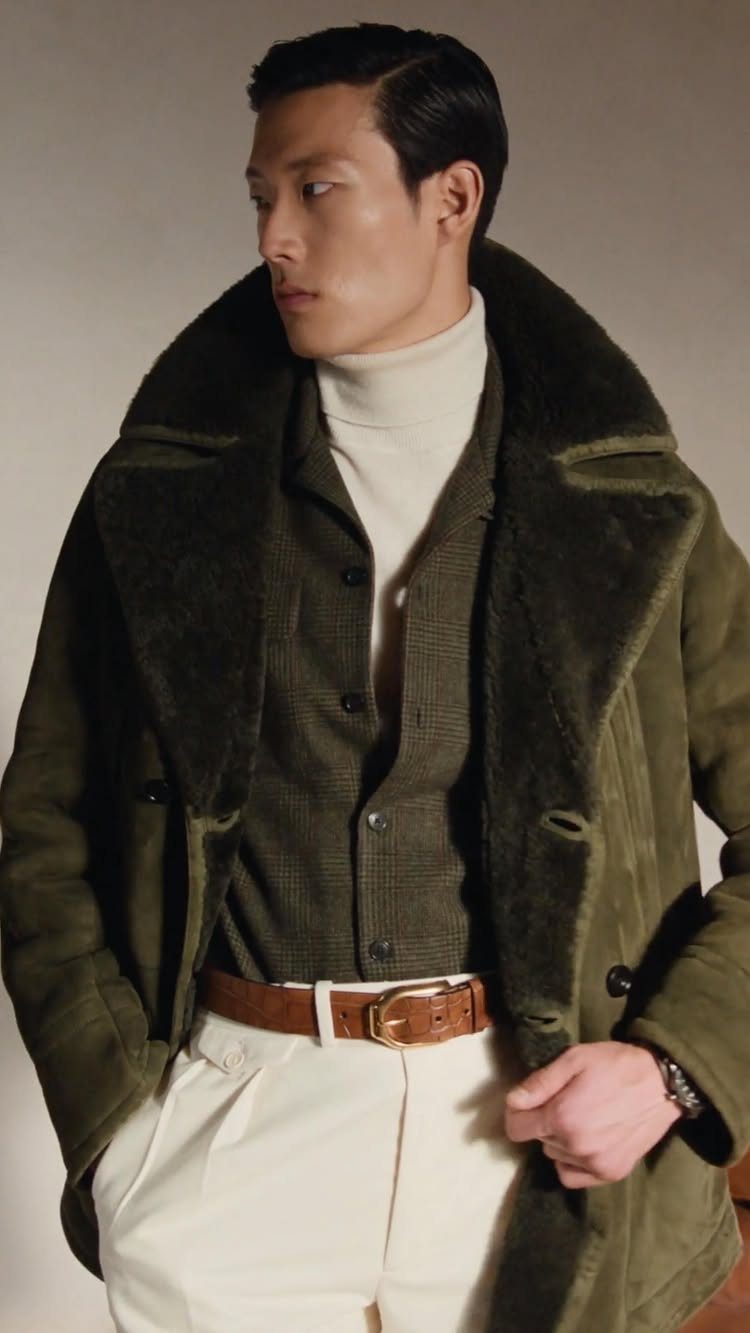
Olive green with a shearling lining is the peacoat for the man who finds navy too expected. Warmth comes from the lining, and the color gives it a more relaxed, almost field-jacket feel.
Light tones against olive keep the outfit from going heavy.
White trousers show everything, so save this for dry days.
4. Long Black Peacoat Outfit
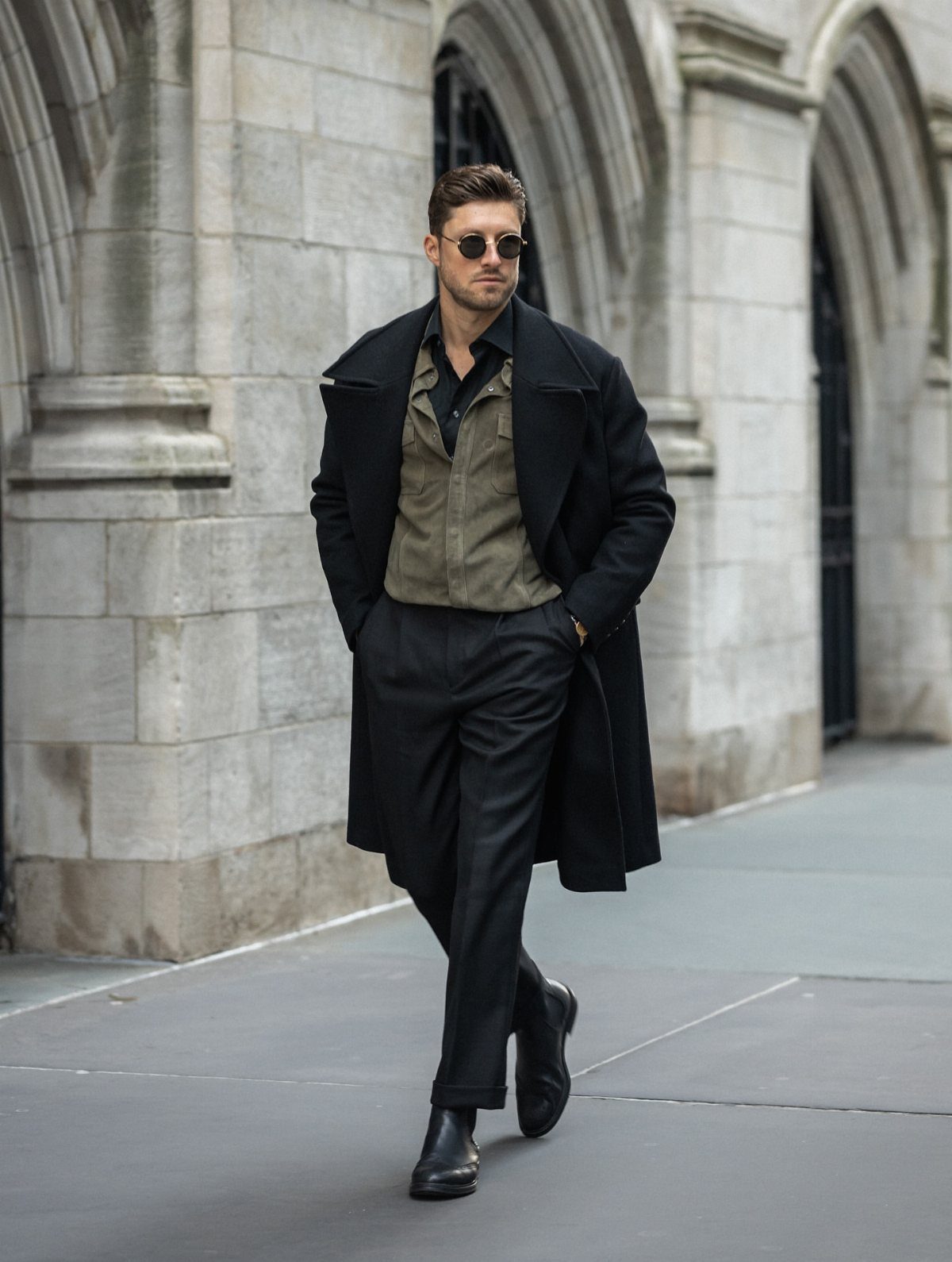
Black on black reads sharp from half a block away, and a long peacoat gives it a clean, uninterrupted line. An olive button-down breaks up the darkness without adding fuss, and sunglasses finish the look.
Choose a length that falls past the hip so the trousers and coat form one column. If you’re shorter, check that the hem doesn’t swallow your legs.
Black shows lint and dust easily, so keep a brush near the door.
5. Navy Peacoat with Scarf
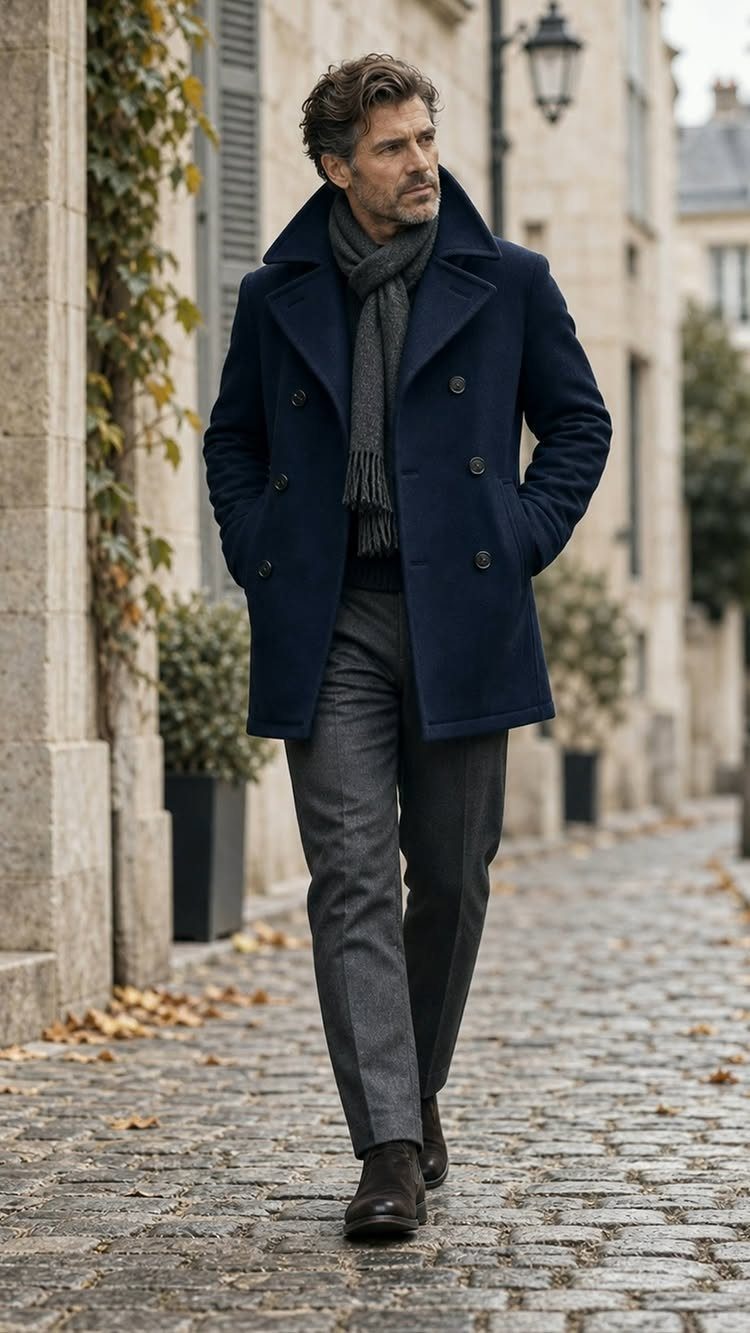
A grey scarf is the cheapest way to make a navy peacoat look finished. Grey against navy is calm and classic, and it works with grey trousers and brown leather boots without any extra thought.
Wool or cashmere both work. Tuck the scarf inside the lapels, or drape it loosely if you like it relaxed.
I’d keep the scarf a shade lighter than the trousers so the layers stay distinct, and skip bold patterns here.
6. Grey Herringbone Peacoat

Herringbone adds texture, so a grey peacoat looks richer than a flat one without anyone noticing why. The zigzag weave catches light softly, which is why a plain black collared shirt underneath is enough.
This is the version I’d pick for indoor-heavy days: office, dinner, a bookstore. It’s quieter than navy and less stark than black.
Keep the shirt dark and solid so the weave stays the only pattern in the outfit.
7. Peacoat with Wide-Leg Trousers
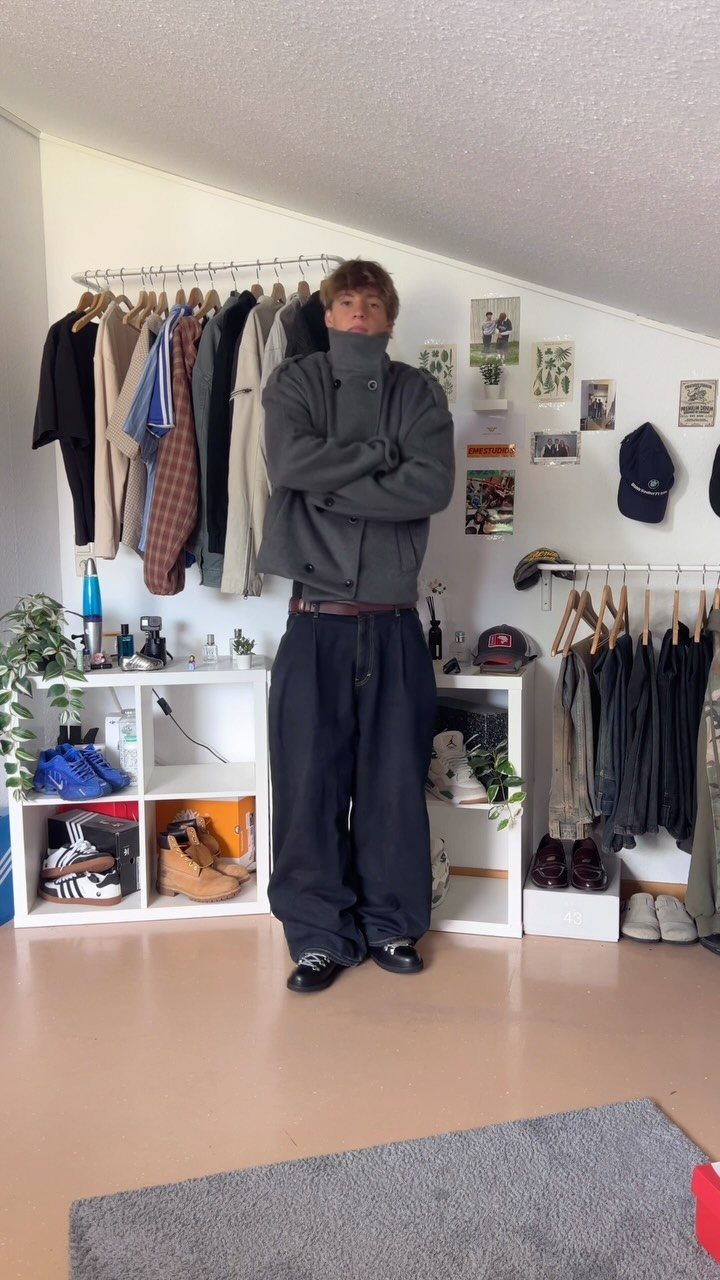
Wide-leg trousers give a peacoat room to breathe. A tailored grey coat keeps the top half neat, and the relaxed dark trousers below balance it, so the outfit looks deliberate rather than baggy.
Let the trousers fall straight and break just over the shoe. Black dress shoes keep the line clean; chunky soles would fight the width of the leg.
Shorter men should check the rise and hem, since extra fabric can shrink your height. A coat that ends near the hip helps keep the proportions even.
Peacoat Fabric Types
Check the label before the color.
The original fabric was Melton wool, though Kersey also saw use, both picked for their weight and resistance to wind. Melton is a dense twill, so the surface feels tight and smooth rather than loose.
For weight, quality coats typically run 24–32 ounces. Pure wool brings a higher price and fussier care, so if you overheat easily, a wool blend breathes better and still keeps you warm.
Construction tells you more than the label: look for cloth from Italian mills like Vitale Barberis Canonico, buttons backed with reinforcing thread, and shoulders built with enough canvas to keep their line after a season of wear.
Peacoat Historical Background
The US Navy picked it up soon after and made it regulation.
The peacoat, originally a naval garment, had to be tough, thick and durable enough for wild, unpredictable weather at sea.
That origin is why I trust the design on a normal commute. Wide lapels, anchor buttons and heavy wool were built for work, and they still do it well.
Peacoat Style Evolution
Modern peacoats keep the double-breasted front, wide lapels and anchor buttons, but the tailoring has changed. Better coats now have structured shoulders and a fit that leaves room for knitwear or even a suit jacket while staying trim.
Decide where you will wear it before you buy. A coat for office days over tailoring needs a cleaner shoulder, while a weekend coat can run roomier.
Check the pockets too. Functional pockets that hold a phone, wallet and keys mean you can leave the bag at home.
Navy remains the traditional color and the easiest one to wear.
Frequently Asked Questions
What makes a quality peacoat?
Start with the cloth: a good peacoat runs 24–32 ounces in wool, and it should close double-breasted with lapels wide enough to turn up against the wind. Look inside, too.
Mill-name cloth such as Vitale Barberis Canonico is a good sign, buttons should be sewn on with reinforcing thread, and the shoulders need real canvas so they keep their shape after a full winter. I trust construction over the label.
Should I buy a pure wool peacoat or a wool blend?
Pure wool is the traditional choice, but it costs more and needs fussier care. Run warm?
A blend lets heat escape more easily than pure wool, and you still get decent insulation. For heavy winter days, I’d lean toward the pure wool.
How do I care for a wool peacoat?
Between wears, I’d keep it on a wide, shaped hanger and go over it with a garment brush now and then to lift off surface dirt.
Store it with cedar during the off-season, and have it dry cleaned once or twice a season. That routine keeps the wool in shape without much effort.