Overalls can run from a classic denim jacket or plain top to olive green, black with a white tee, or a utility vest, and where you land depends on how much of the workwear feel you want to keep.
Dark indigo, black and olive hold up on a weekend or errand run, while a tie and blazer, or a button-up and loafers, move the bib toward an office with a loose dress code.
Whatever the direction, the pattern rule stays put: keep to one pattern per piece, never two on the same layer, and let everything else stay plain.
1. Keep It Classic
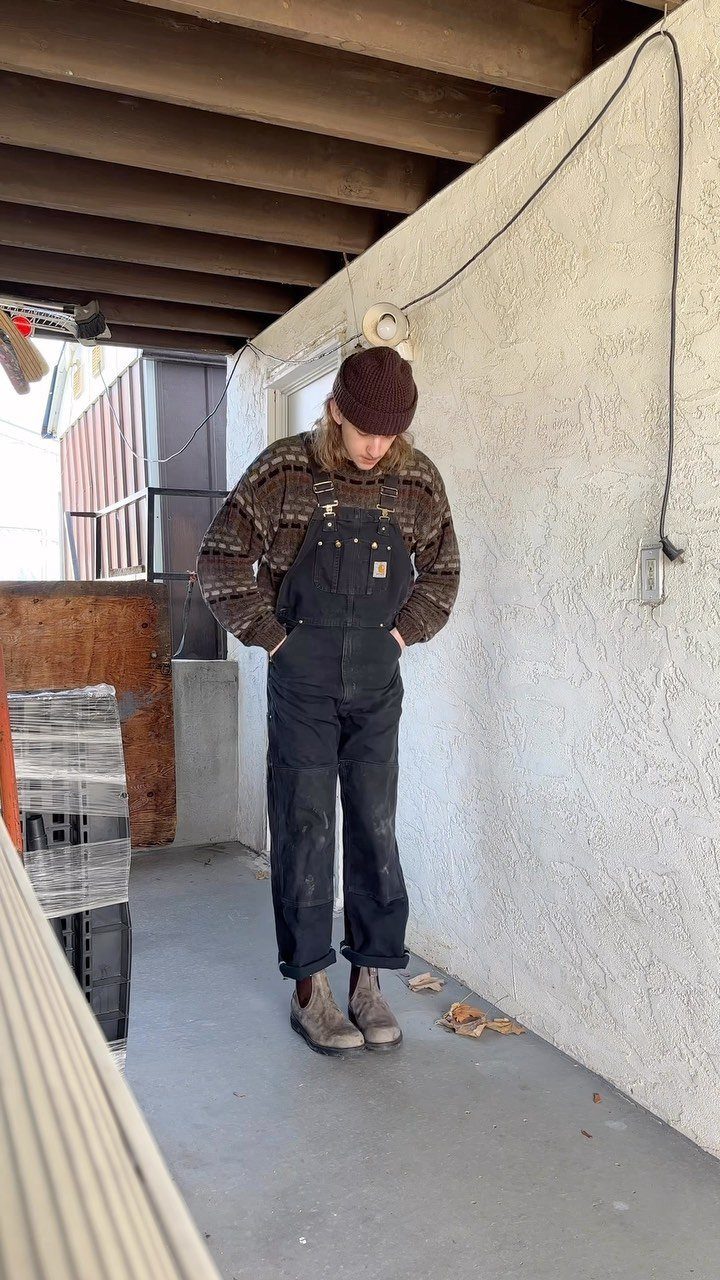
Dark overalls read as workwear only when everything around them does too, so the fix is knitwear. A patterned sweater under the bib and a beanie push the look toward a weekend outfit and away from the job site.
I’d pick navy or black over faded blue; the darker color looks cleaner and pairs with brown boots and warm sweater tones without a fight. Keep the sweater fitted enough that it doesn’t bunch under the straps.
2. Overalls with a Denim Jacket
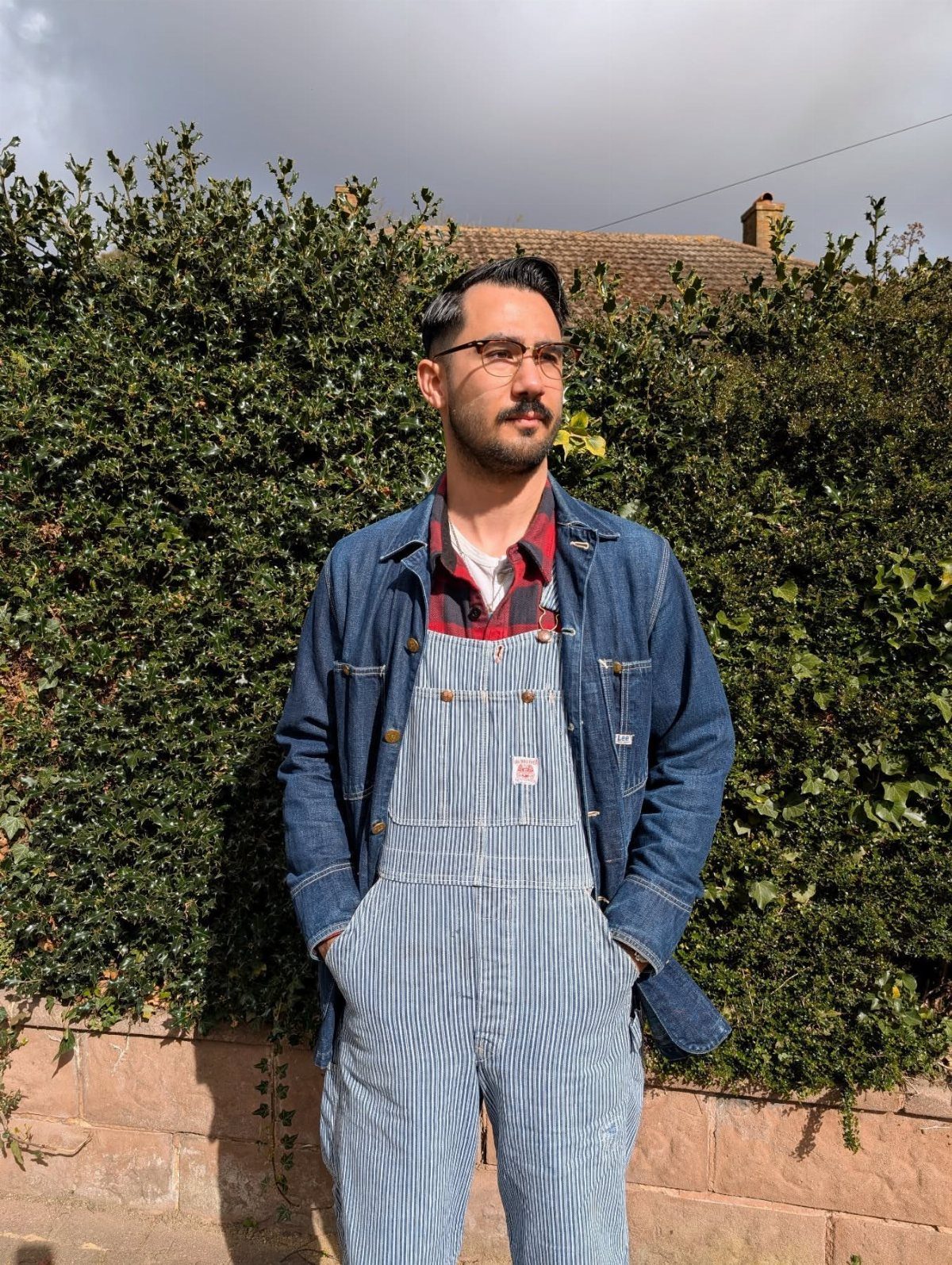
Once the temperature drops, a denim jacket over overalls takes no thought at all. Wear it open so the bib stays visible, and put a flannel or plaid shirt underneath for warmth.
Denim on denim works best when the shades differ.
A lighter jacket over darker overalls, or the reverse, looks planned; two near-matches look like a mistake. Stripes on the overalls are fine, but keep the shirt to one pattern, not two.
3. Overalls with Plain Tops
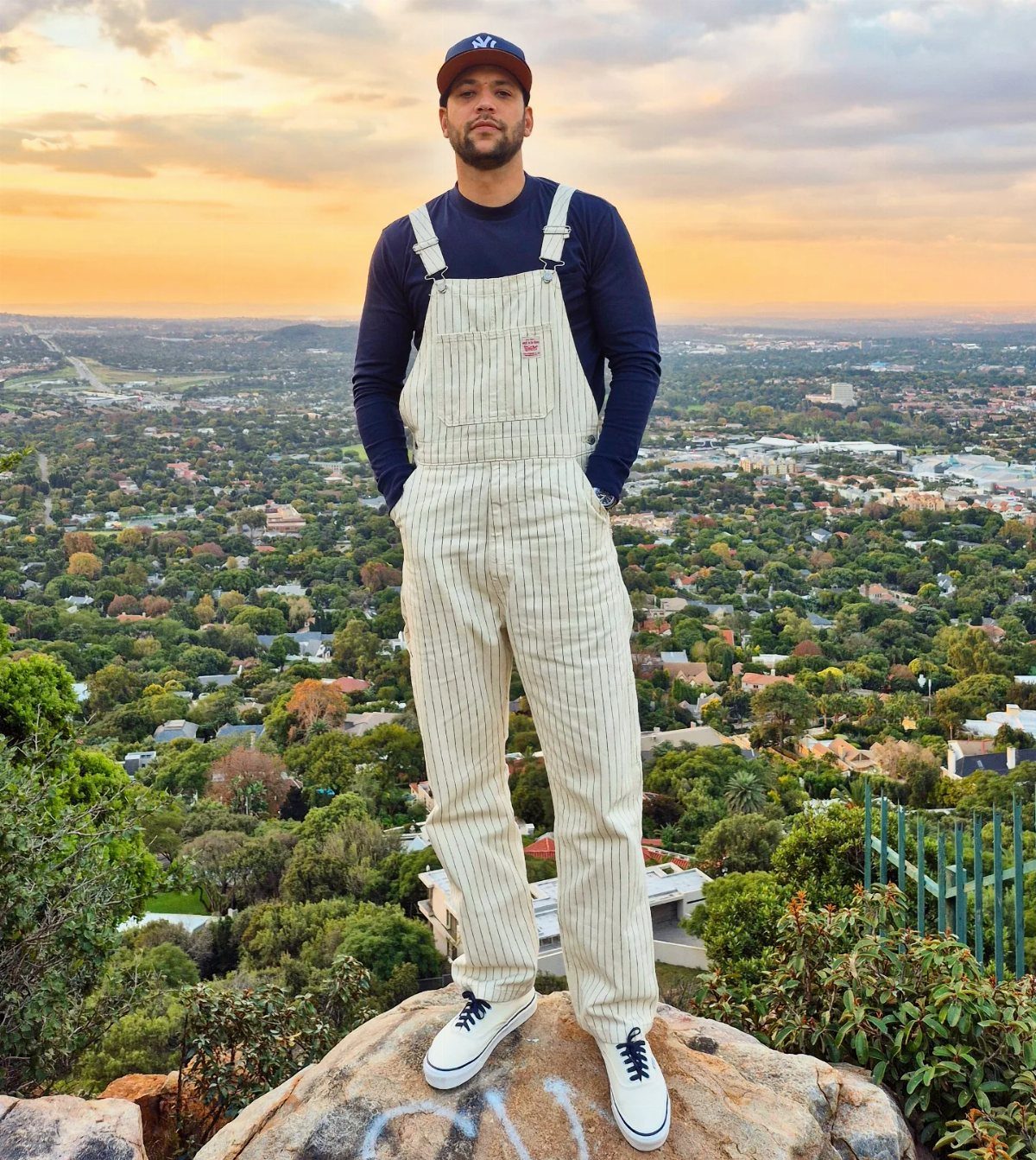
A plain shirt lets the overalls do all the talking, which is the safest route for a first try. Navy, white, or gray under a patterned pair keeps things calm.
White sneakers and a baseball cap tilt it sporty rather than rustic, and that’s the version I’d recommend if you worry about looking like a farmer.
Pick a shirt that tucks in or sits just above the hip so the bib doesn’t swallow it.
4. Overalls with Sturdy Boots
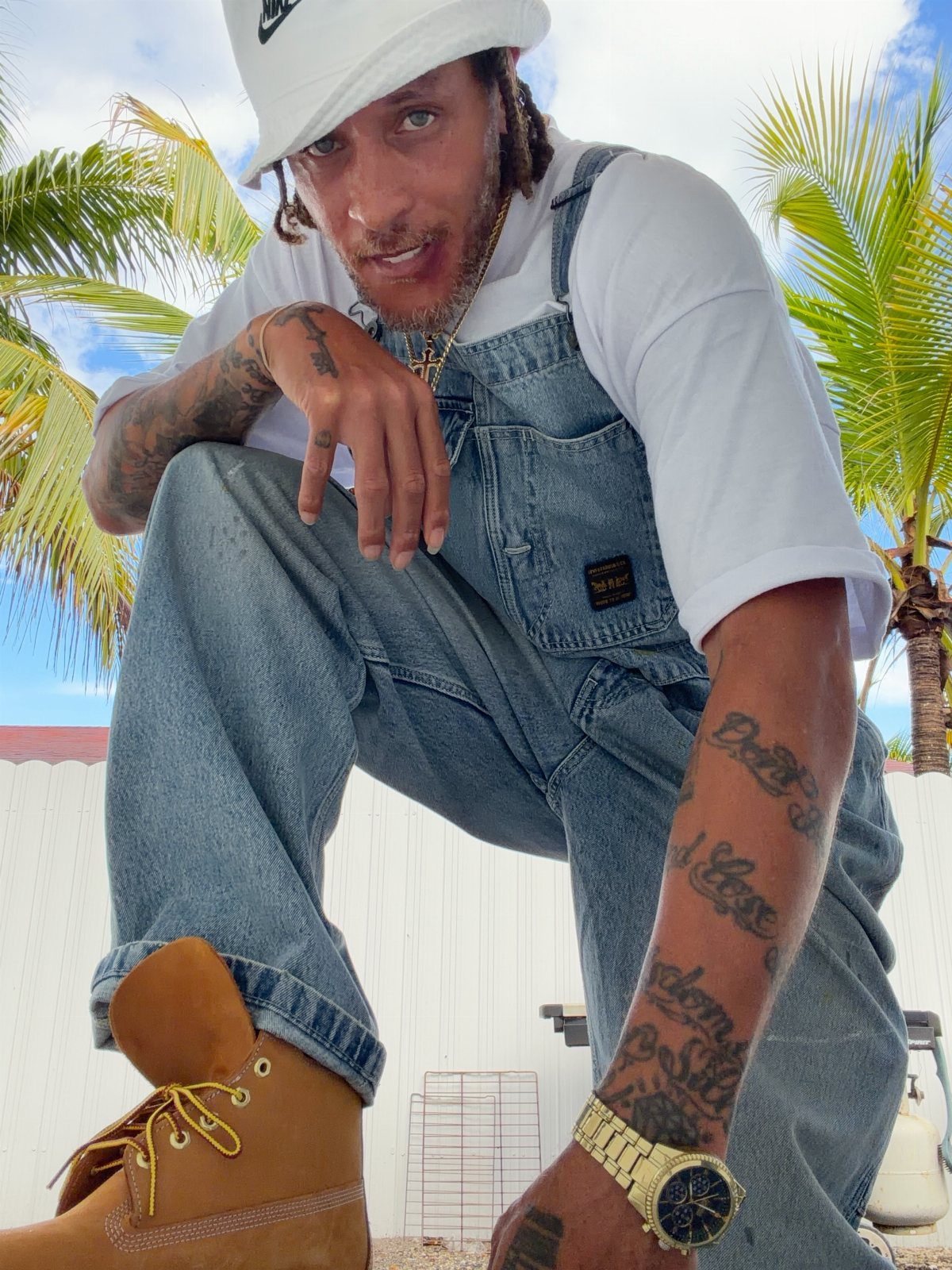
Overalls plus tan leather work boots is the pairing that looks most honest, since both come from the same tradition. A white tee and a cap keep it from tipping into costume.
Let the pant legs sit at the top of the boot or stack slightly rather than bunching into a big roll. Boots add weight to the outfit, so choose a lighter tee and plain cap to balance it.
5. Olive Green Overalls
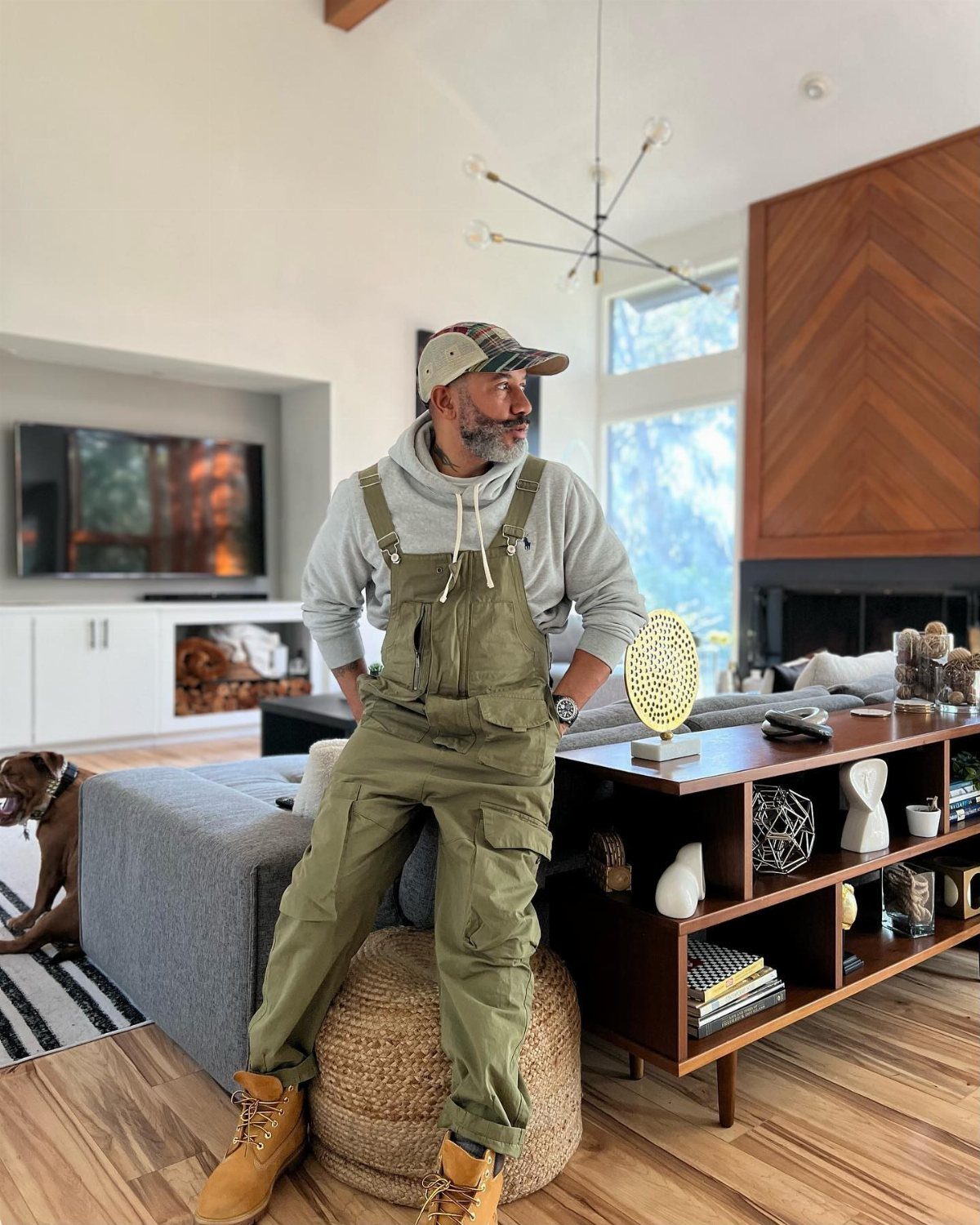
Olive green softens overalls in a way blue denim can’t. It’s an earthy neutral, and it sits easily next to gray, which is why a gray hoodie works so well here.
Tan boots finish the palette without adding another color.
I like this for days at home or errands, when comfort matters more than polish. Keep the hoodie slim so the olive stays the focus.
6. Overalls with Flannel Shirts
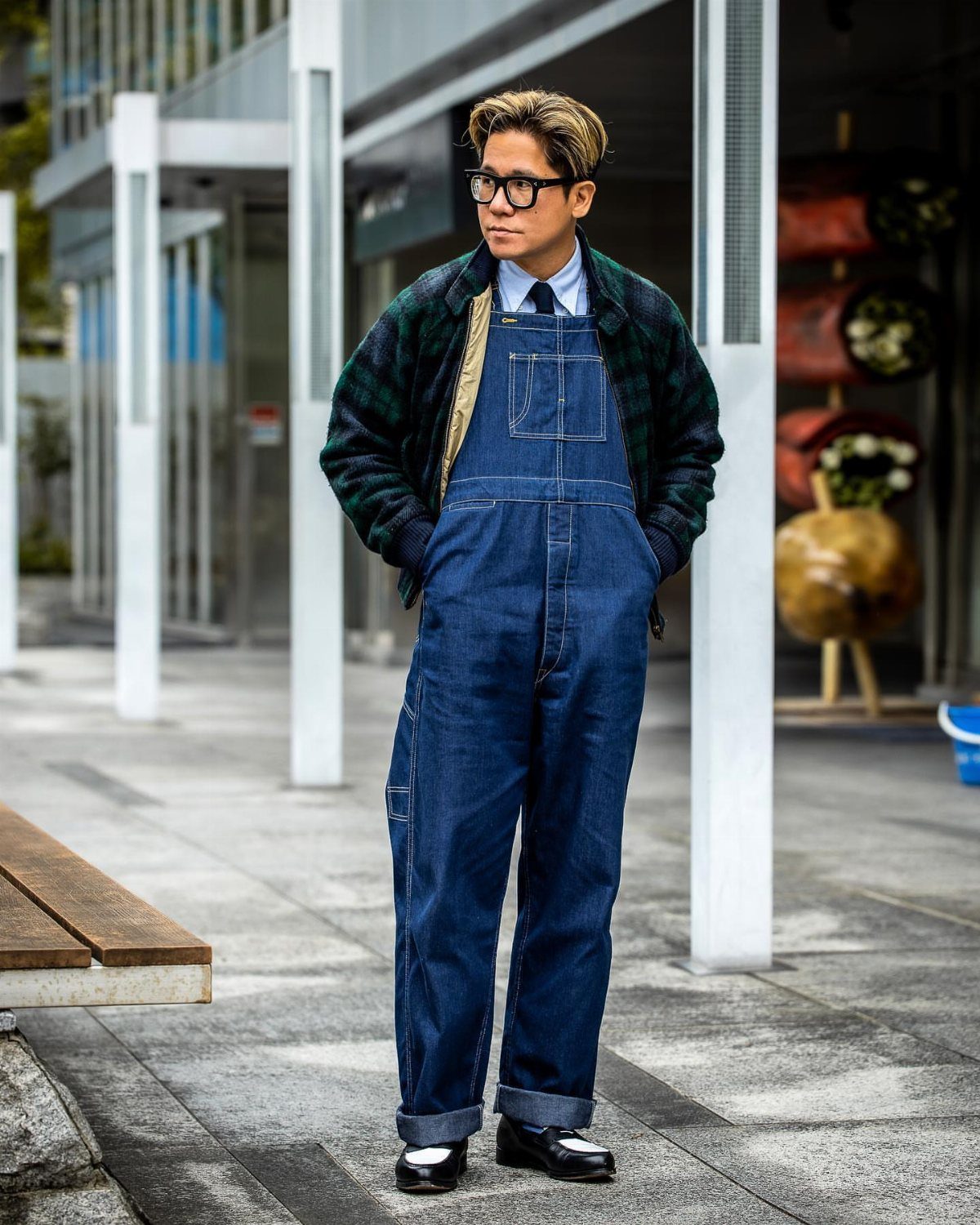
Wearing a plaid flannel as a jacket over a white shirt and tie is the sharpest take on this pairing. The tie is what stops the outfit from looking rural.
Leave the flannel open so the white collar shows.
Keep the plaid to one or two colors so it doesn’t compete with the denim. It’s a bold move, but styled hair and clean lines make it read as deliberate.
7. Overalls with a Tie and Blazer
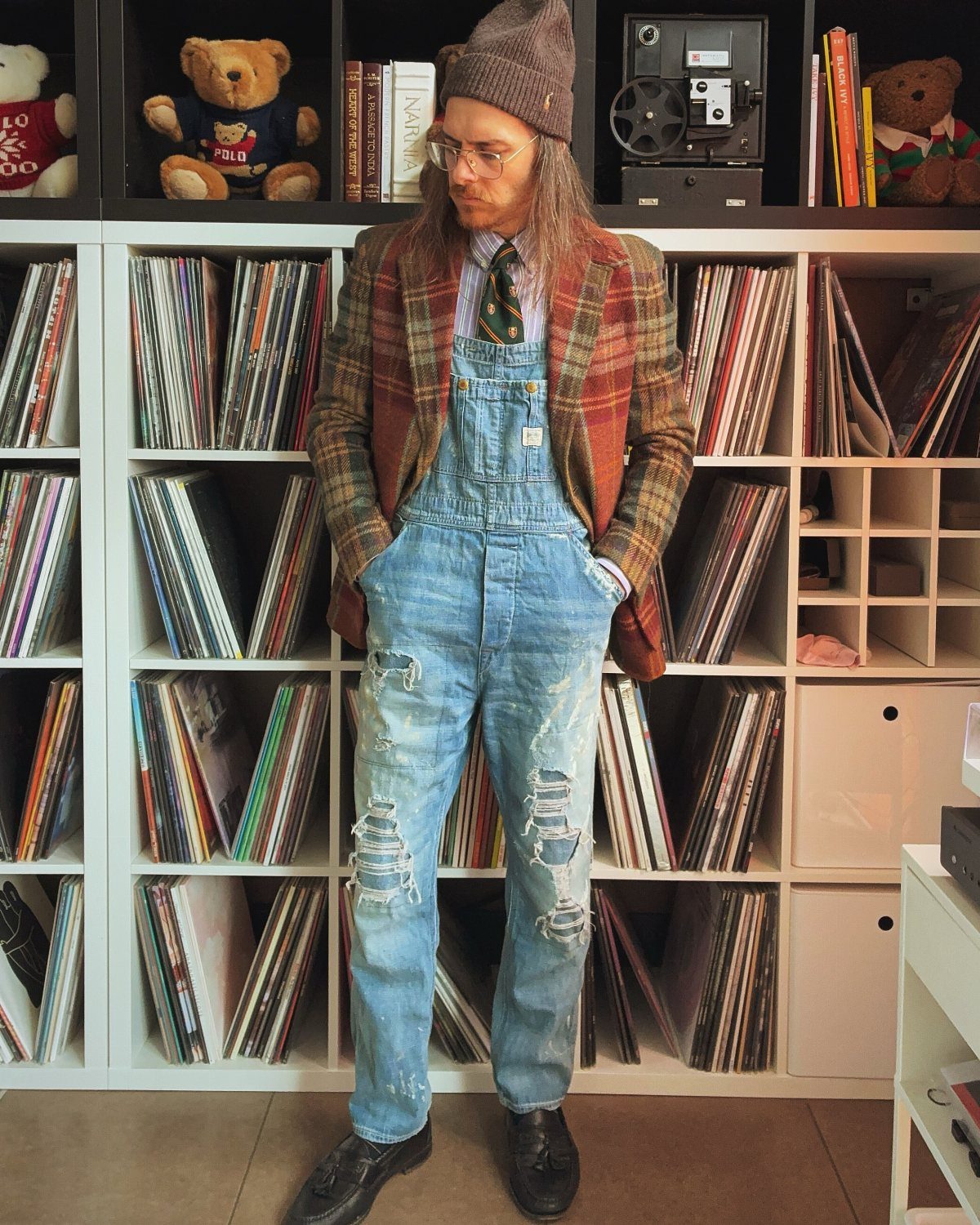
A tie and a plaid blazer are what pull overalls out of workwear territory. Once the jacket and collar are in play, the bib reads as a deliberate choice.
Keep the tie plain and give the blazer the pattern.
Distressed denim is a fair match for the beanie, but a cleaner pair makes the look sharper if you want it for something closer to work. Button the shirt to the top under the tie.
8. Overalls with an Open Button-down
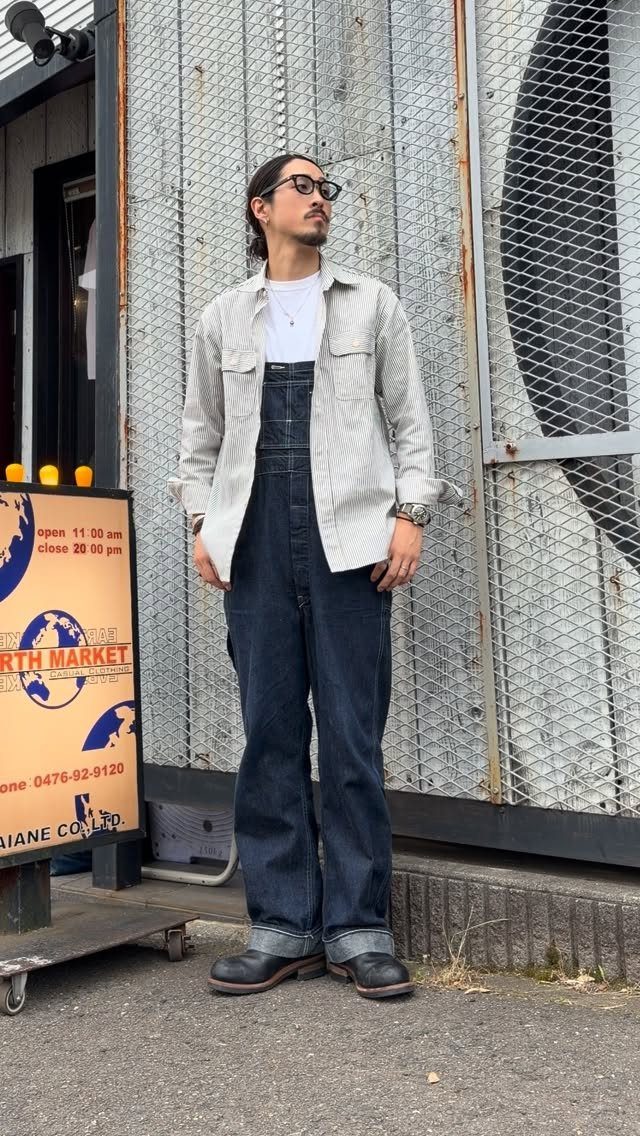
An unbuttoned striped shirt over a white tee adds a third layer without hiding the bib. It’s an easy way to give dark denim some structure.
Dark overalls handle stripes well because the shirt stays the only pattern.
Leave the shirt open and push the sleeves past the elbow if it’s warm enough. Black shoes keep the whole thing tidy; I’d pick those over bulky boots here.
9. Brown Canvas Overalls with Wide-brim Hat
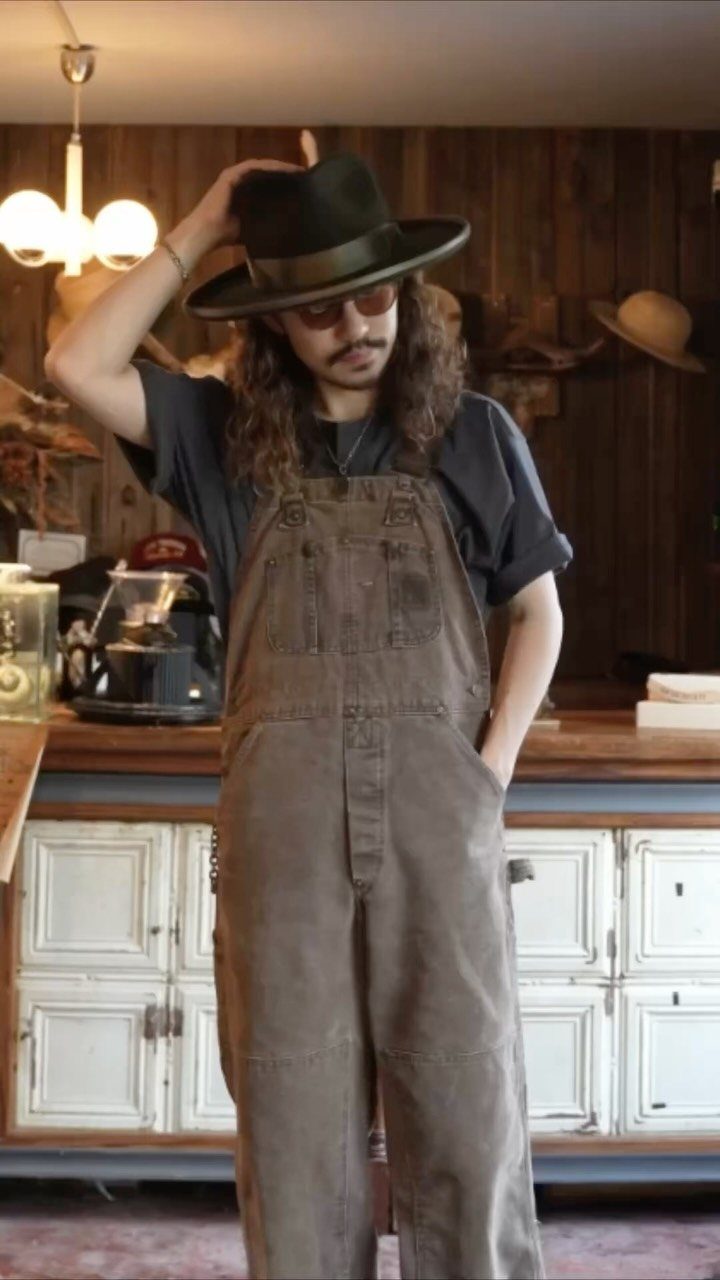
Brown canvas overalls lean rugged, so the hat and sunglasses have to push the other way. A wide brim with a dark tee gives the outfit a relaxed, slightly artistic feel instead of a ranch-hand one.
Match the hat to the tee in color.
Black on black keeps the brown as the only warm tone. Sunglasses finish it, though they suit sunny days better than indoor plans.
10. Overalls with a Hoodie
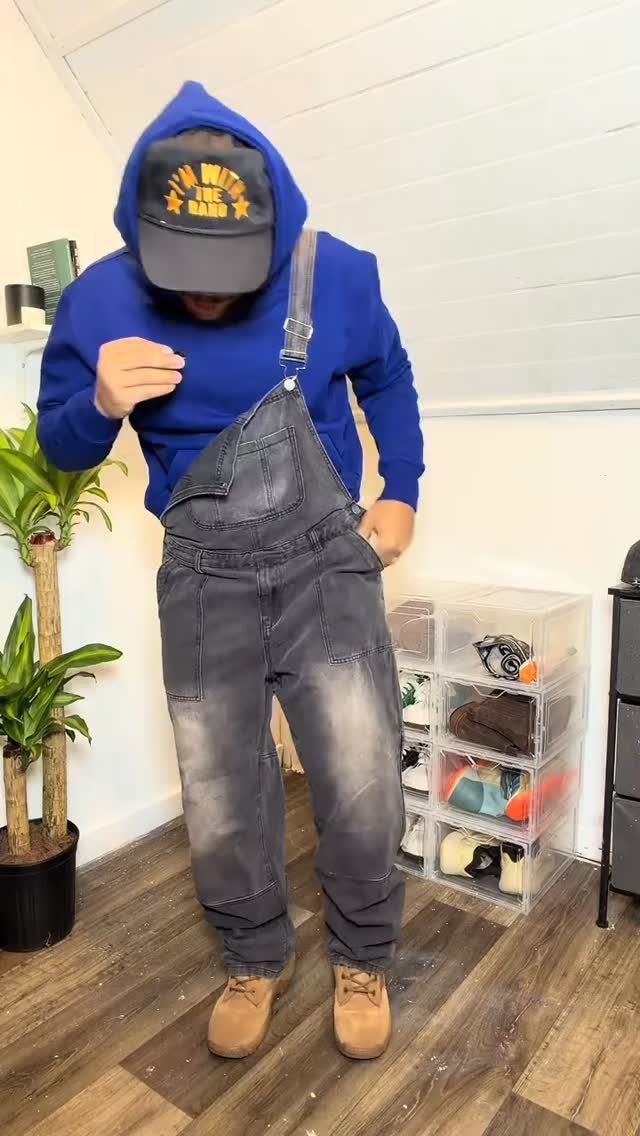
A hoodie under overalls is the most comfortable version of the look, and it works because the hood adds bulk at the neck that the bib needs to balance. Blue under gray denim stays cool-toned and calm.
Add a black cap and tan boots, and the outfit looks sporty with a bit of grit. Pick a hoodie that’s not oversized, or the straps will pinch and bunch across the chest.
11. Overalls with a Utility Vest
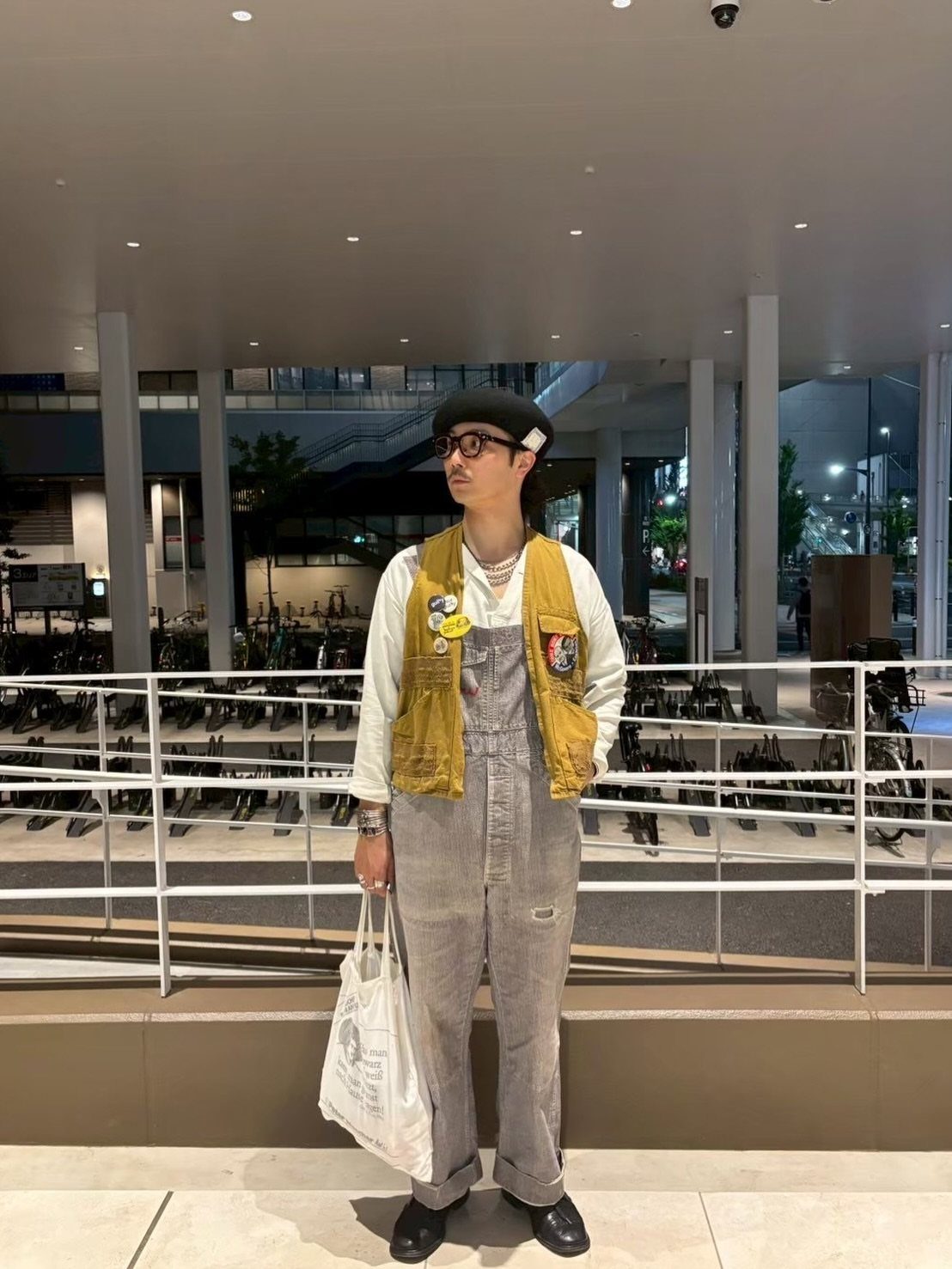
A bright yellow utility vest is the loudest move on this list, so everything else should stay quiet. Gray denim overalls and a black beret give the yellow room to be the one thing people notice.
Keep the layers under the vest simple.
A white tote bag adds a neutral that stops the outfit from feeling busy. This is a look for confident dressers; if yellow feels like too much, try a muted vest first.
12. Black Overalls with White Top
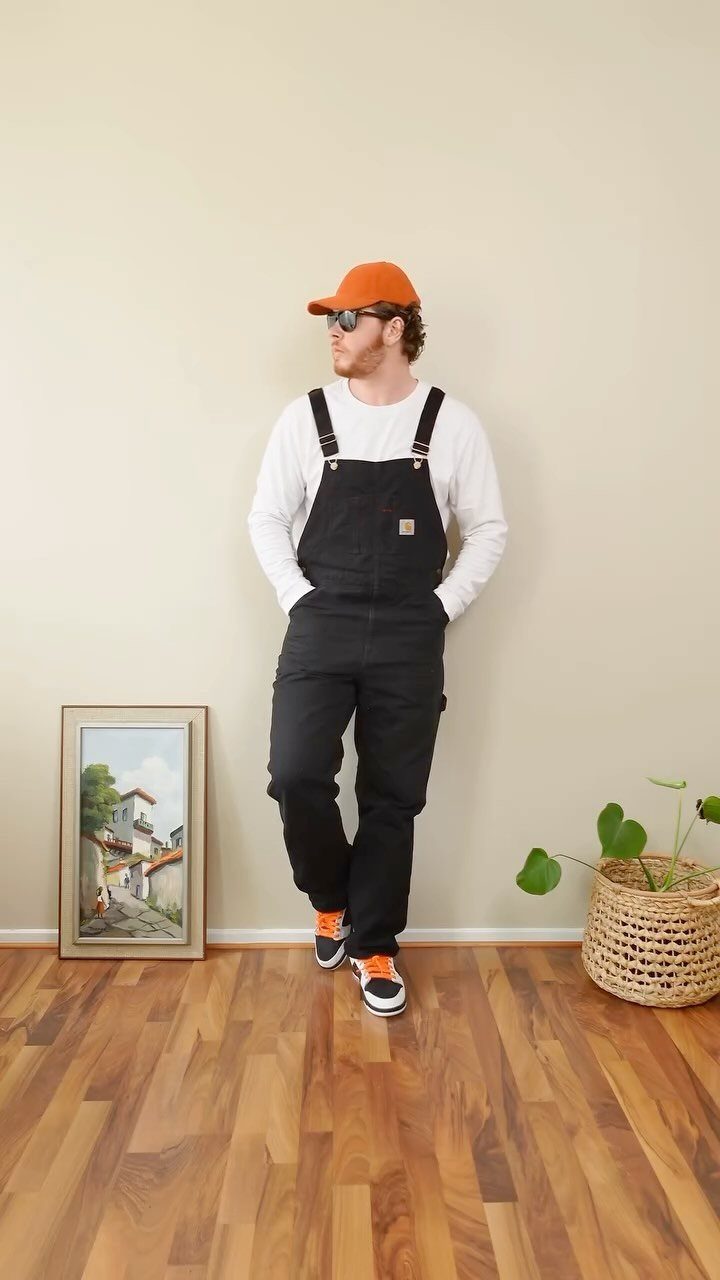
Black overalls over a white long-sleeve shirt is a high-contrast base, and it takes color well. Orange sneakers and an orange cap tie the outfit together with just one accent shade.
I’d repeat the accent exactly twice, as here, and stop.
Sunglasses are optional. Pushing the white sleeves up slightly keeps the shirt from looking stiff under the bib.
Choosing the Right Overalls
Dark indigo denim is the safest base. It goes with nearly everything, and a solid color with a pocket or 2 keeps the look simple and practical.
Fit matters as much as color. A slightly loose cut is more comfortable than a slim one, but anything very baggy looks dated, so stop at relaxed.
Black does more than blue to make overalls look modern, because it hides most of the workwear feel.
Cream, olive and tan overalls sit well with a white, black, navy or gray top. Printed overalls over a printed shirt almost never work, and I’d skip the pairing.
Occasions for Wearing Overalls
A close fit and a tight color palette let overalls carry past the weekend.
The look reads as relaxed and deliberate.
For an office with a loose dress code, push the same formula further: a button-up under the bib, loafers, and no loud colors. Know your workplace first, because this suits some offices and not others.
For casual outings, the choice is yours. Keep the pieces few and the fit clean.
Overalls, as much as possible, should feel like a relad part of the outfit—almost a denim basic—and not the main event. Fit should be loose, but never, ever baggy.
— GQ
Layering Techniques
Once it’s truly cold, I’d put the extra warmth in a jacket over the top instead.
Neutral shades are the simplest to pull off. White, gray, black, navy, and cream all sit well against denim, black, or olive.
When you dress for fall, start with a well-fitted long-sleeve shirt or lightweight sweater, then check that the overalls leave room for it.
Frequently Asked Questions
How do you style overalls for men?
Start with dark overalls in navy or black, a relaxed fit that is neither slim nor baggy, and a plain or lightly patterned top, then keep every other piece quiet.
Knitwear, a denim jacket, or a tee with tan boots all work. Pair the bibs with a fine-gauge knit or an unstructured blazer, since a cleaner layer on top keeps the whole outfit from reading as a work uniform.
Can men wear overalls to work?
It depends on the office. In a traditional office they usually won’t, so check your workplace norms first.
How should overalls fit?
Go relaxed, not slim and not baggy. Leave enough room for a long-sleeve shirt or light sweater underneath so the straps don’t pinch or bunch.
Can a 45 year old wear overalls?
Yes, if the styling stays sharp. A dark pair with a close fit, a tight color palette, and a clean top or blazer looks relaxed and deliberate at any age.
Skip printed overalls with a printed shirt and anything very baggy, which tend to look dated or costume-like.