What you wear with a brown trench matters less than what you wear under it, because the coat is plain and the layers carry the look.
The 6 ideas run from black dress pants to a turtleneck with tan trousers, and the choice follows the setting: pressed trousers for work and dinner, black jeans for a normal weekday, a knit sweater for something relaxed.
1. Brown Trenchcoat with Black Dress Pants
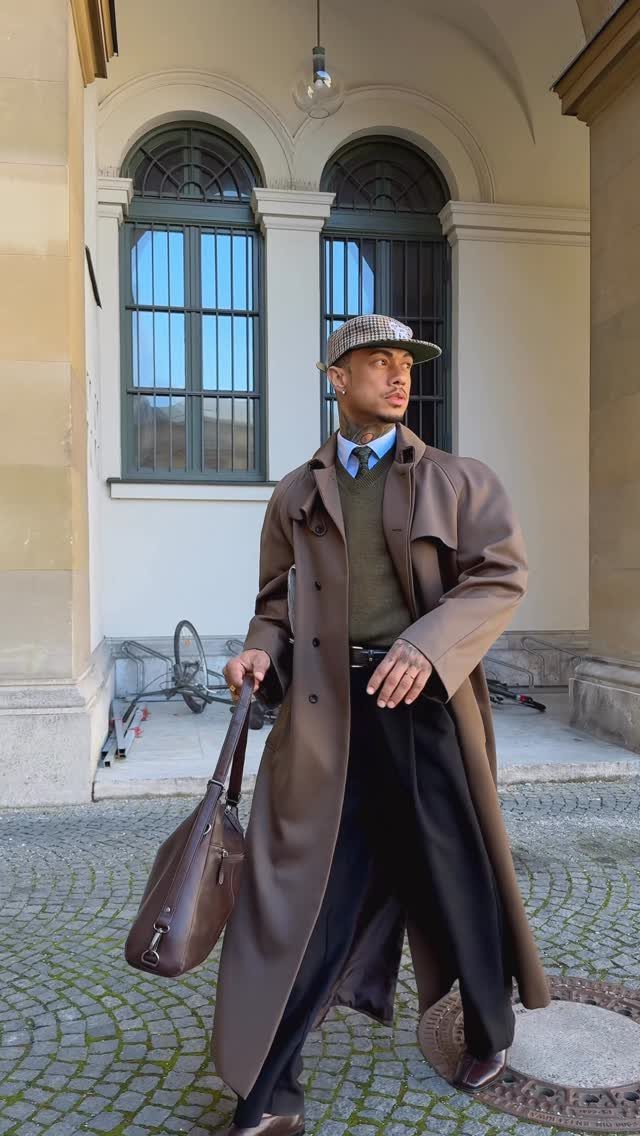
Black dress pants under a brown trench give you a dark, narrow base that lets the coat carry the outfit. An olive sweater between the two, as visible here, softens the contrast so black and brown don’t fight.
I like this for work and dinner because it needs almost no thinking. Keep the trousers pressed and the hem clean, and add a brown bag or cap that echoes the coat.
2. Brown Trenchcoat with Charcoal Wool Dress Pants
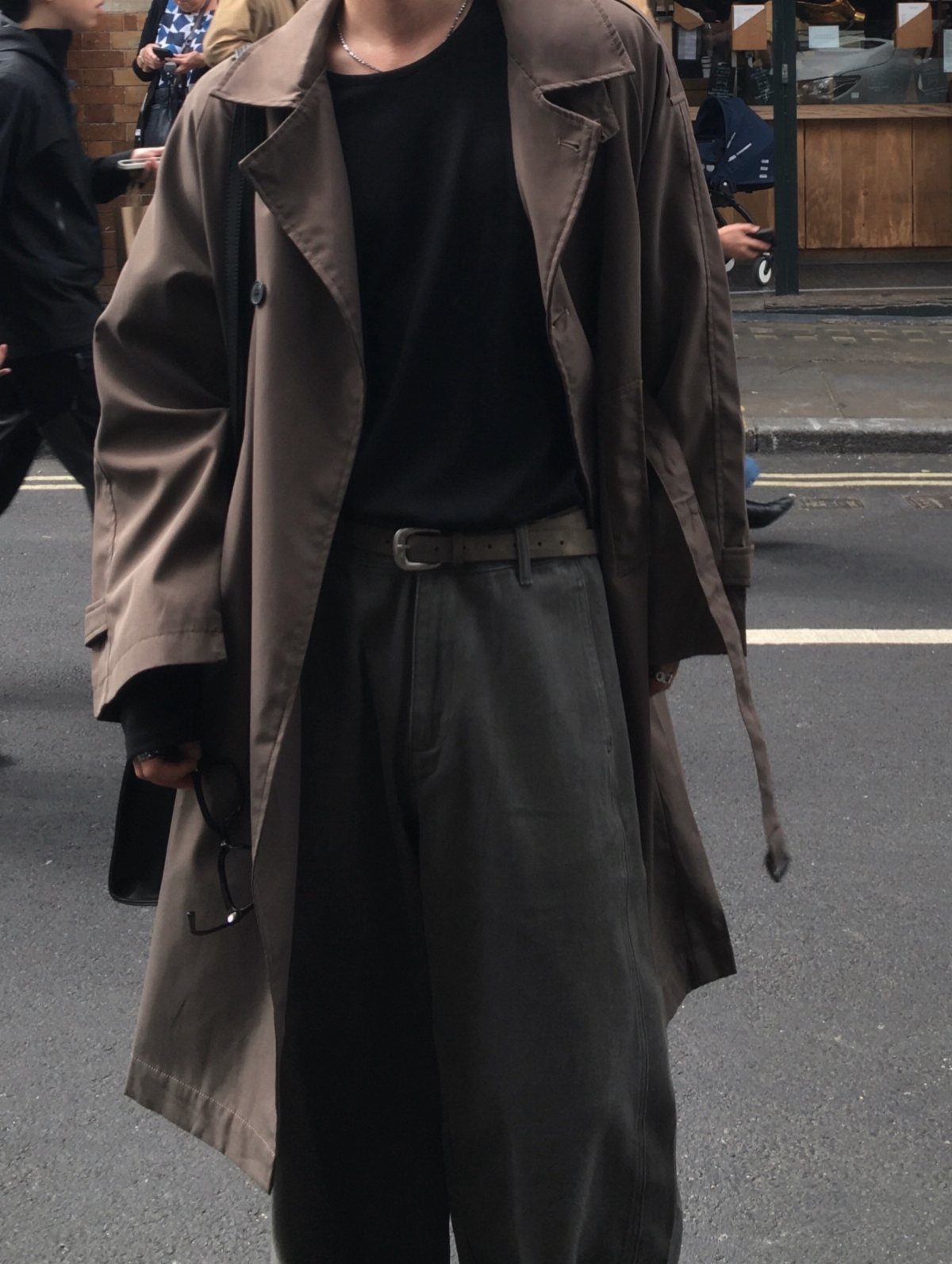
Charcoal wool is the softer cousin of black. Against a brown trench it reads a little warmer and more considered, and a black shirt underneath keeps the whole look dark and clean.
I’d pick this over black trousers if you wear the outfit in daylight, where charcoal shows its texture. Black shoes or dark brown both work; just match your belt to them.
3. Brown Trenchcoat with Black Jeans
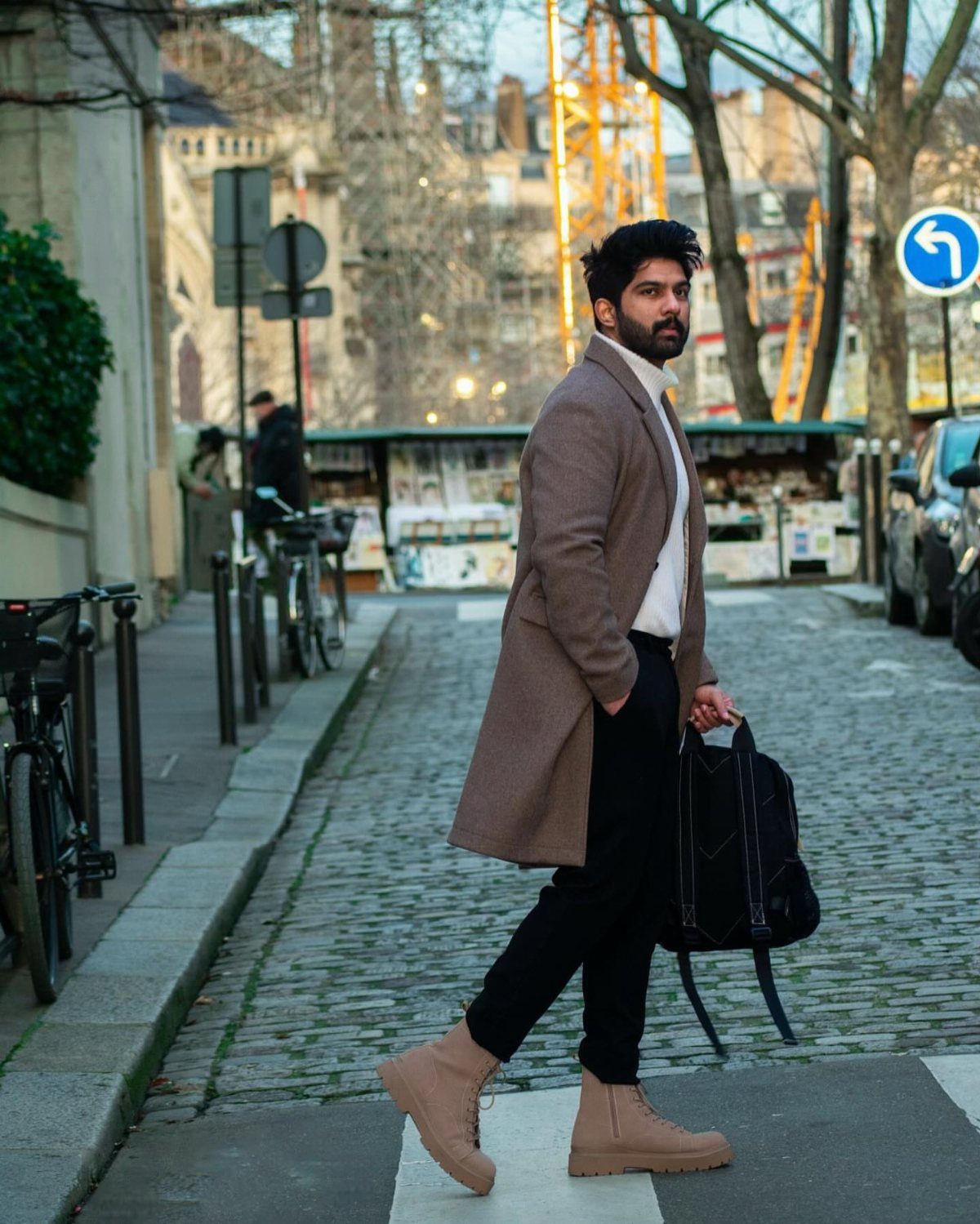
Black jeans make a brown trench easy to wear on a normal weekday. A white sweater underneath brightens the look, and tan boots tie back to the coat’s warmth.
Choose a dark, true black pair without fading, and a slim straight cut so the coat’s hem doesn’t swallow your legs. Dressier than blue denim, easier than dress pants.
4. Brown Trenchcoat with Brown Chinos
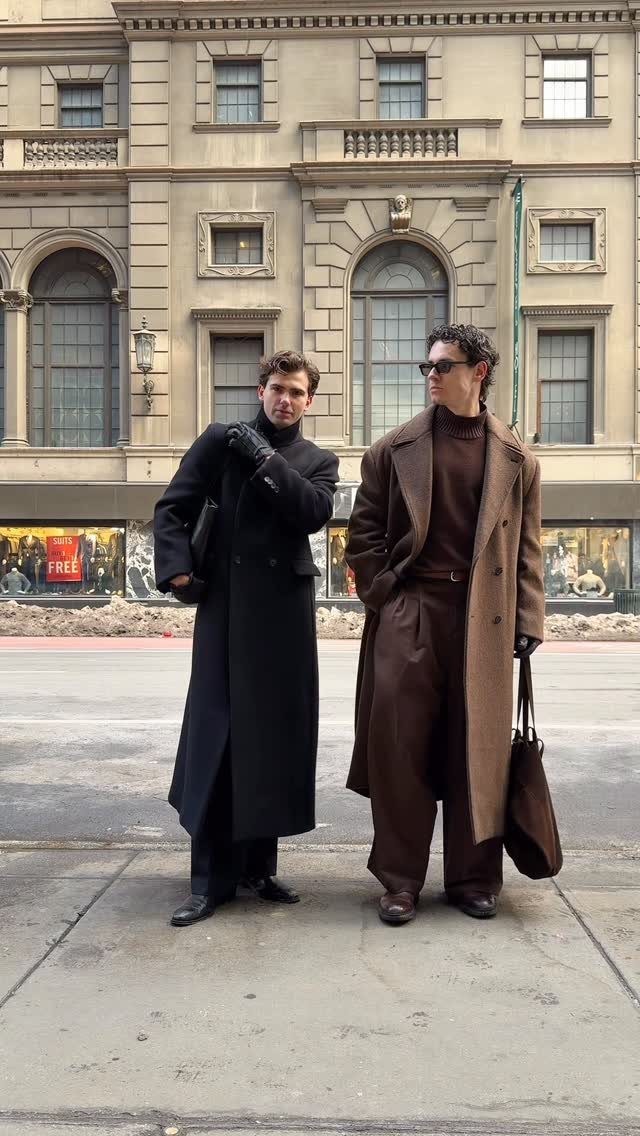
Brown on brown works when the shades differ: a trench a step lighter or darker than the chinos keeps the outfit from looking like a uniform. A matching turtleneck extends the column and makes you look taller.
Add one contrast, like black shoes or a pale scarf, so the look has an edge. I prefer chinos with a clean, slightly tapered leg here.
5. Brown Trenchcoat with Knit Sweater
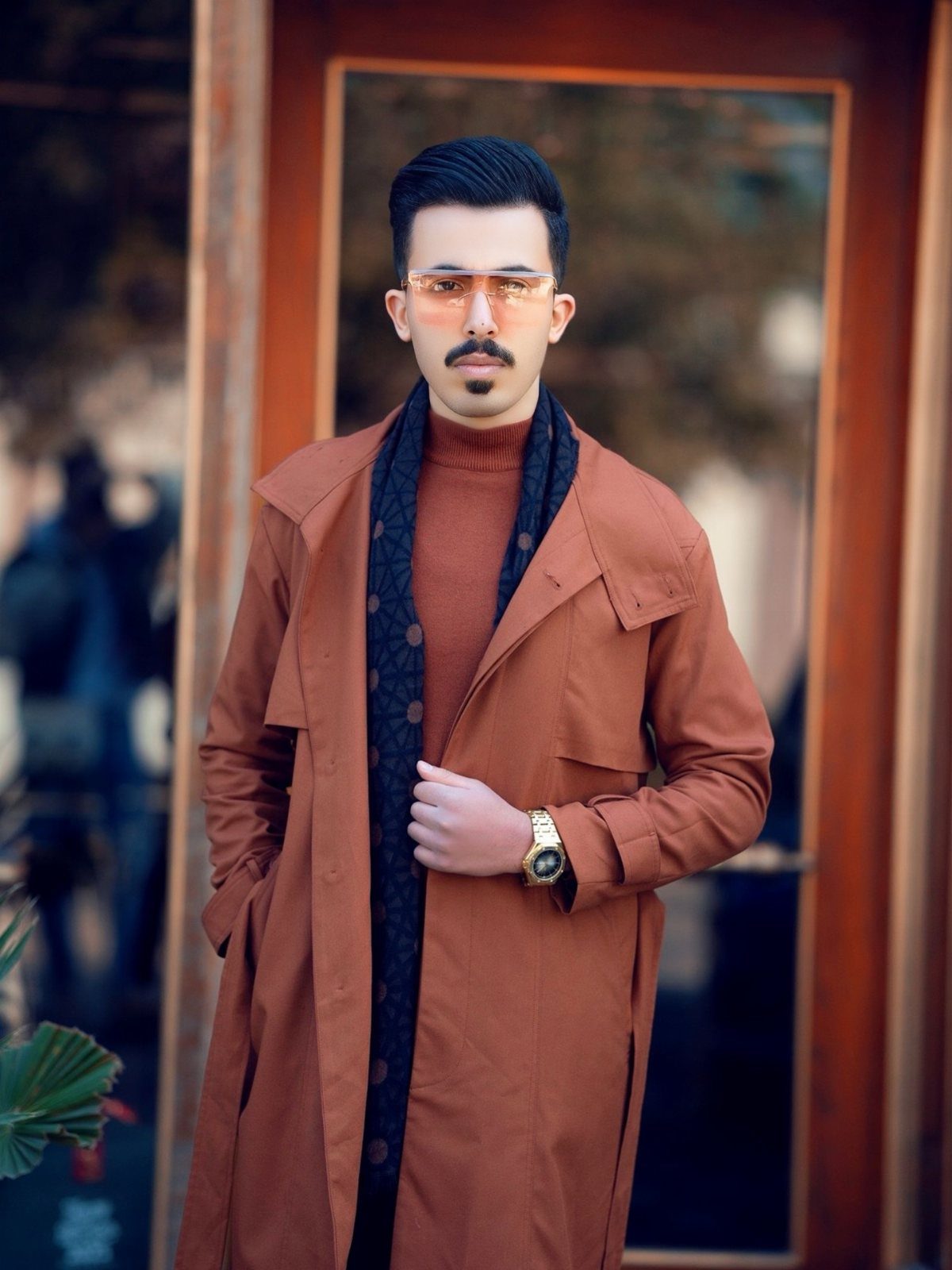
A knit sweater is the quickest way to make a trench feel relaxed. A turtleneck in brown, as here, sits snug at the collar and leaves no gap for cold air.
Pick a mid-weight knit so the coat still closes without bunching at the chest.
A patterned scarf in darker tones adds interest without adding a new color. Simple, and hard to get wrong.
6. Turtleneck and Tan Trousers
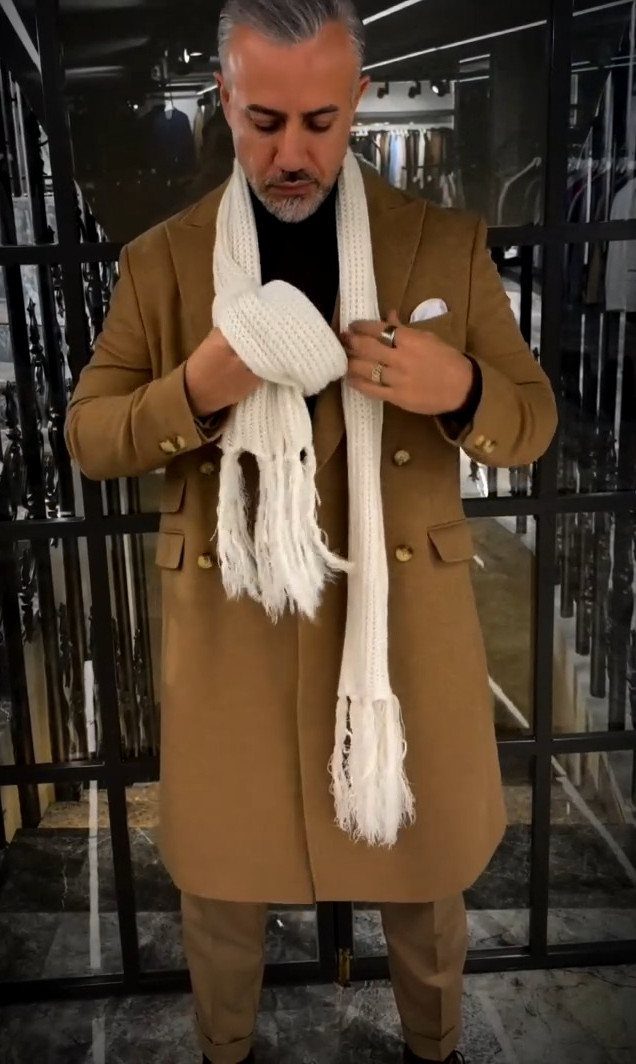
Tan trousers lighten a brown double-breasted coat and keep a black turtleneck from feeling heavy. The white knit scarf adds a bright line near your face, which is where people look first.
I’d keep the trousers a shade lighter than the coat so the layers read separately. This suits an older, more polished look, and it works well for events where jeans feel too casual.
Trench Coat Fit
Fit starts with what goes under the coat.
Try it on over a wool sweater or a suit jacket, the bulkiest layers you’ll realistically wear with it, and check that you can button it and bend your arms without the fabric pulling across your back.
Loose is correct, but there’s a limit. If the coat flaps and catches wind when you hurry for a bus, it’s too big.
If winter in your city stays above freezing most of the time, a trench with a zip-in liner and a thick sweater underneath gets you through.
When the temperature drops and stays there, a wool overcoat is the better choice. A trench is the wrong tool for that cold.
The shoulders of the trench coat should allow enough room for you to wear a man’s suit jacket underneath. About .5″ to 1″ of the trench coat should extend past your natural shoulders.
Trench Coat Versatility
A brown trench coat makes a sound first purchase if you want one coat to handle a work week and a weekend.
Dress it up with tailoring underneath, or down with a sweater and casual trousers. The one exception I’d hold to is shorts; a long coat over bare knees looks like a mistake.
Because it’s so flexible, the coat itself should be plain. Save the pattern and color for what you wear under it.
Trench Coat Materials
Fabric decides how the coat wears, so check the label before the color.
Gabardine is what most trenches are cut from: tight twill weave, diagonal texture on the face, smooth on the reverse. Burberry invented it, it was traditionally worsted wool, and today you’ll also see cotton, polyester and blends.
Cotton drill is nearly identical, just a slightly looser weave. It’s strong, breathable and has a visible twill weave, which makes it a good everyday pick.
Serge has the diagonal rib on both sides instead of one. It’s rarer in trenches.
Leather is the serious option: durable, soft and protective. It needs regular cleaning, conditioning and air circulation to last, so be ready for that upkeep.
The design itself began as an Army officer’s coat in WW1, which explains the double-breasted front and the belt.