Your climate and your closet decide which of these fall style trends suits you, because the list runs from a single burgundy accent on a navy coat to a shearling that replaces a coat for most of the season.
If you leave in the morning at 55°F and are back to 72°F by lunch, pick pieces that come off and still look finished, like a denim jacket or a flannel over a plain tee.
If it stays cold all day, spend on the heavy layer and keep the flannel, denim, or corduroy under it quiet.
1. Denim Jackets
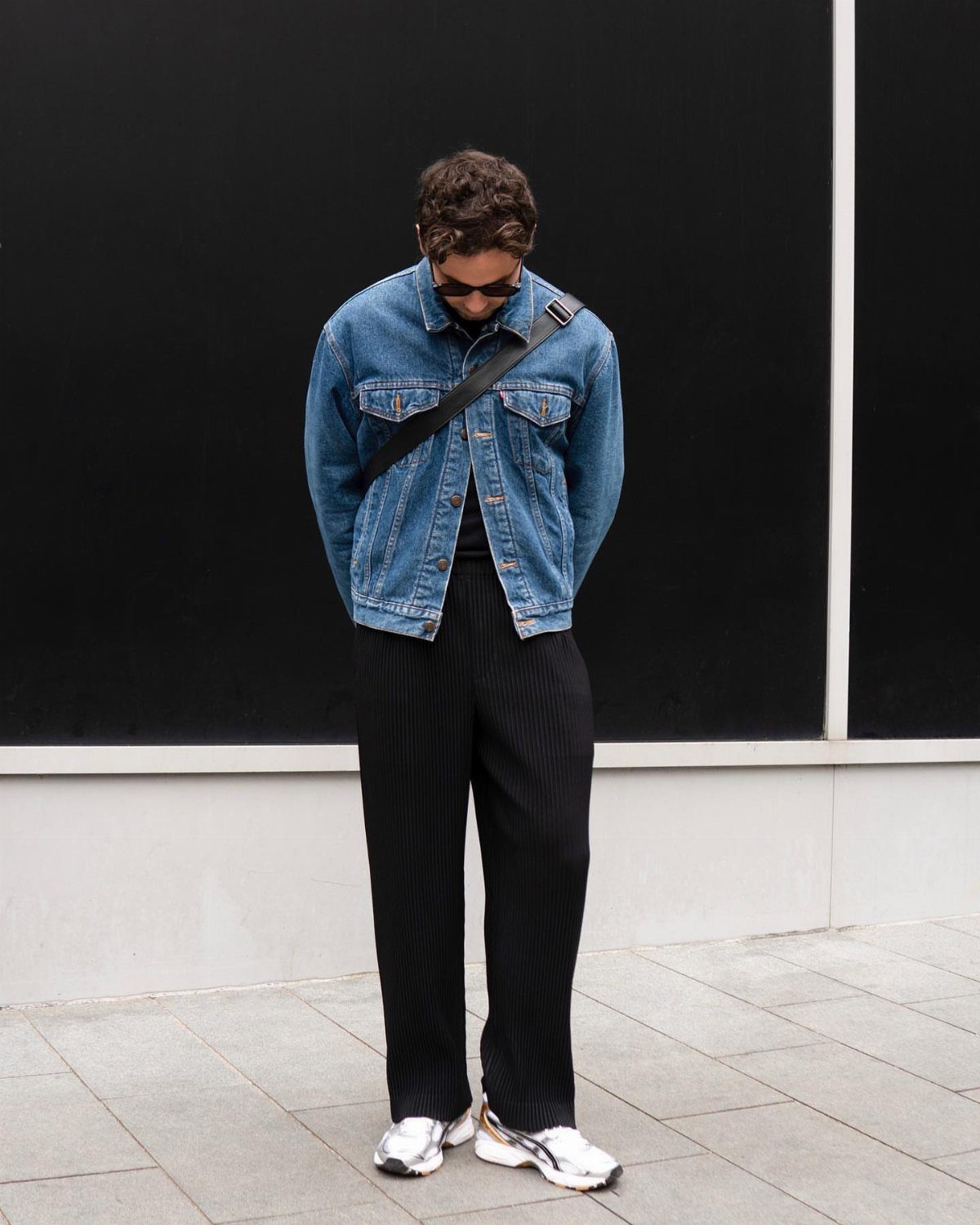
A denim jacket in mid blue works as the middle layer of a fall outfit, bridging a shirt and the cold air outside. Dark bottoms and a pale shoe let the blue do the talking.
Pick a cut that stops at the belt line and sits close through the shoulders; a boxy jacket over wide-leg trousers can swallow a shorter frame.
Wear it over a plain tee now, then add a sweater underneath once the weather turns.
2. Baggy Pants
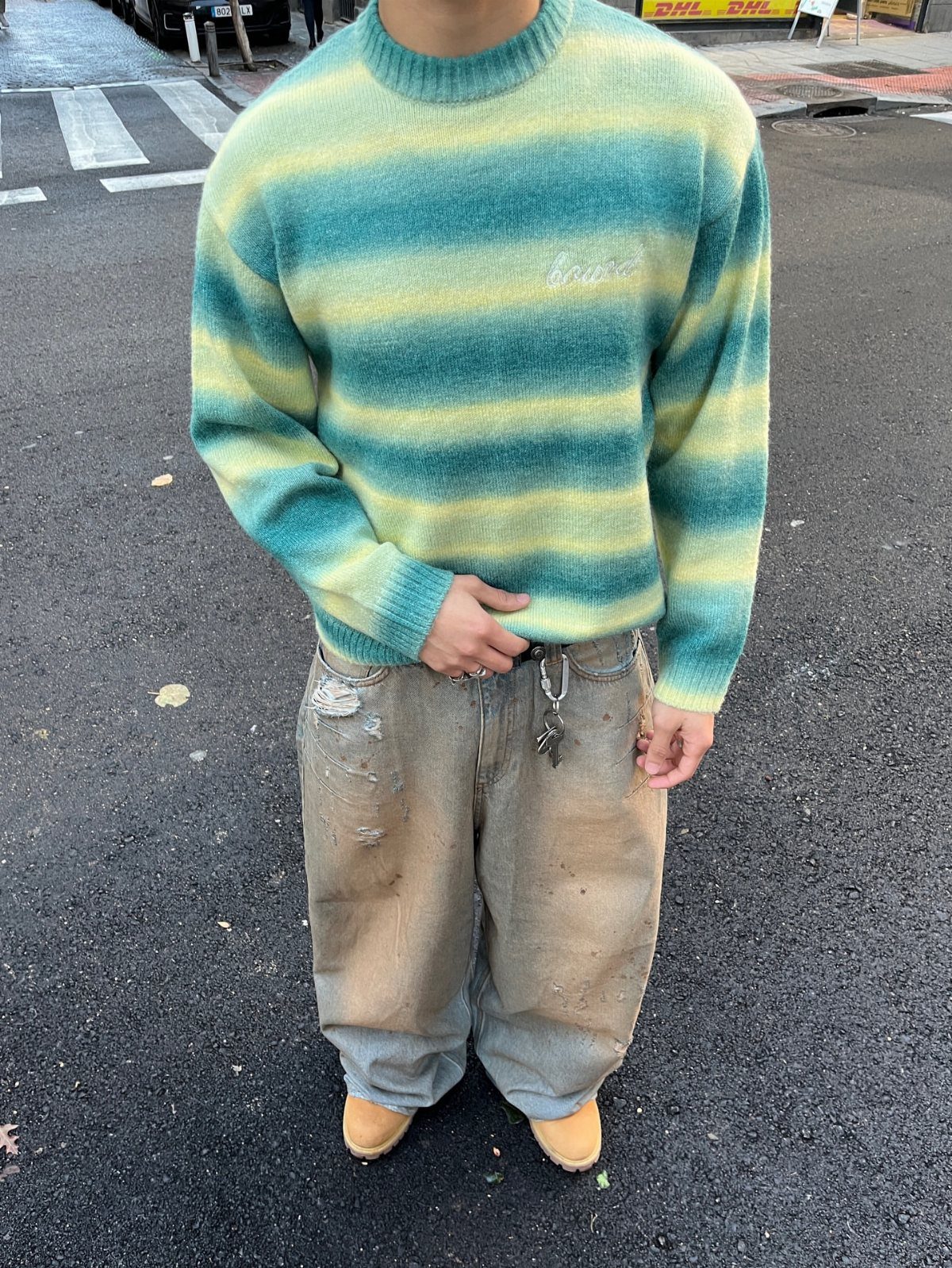
Baggy light-wash jeans ask for a decision about everything else you put on.
Choose a sweater that ends at the hip so the jeans don’t swallow your proportions. Let the hem break on the shoe, with no pooling at the ankle, and wear a chunkier sneaker to balance the leg width.
Taller guys wear this fit easily. If you’re shorter, take a slightly smaller size in the waist and hem them yourself.
3. Brown Tones

Brown works in fall because it sits next to navy as easily as it does next to cream or olive.
A brown crewneck over a navy polo and navy pants proves it, and I like that the pairing looks planned without being fussy.
Keep the brown in one piece, usually the sweater, and let the rest stay dark and quiet.
A polo collar under the knit gives you a clean neckline for work. Brown shoes in a similar shade tie the outfit together.
4. Long Scarves
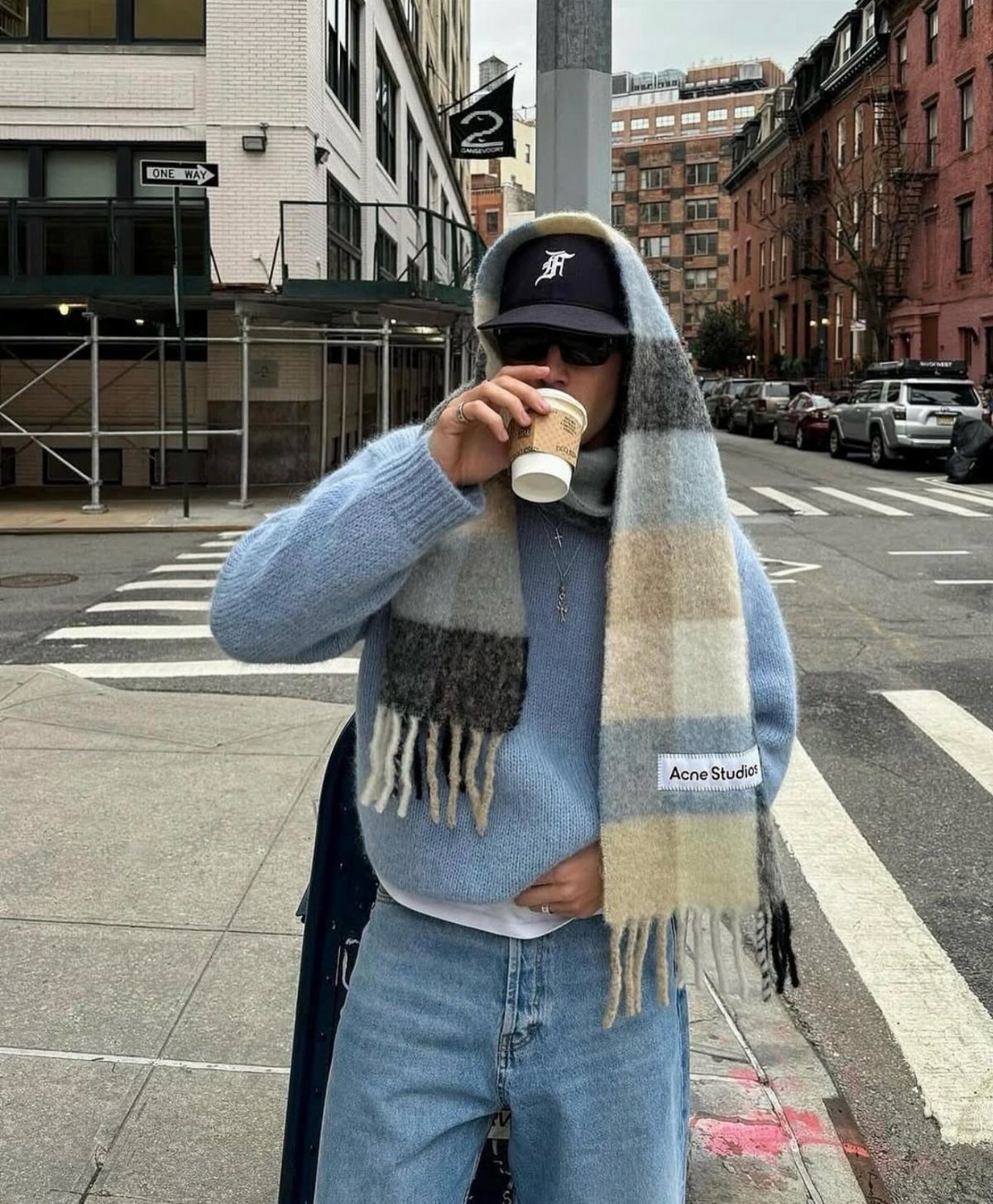
A long scarf does the job of a collar and a statement piece at once. Left hanging loose over a blue sweater and jeans, it adds a vertical line that makes the whole outfit look taller and more deliberate.
Wear it simply: drape it around your neck with both ends hanging, or loop it once. Choose a scarf in a muted check or a solid that sits near your sweater color, so it adds depth rather than competing.
It costs more than a beanie, but it gets used all season.
5. Printed Scarves
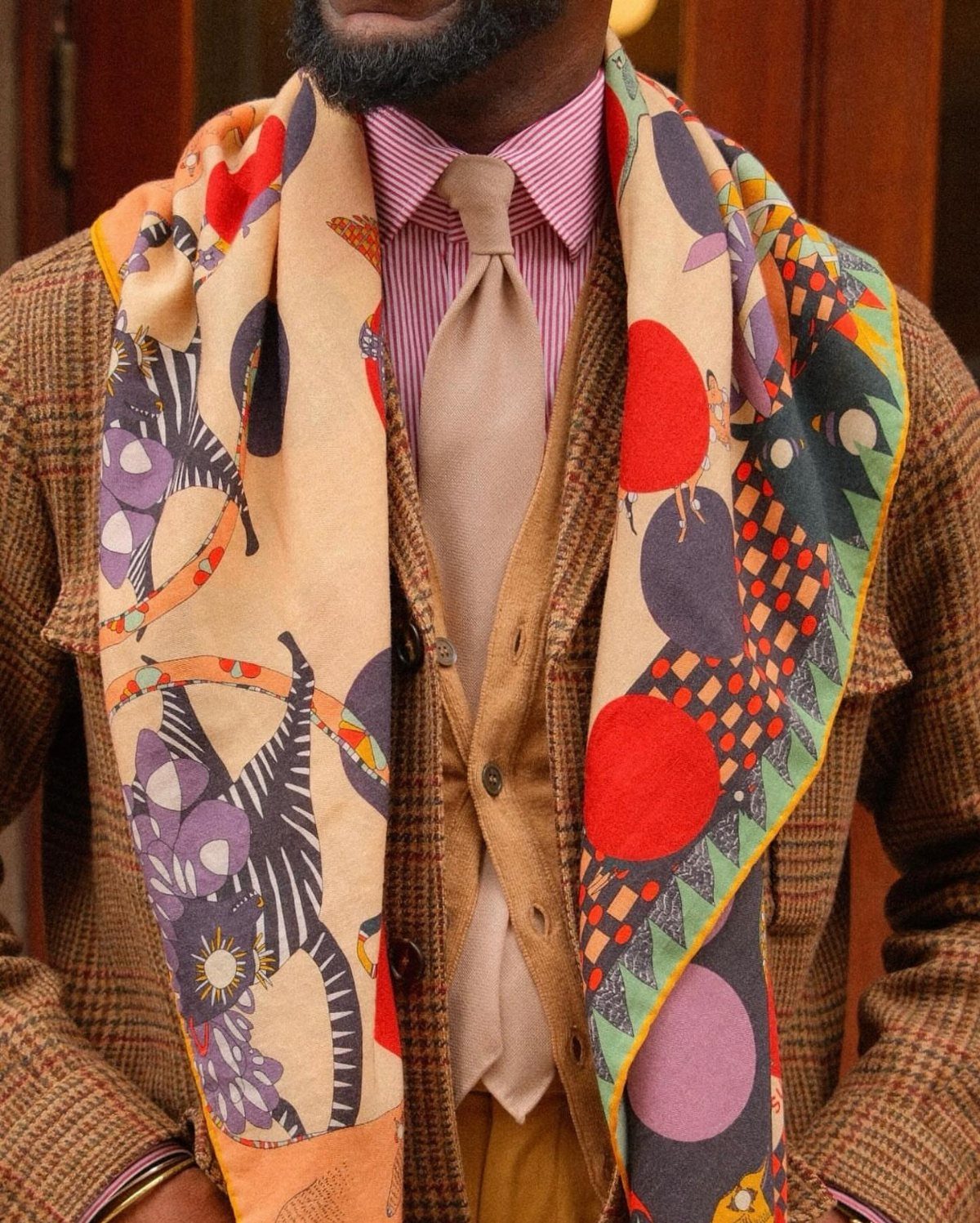
A printed scarf is the quickest way to put pattern into a plain outfit.
Let the scarf be the loudest thing you wear, and keep the rest in two or three colors. Fold it flat under the lapels rather than bunching it.
If stripes and a tie already feel busy, wear the scarf over a solid shirt instead.
6. Flannel Shirts
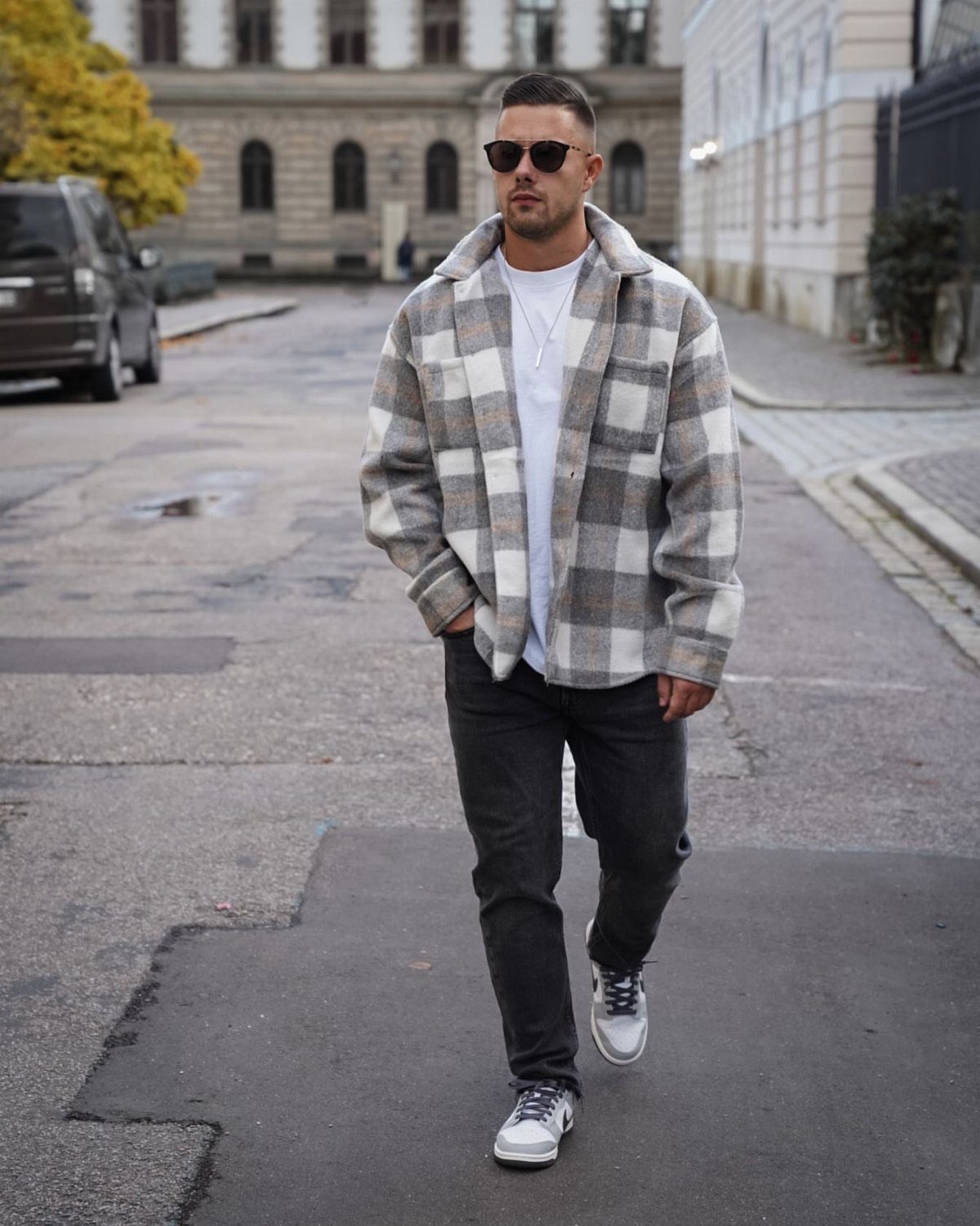
Flannel earns its spot because it’s soft, warm and forgiving. A grey and white plaid reads quieter than the red-and-black version, so it goes with nearly everything.
Leave it untucked, and check that the hem lands around mid-fly so it doesn’t hang too long. The shoulder seam should sit at the edge of your shoulder.
A neutral plaid like this one also works under a denim jacket or a field jacket when it gets colder.
7. Corduroy Blazers
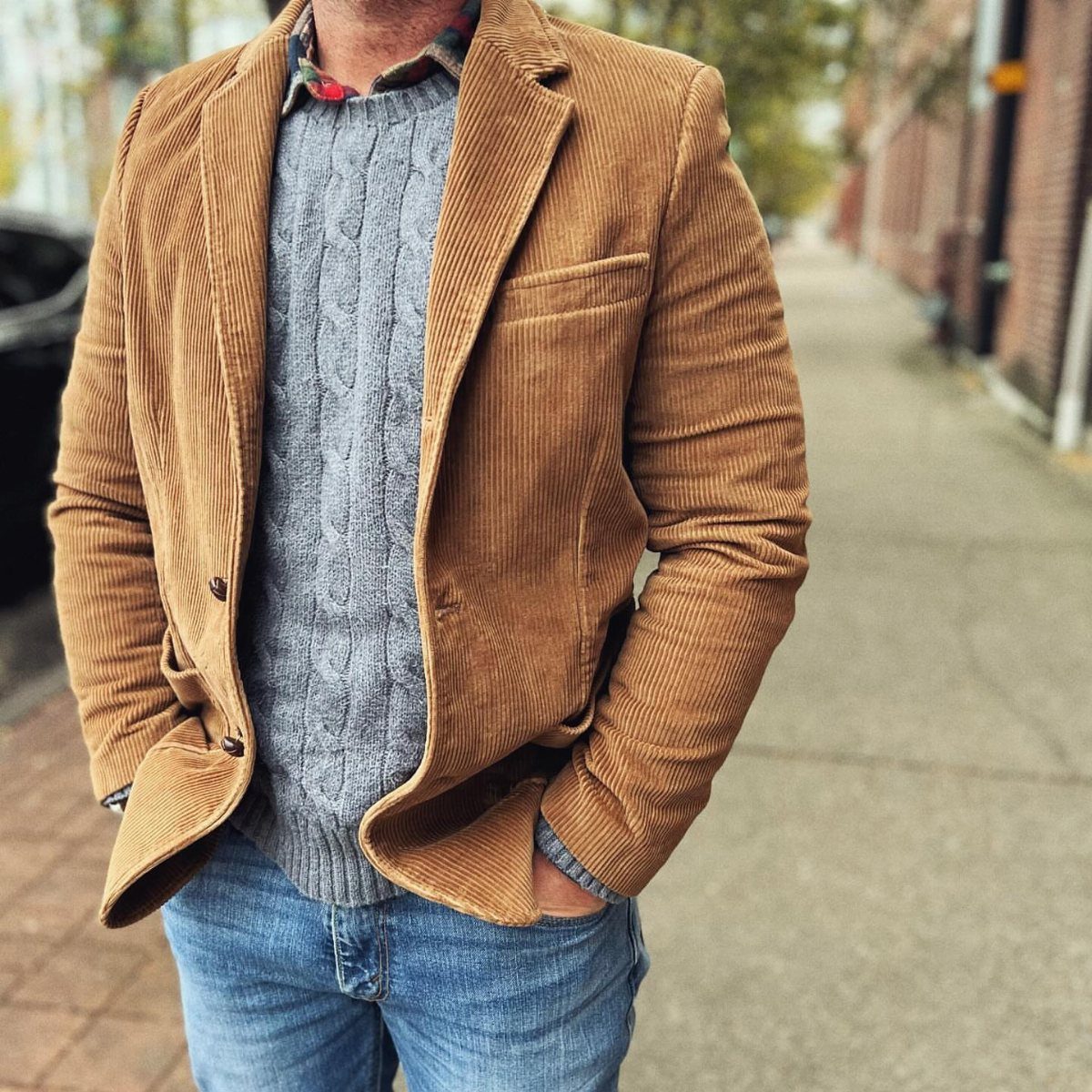
Corduroy gives a blazer texture that a flat wool jacket can’t, and that is why it feels vintage without looking like a costume. Brown corduroy over grey knitwear and denim is low effort and reads cleaner than most fall combinations.
Keep everything under it simple: one knit, one shirt, one pair of jeans.
A patterned shirt works here because the ribbed cloth is already doing the talking. Tan is the lighter, easier alternative if you wear a lot of dark denim.
Choose a jacket that fits the shoulders closely; a knit underneath adds bulk, so test it with the sweater on.
8. Shearling Coats
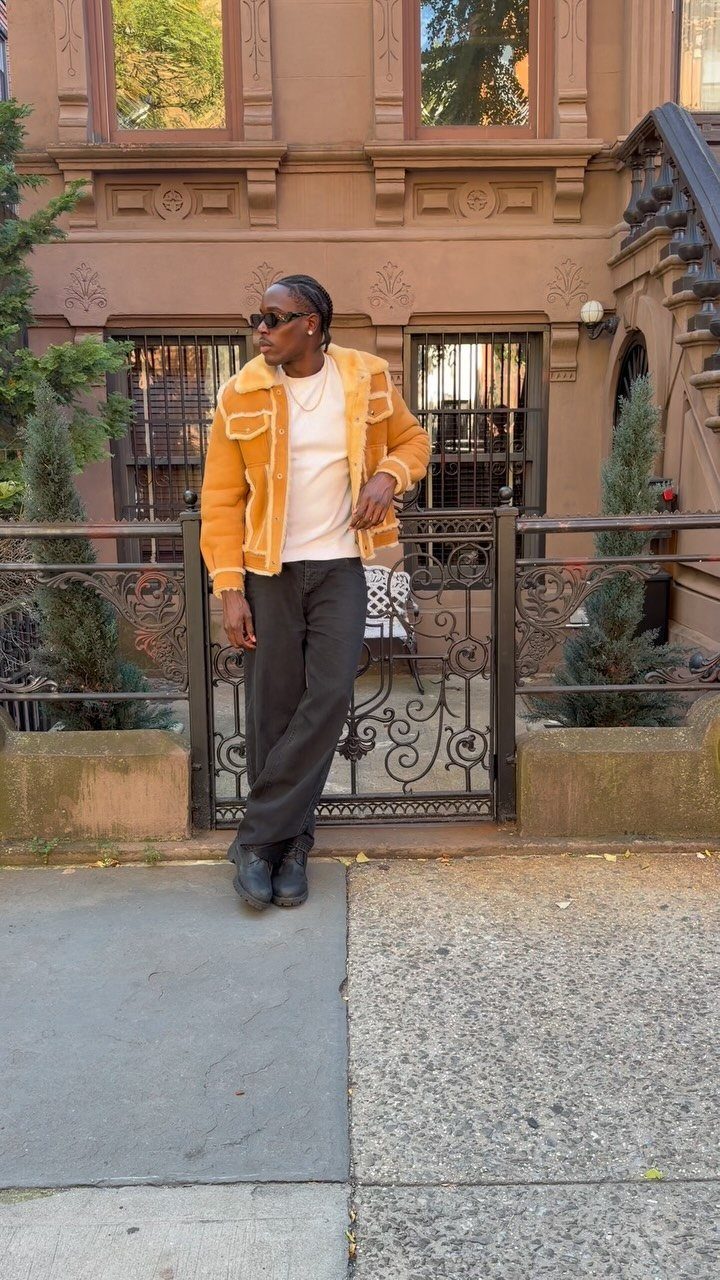
A shearling jacket is the loudest warm layer you can own, and mustard yellow turns it into the center of the outfit. Everything else should step back: a white shirt and dark trousers, baggy or straight, give it room.
Skip a scarf with a busy pattern, since the collar already adds texture around your neck. If yellow feels like too much, a darker brown shearling keeps the same warmth with less attention.
It costs real money, but it replaces a coat for most of fall. Pick one that closes cleanly over a sweater.
9. Oversized Coats
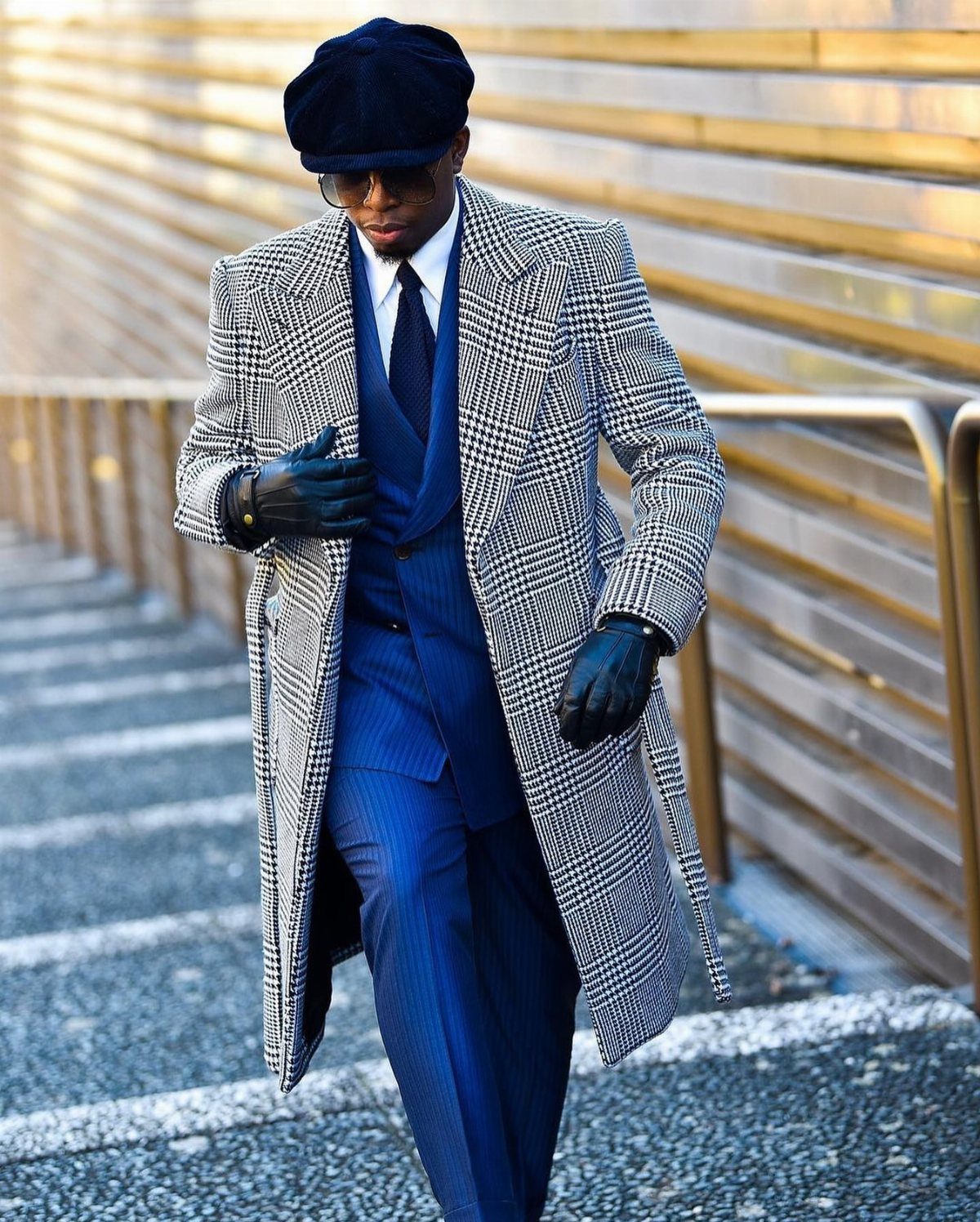
Under a big coat, a suit stays sharp and the coat does the weather work. Houndstooth in grey is the pattern to try: it reads as a texture from a distance, so it won’t fight a plain navy suit.
Let the shoulders run a little wide, but make sure the hem clears your jacket by a few inches so the suit doesn’t peek out awkwardly.
If you’re shorter, choose a hem near the knee, and keep the suit slim to balance the volume.
10. Field Jackets
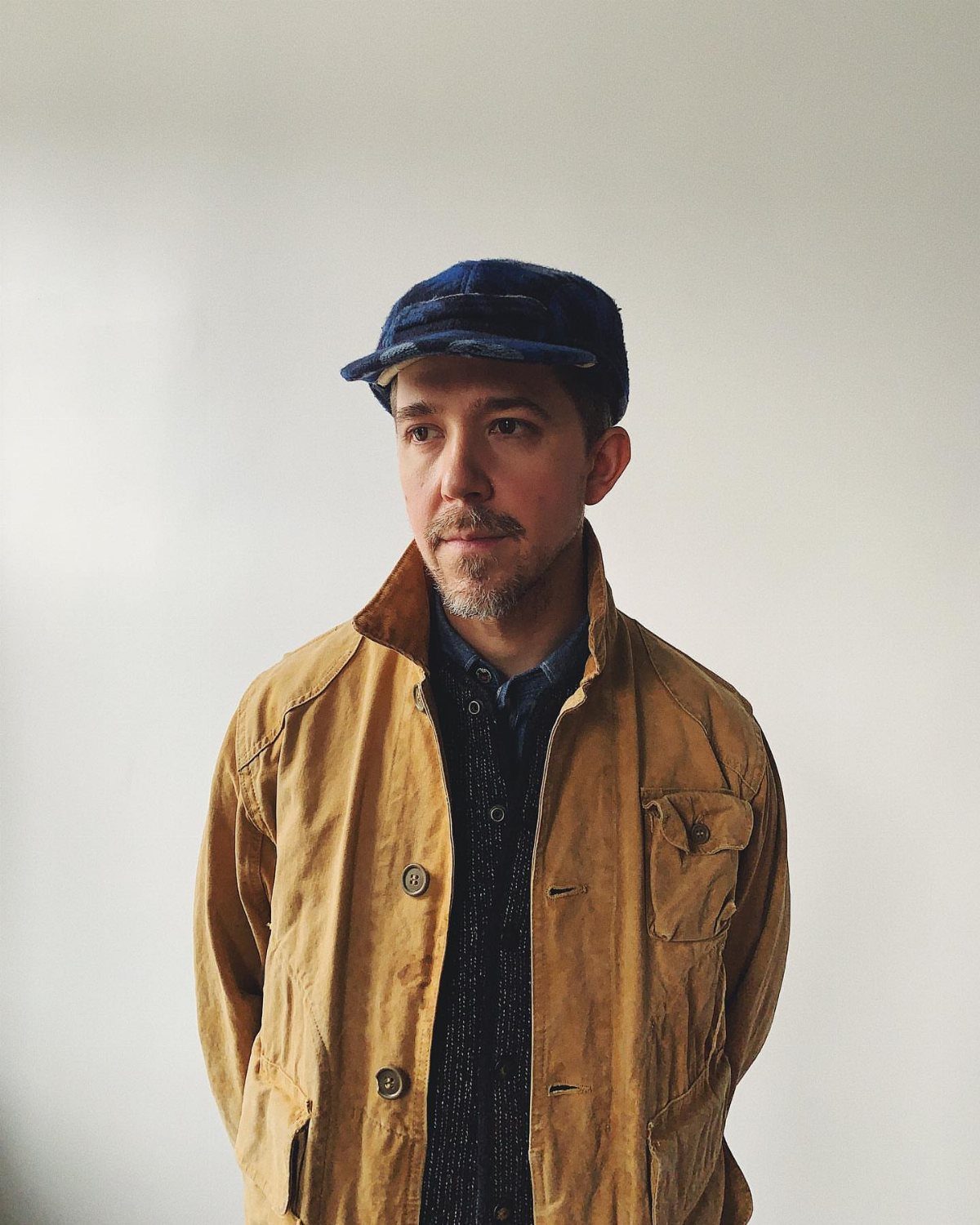
A tan field jacket makes a plain dark shirt look planned. The pockets give it a utilitarian shape, and I like that it needs nothing else to look finished.
Wear it open over a dark tee or a shirt, with darker pants so the tan stands out.
Choose a length that stops around the hip, and make sure you can raise your arms without the hem lifting. When it gets colder, a sweater fits underneath if you size up carefully.
11. Burgundy Accents
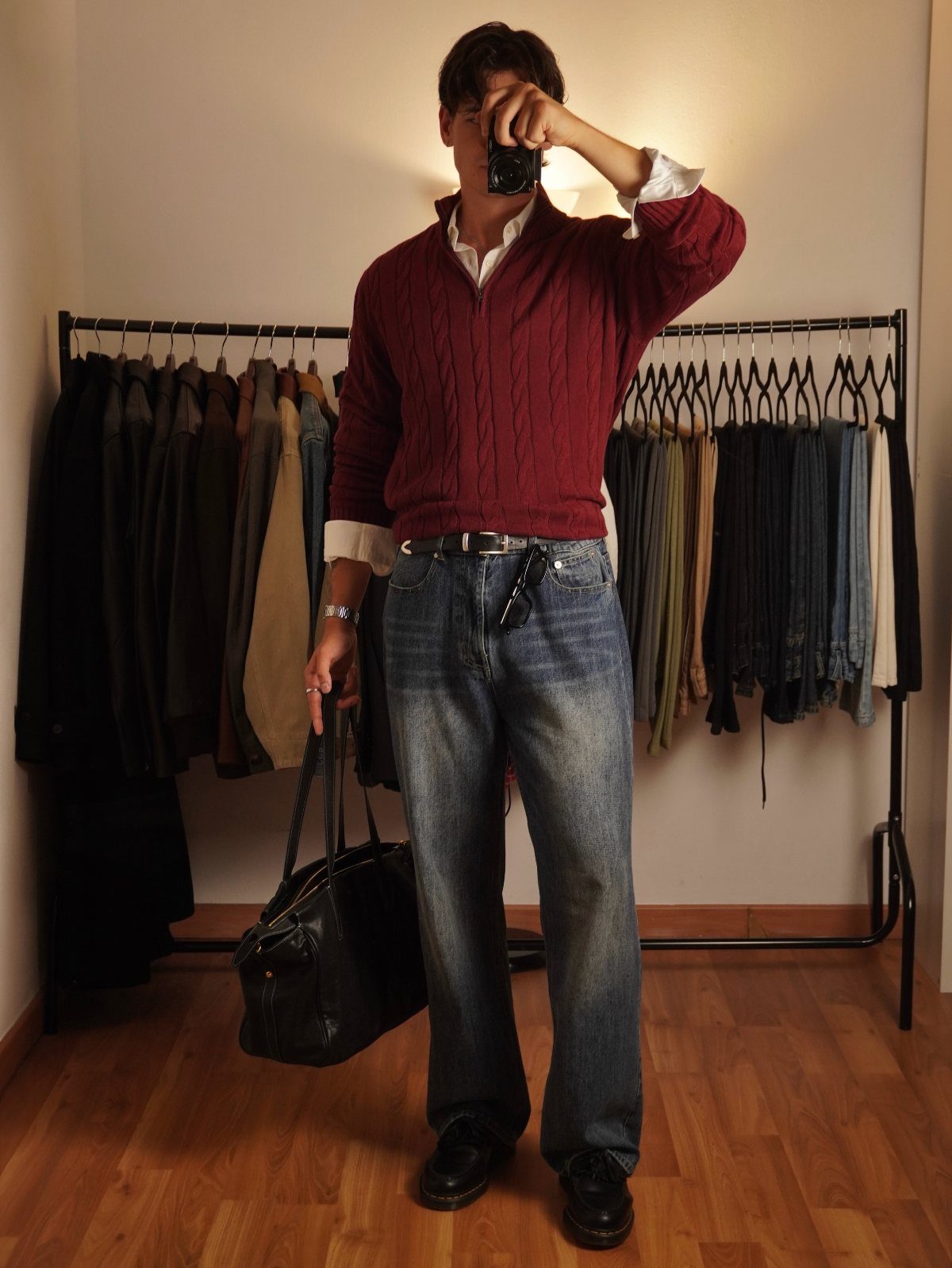
Burgundy adds warmth to a fall outfit without the shouting of orange or red. Cable-knit burgundy over white and denim is the baseline version: 3 pieces, no thinking required.
One burgundy piece against neutrals is enough; the white shirt gives it definition. Blue denim and burgundy already get along, so no further thinking is needed.
Black or dark brown shoes both work. If you’d rather start smaller, try a burgundy scarf or beanie on a navy coat.
Best Colors for Fall
Fall colors run richer and more saturated than summer’s pastels, and that depth is what makes them easy to mix.
Earth tones lead: warm browns, soft beiges and deep olive green all sit well together, so a single outfit can hold two or three of them without looking matched.
Rust orange and wine red come next. Pair either with neutrals and the cooler shades of the season, and they supply warmth without taking over.
Mustard and pumpkin sit at the bright end of the palette. I’d treat them as one accent at a time, against neutrals, so the outfit stays balanced on a gray day.
A simple rule for building a palette: choose one earth tone as the base, one neutral to calm it, and one deeper accent if you want it.
Best Fabrics for Fall
Wool belongs on tailored pieces, and no other fabric says fall quite as clearly.
Heavier shirting, flannel first among them, becomes the overshirt that anchors casual fall dressing. Trousers and shirts both carry autumn weight when cut from corduroy, moleskin or brushed cotton.
Jeans and denim jackets work better in a heavier weight once the temperature drops.
One crisp piece holds the outfit together: a plain dress shirt works under anything and stops wool and flannel from piling on too thick.
Layering Techniques
Layering in fall is not about wearing more clothes. The target is an outfit that holds at 55°F when you leave and still works at 72°F by lunch, with layers that come off without leaving you underdressed.
Think in 3 layers. The base is a fitted foundation that stays on all day: a tee, dress shirt, Oxford shirt or rollneck.
The middle layer does 2 jobs: it adds warmth and gives the outfit its texture, and it needs to be something you can pull off once you step inside.
The top layer stops rain and wind and gets removed first when the temperature climbs. A blazer, wool overcoat, denim jacket or parka fits here.
Test the outfit with the outer layer off. If the base and mid layer still look finished, the whole thing holds together at any temperature.
The real secret here is expert layering; tuck shirts underneath sweaters and belts, and let fisherman sandals poke out of wide-leg pants.
— Glamour
Frequently Asked Questions
What styles are trending right now for men?
Flannel shirts, oversized coats and turtlenecks lead the fall picks. Other pieces I’d add are denim jackets, baggy light-wash jeans, corduroy blazers, shearling coats, field jackets and long scarves.
Brown tones and burgundy accents are the strongest colors, and one statement piece against quiet neutrals is the easiest way to wear any of them.
What are the must-have essentials for men in fall fashion?
Start with versatile outerwear: a denim jacket, field jacket or wool overcoat. Add a flannel shirt, a knit sweater and a plain dress shirt to crisp up the layers.
Wool, flannel, corduroy and heavier denim are the fabrics that look right for the season. Dark jeans or trousers and brown shoes tie it together with very few pieces.
What’s in style for fall 2026 men?
Warm, deep colors lead: browns, beiges, olive, rust, wine red and burgundy, with mustard and pumpkin as bright accents.
Build from navy, charcoal and brown, then bring in a single piece that carries color or pattern. Shapes run relaxed, with baggy jeans, oversized coats and long scarves, balanced by a closely fitted shoulder on jackets and blazers.