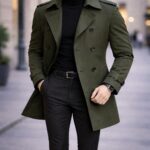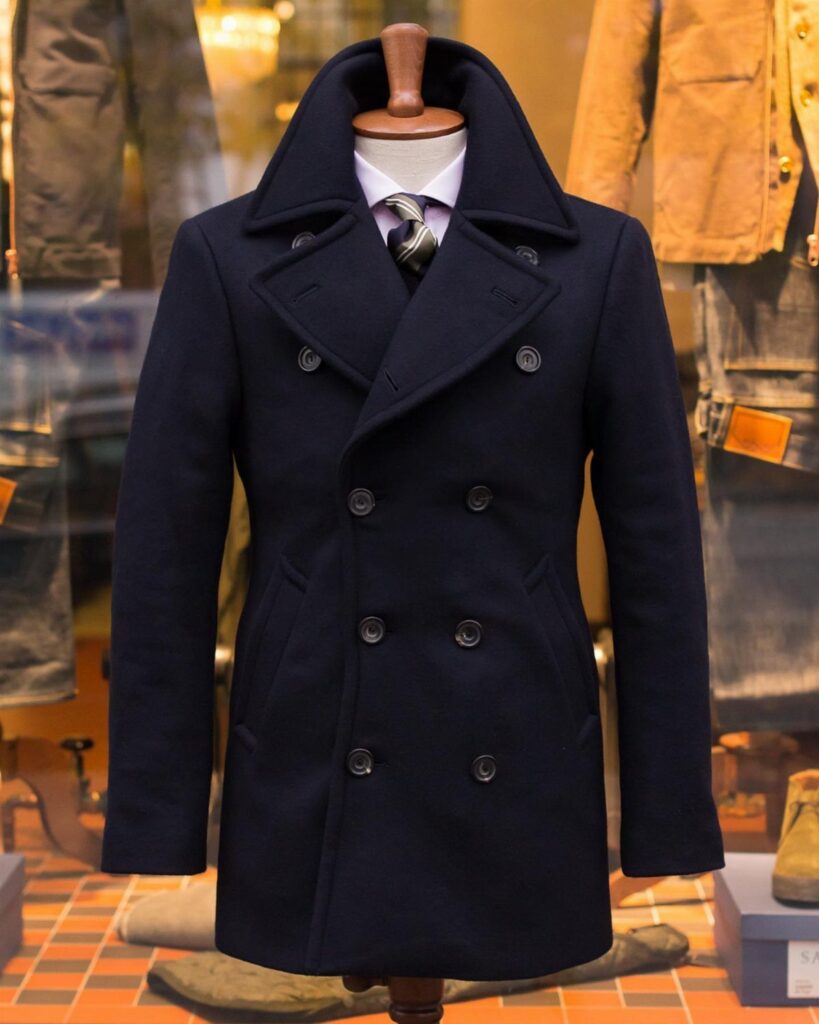
Where you wear it decides which of these is yours: a belted trench for a rainy commute, an overcoat for a wedding or interview, and a hooded parka or a canvas chore coat for a weekend of errands.
The range runs from dressy wool overcoats to costly shearling and leather, down to casual canvas.
Before buying, put the coat on over the thickest sweater you plan to wear beneath it; if the shoulders pull or the sleeves ride up, size up.
1. Trench Coat
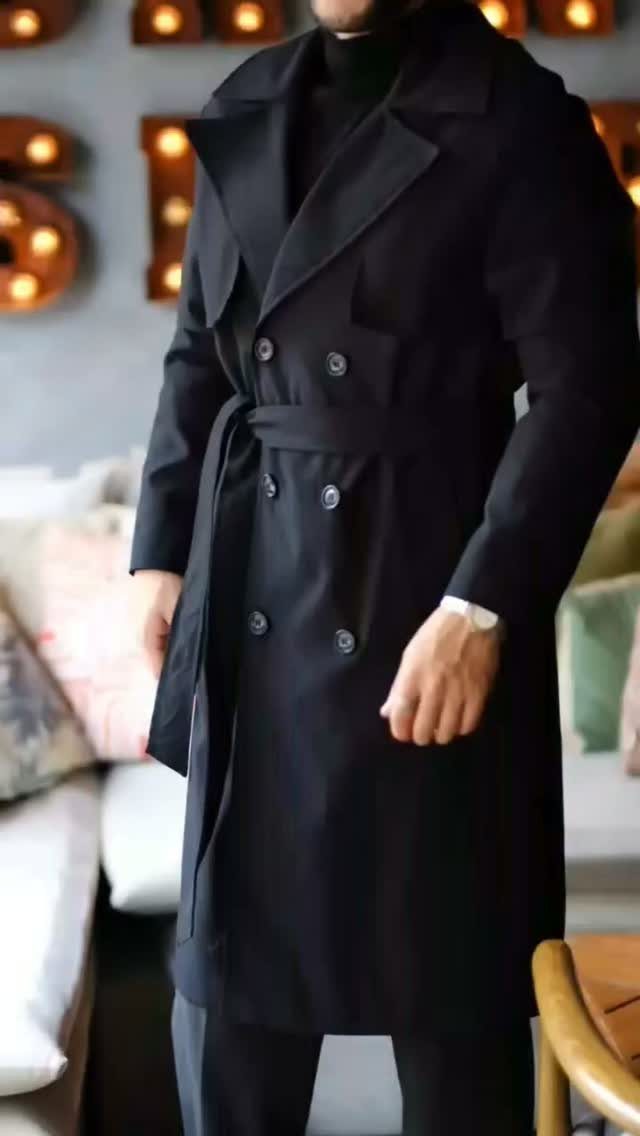
A belted trench in black reads dressier than the usual khaki, and it keeps working over a turtleneck the way it does here.
Double-breasted fronts with a belt give you a defined waist, which helps if you carry a little extra through the middle or want a long coat to look less boxy.
I would knot the belt loosely instead of buckling it tight; cinched hard, it bunches the fabric.
The coat’s military roots and waterproof build make it a solid choice for a rainy commute, and it shades from work to dinner without a change.
2. Overcoat
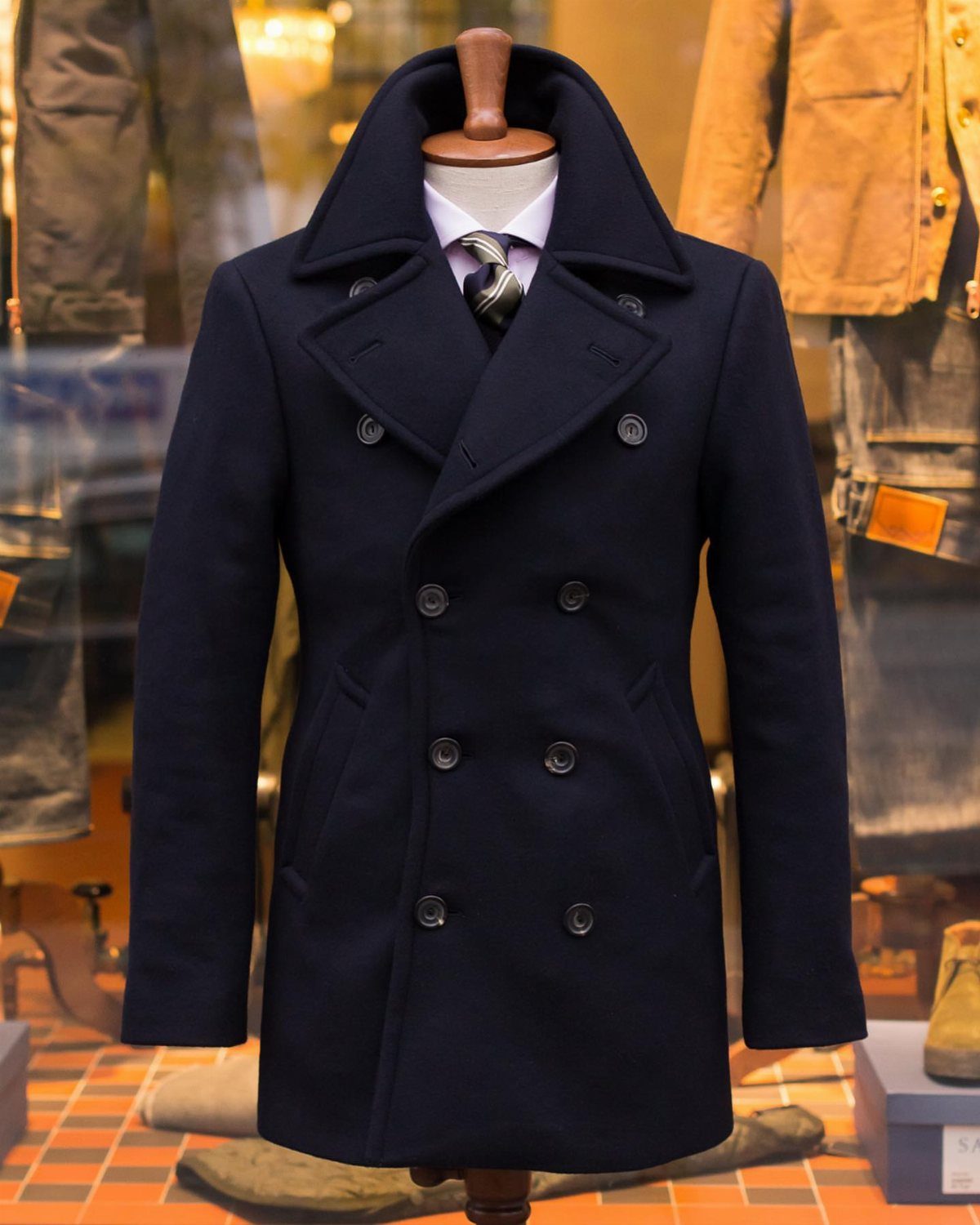
Navy is the overcoat color I’d buy first, since it sits over a suit, a shirt and tie, or a plain sweater without clashing with any of them.
A double-breasted front adds formality, so it suits weddings, interviews and office days.
Length matters more than most men expect. The hem should cover the jacket underneath, so try it on with your suit jacket, not a thin shirt.
If the shoulders pull when you reach forward, size up. Single-breasted is the easier option for something plainer.
3. Shearling Coat
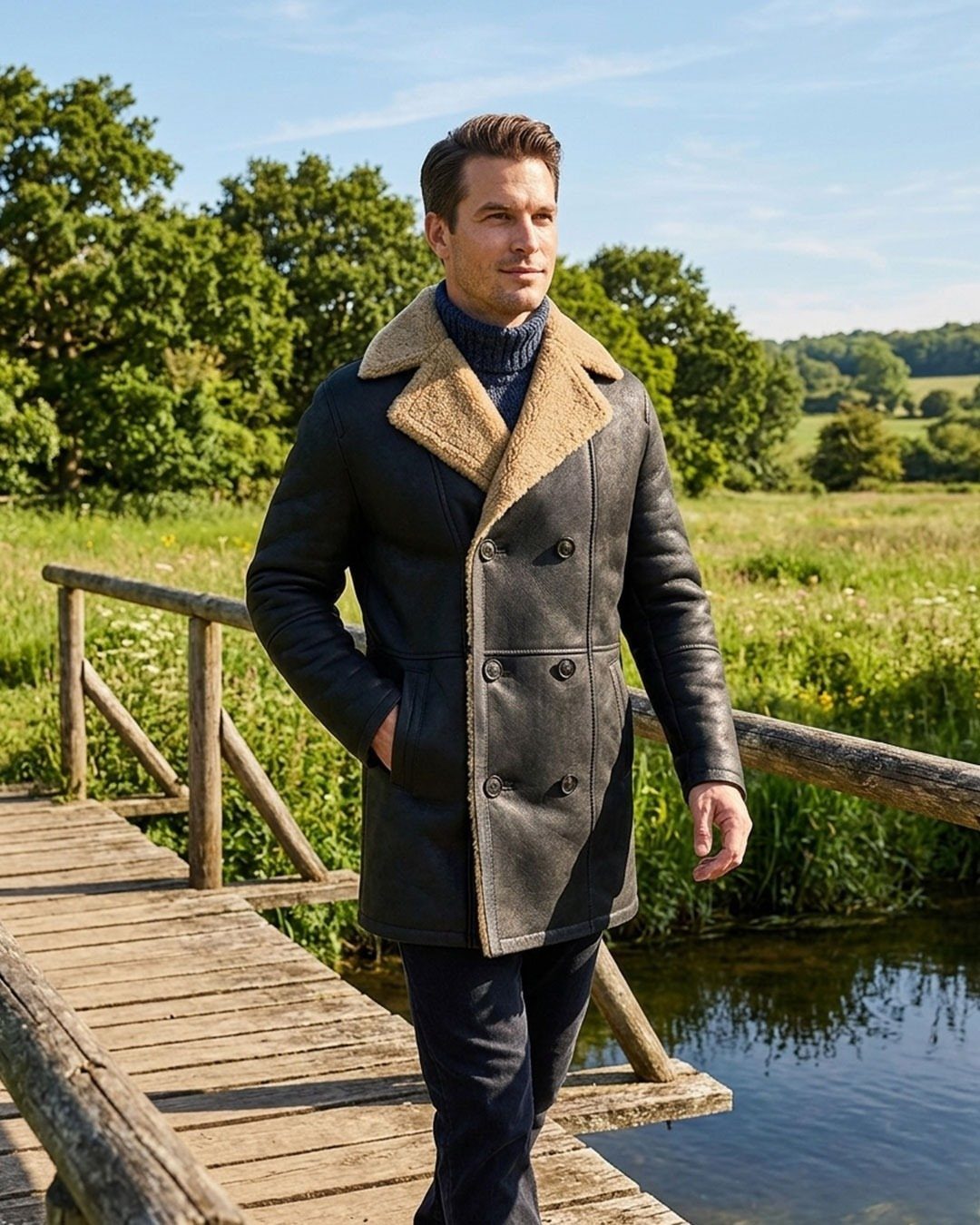
Sheepskin is warm in a way wool rarely matches, and a black shearling coat over a simple blue sweater looks expensive without any effort. You wear one layer under it and little else.
The cost is real. Shearling runs pricey, it is heavy, and it dislikes heavy rain, so I would keep it for dry, cold days and skip it for slushy commutes.
Try it on with your bulkiest sweater to check the sleeves. Buy one good coat and wear it for years instead of chasing a cheaper copy.
4. Puffer Coat
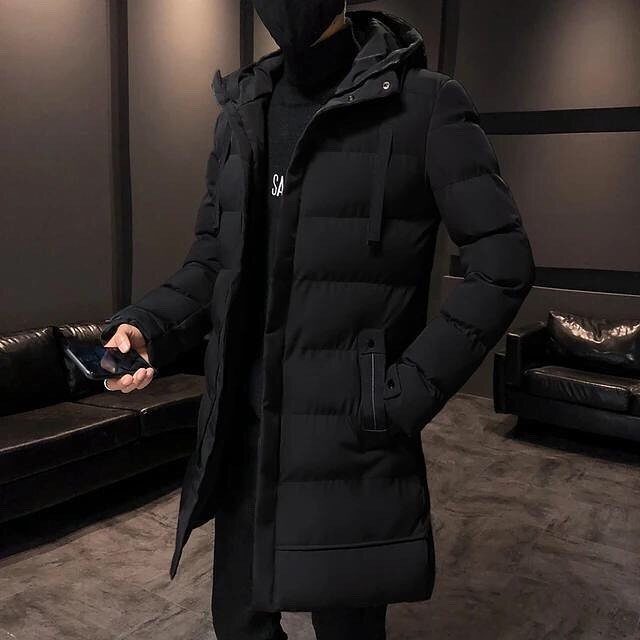
Long, black and quilted, with a hood: this puffer covers you past the hips, which is where a short one leaves you cold. In deep winter, that extra length is what I would pay for.
Worn over a turtleneck, it stays streamlined if you keep everything underneath slim and dark.
Black hides dirt, which suits daily wear. What you give up is bulk; it will swallow a tailored jacket, so skip it for formal events and pair it with a sweater and plain trousers instead.
5. Trucker Jacket
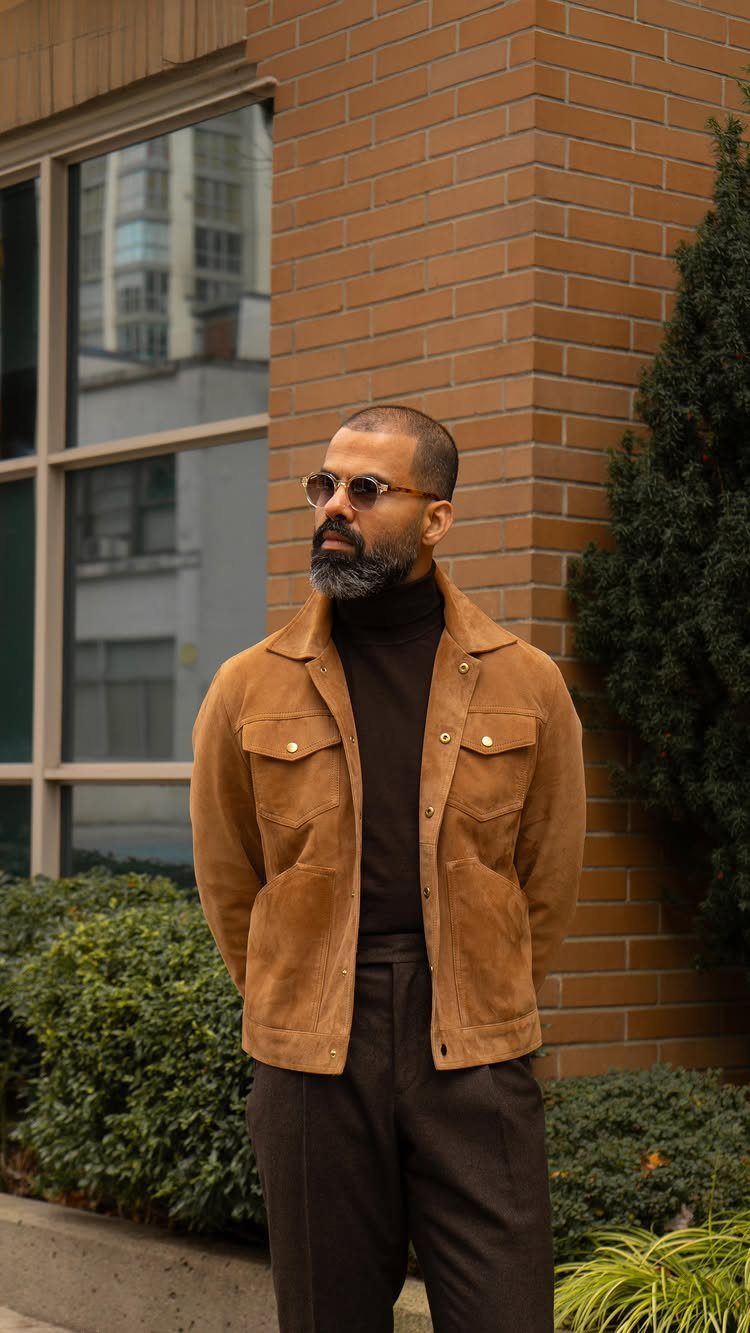
Suede trucker jackets look best in tan or brown, and a turtleneck underneath keeps it from feeling too rugged. Dark trousers finish it, and the outfit works from a casual dinner to a day in the office.
The cut is short and boxy, so it flatters most builds, especially if you are on the shorter side.
Suede does not like rain, so a protective spray is worth the few dollars. Choose a snug fit through the shoulders; sleeves can be tailored later if needed.
6. Car Coat
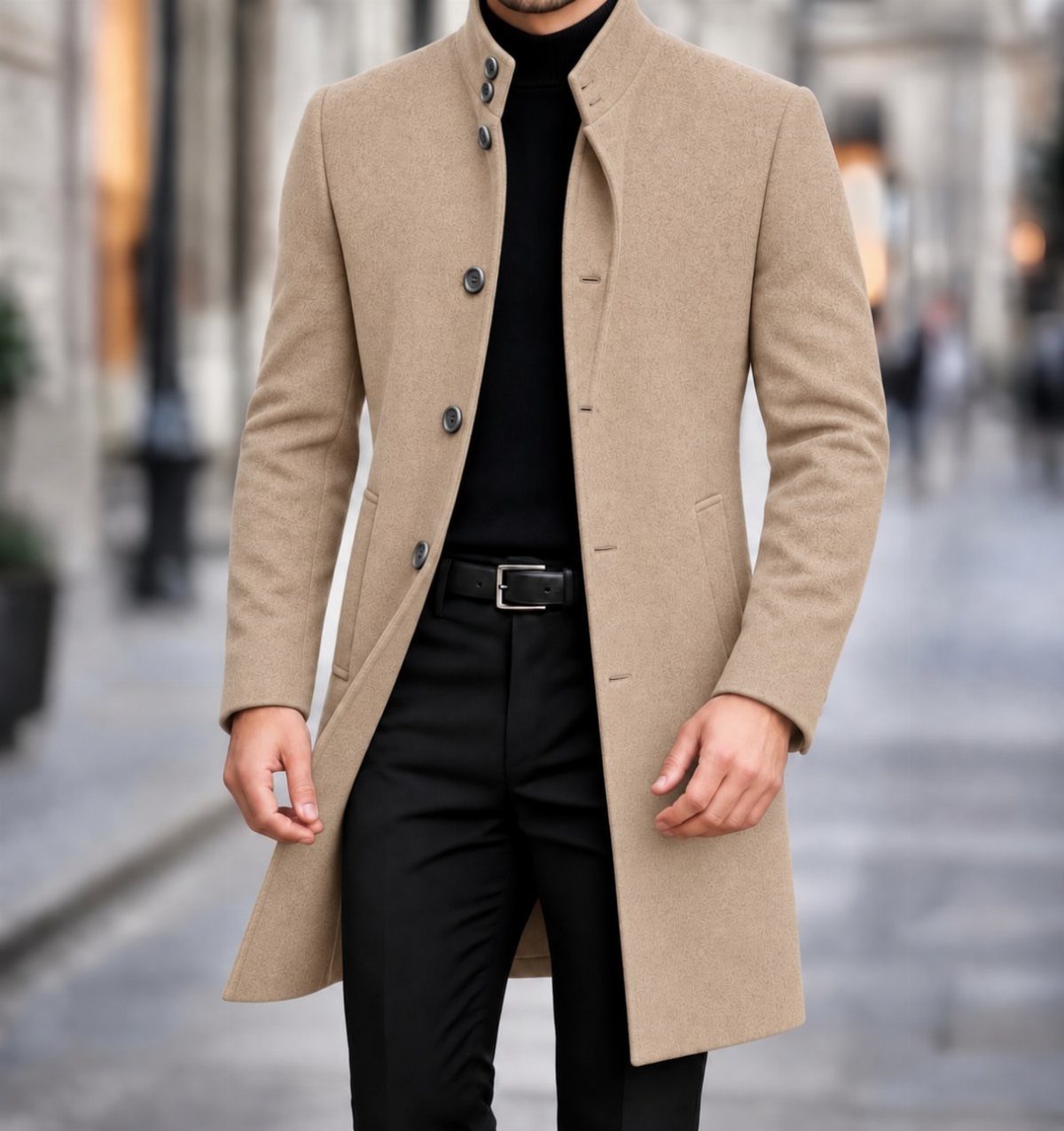
Mid-length and tan, a car coat sits between a jacket and a full overcoat, which makes it easy to wear all day. It falls around mid-thigh, so you can sit down in it without fuss.
With a black turtleneck and black trousers, the tan becomes the single point of color, and I like that restraint.
It is a good first coat for work, dates and weekends. Check that the hem clears your jacket if you plan to layer over tailoring.
7. Hooded Parka Coat
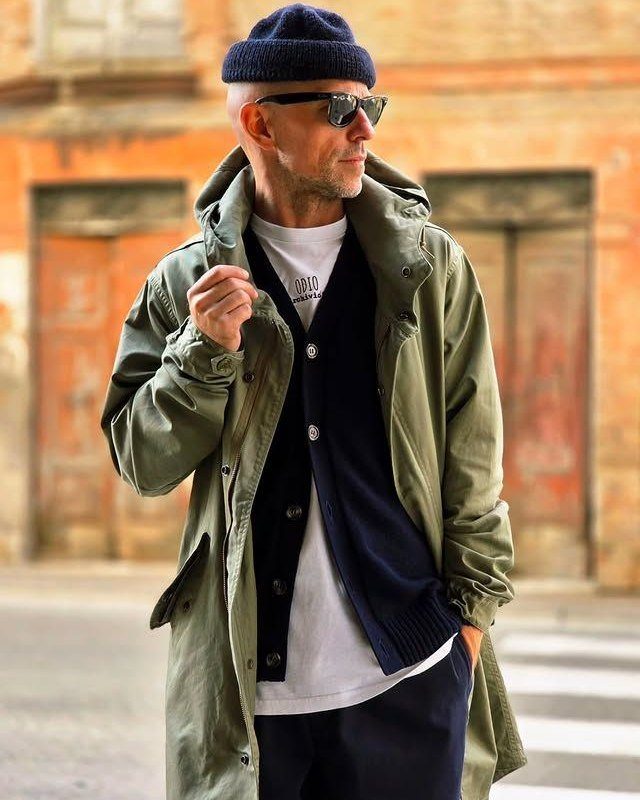
Olive is the parka color I’d pick for a man who wants one coat to go over everything.
It sits easily on top of a navy cardigan and a plain white tee, and the hood adds coverage when the weather turns.
Keep the layers under it thin and dark so the coat stays the main piece.
A parka is a casual coat, so I would save it for weekends, errands and the commute, and bring a wool overcoat to the dressier days.
8. Wool Duffle Coat
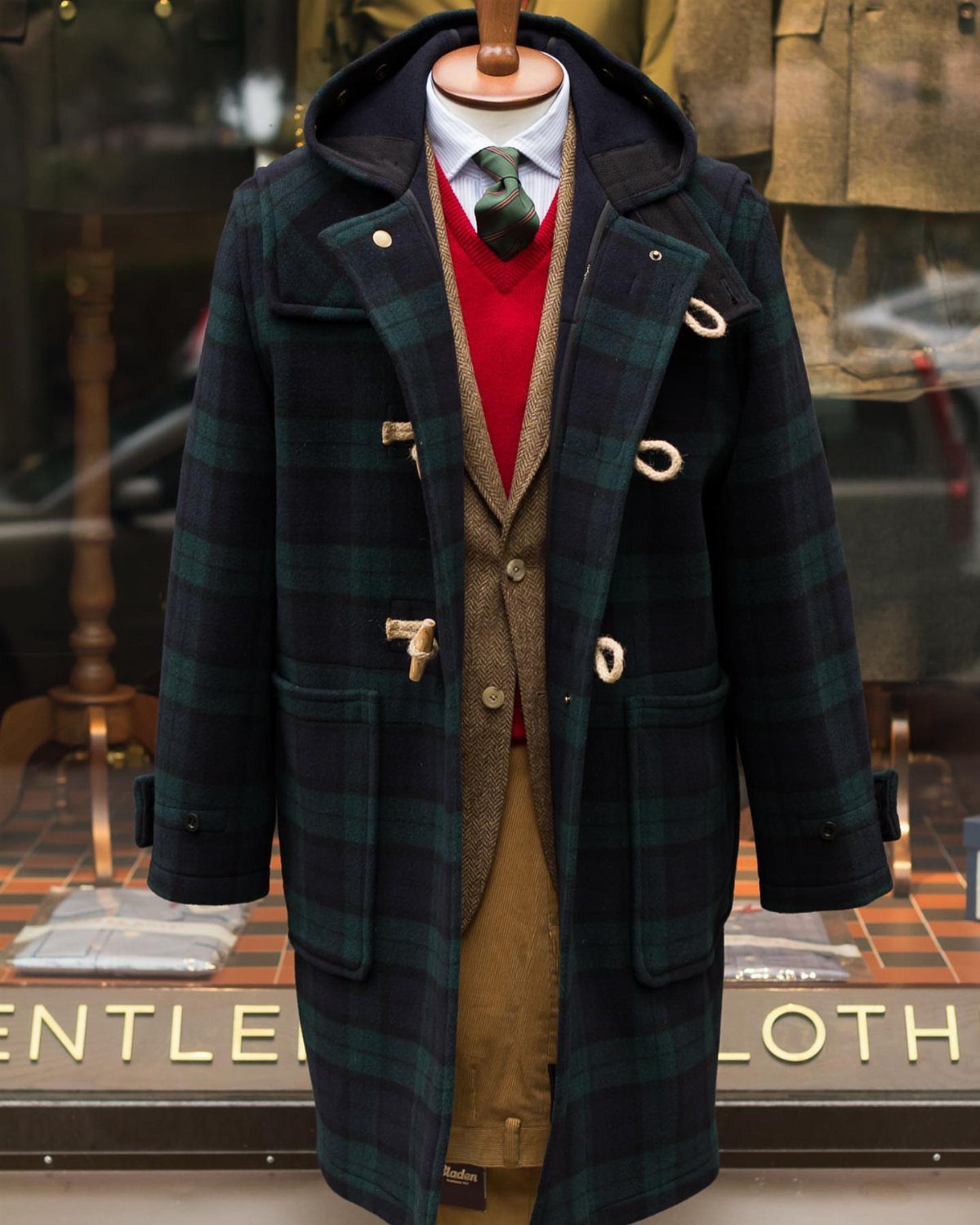
Toggles are what make a duffle coat a duffle coat, and a dark green plaid wool version adds pattern without any fuss.
A red sweater and a brown vest, as on this display, work because the coat stays calm around them.
Khaki pants keep it relaxed.
If your sweater is already loud, I would choose a solid duffle in navy or gray instead. Fasten the toggles from the top down and check that you can still do them up over a thick knit.
9. Canvas Chore Coat
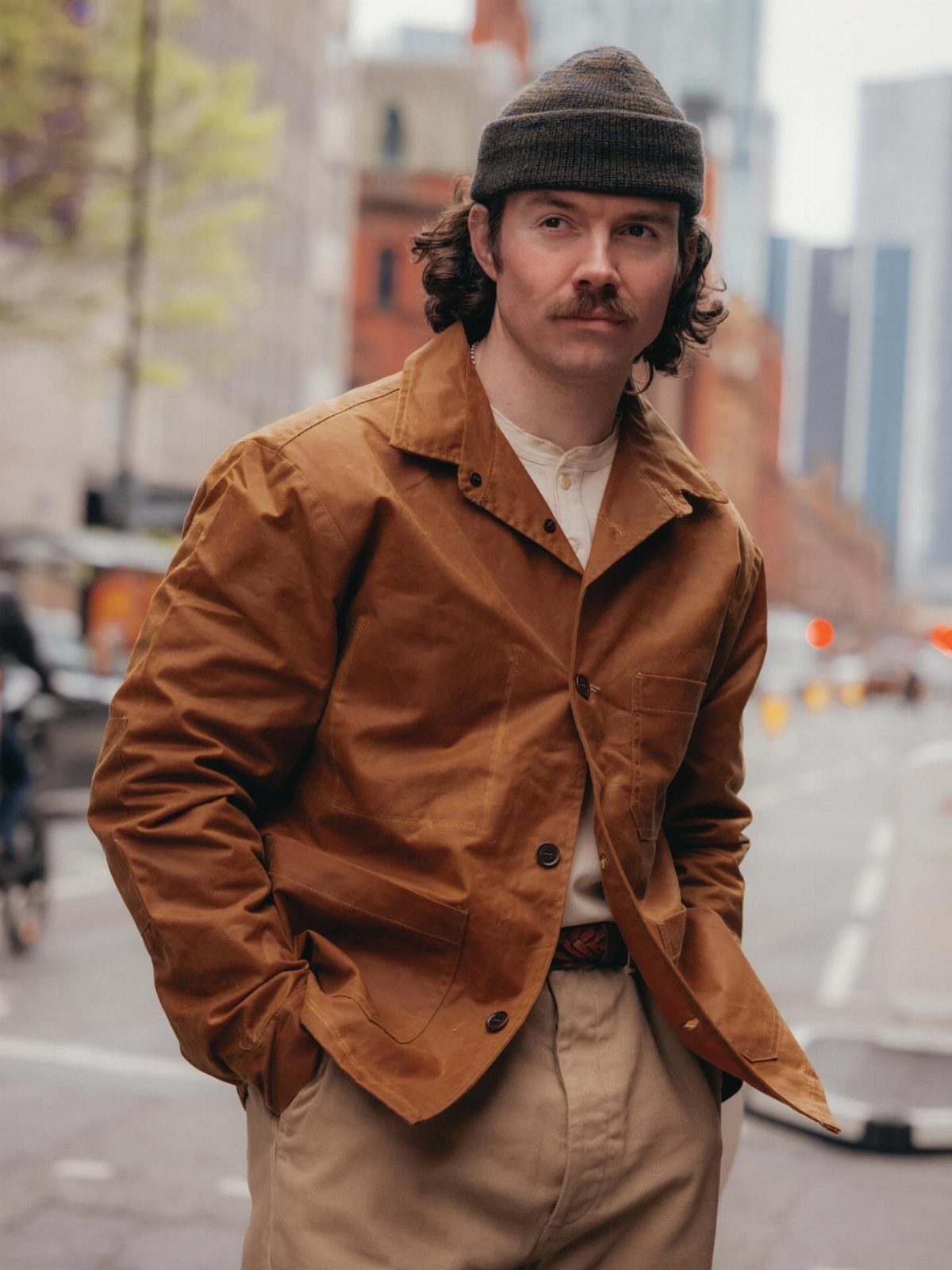
A brown canvas chore coat dresses up khakis better than any other piece I can think of, and never looks like effort.
The boxy cut and plain front pockets read as workwear, and the fabric softens with wear instead of looking tired.
Add a gray beanie and you have a weekday outfit with almost no decisions in it.
Pick a size that lets you fit a sweater under it, since canvas has little give. It is too casual for a tailored office, so keep it for off-duty days.
10. Belted Field Jacket
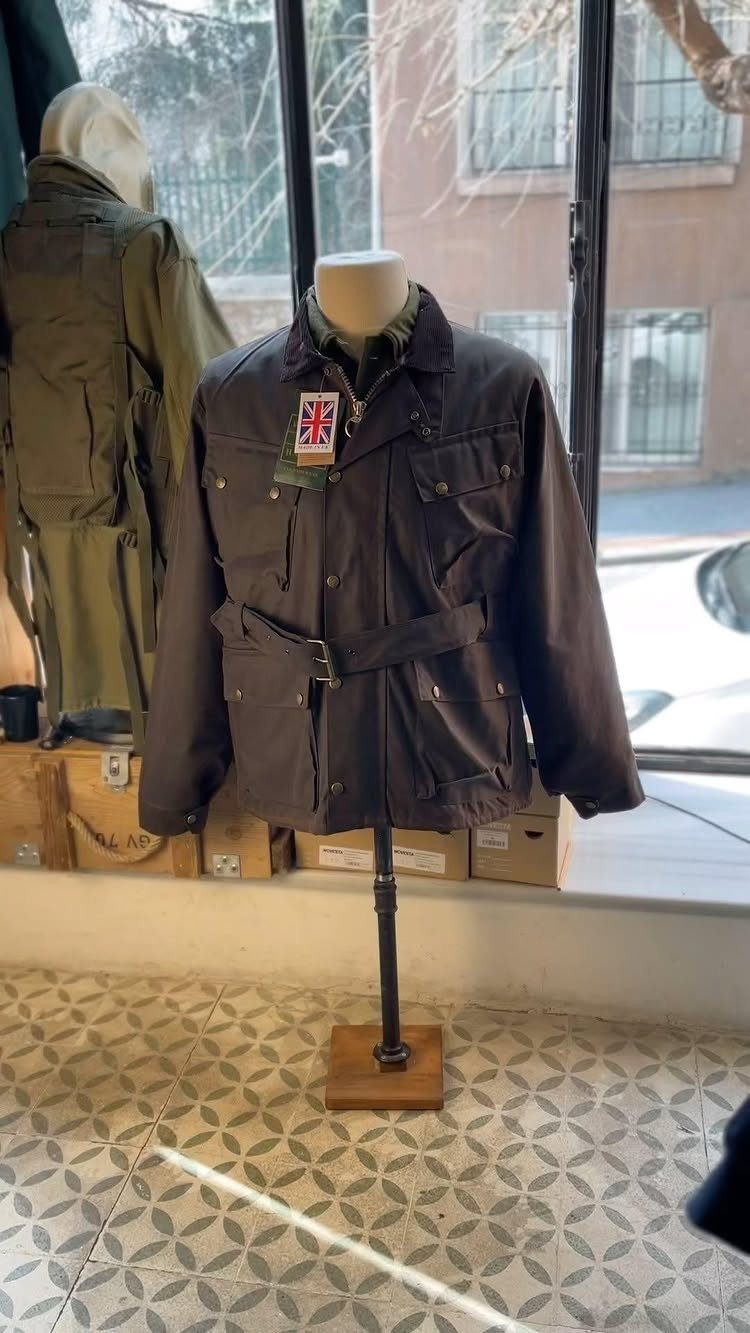
Pockets do the talking on a field jacket, and a brown one with a belt gives you storage plus a shaped waist. Cinch the belt only as far as feels natural; pulled tight, it puckers the cloth.
I like brown for how it pairs with denim, olive and khaki without matching any of them too closely. Wear it over a plain tee or knit and leave the pockets mostly empty, because stuffed ones ruin the line.
11. Brown Leather Jacket
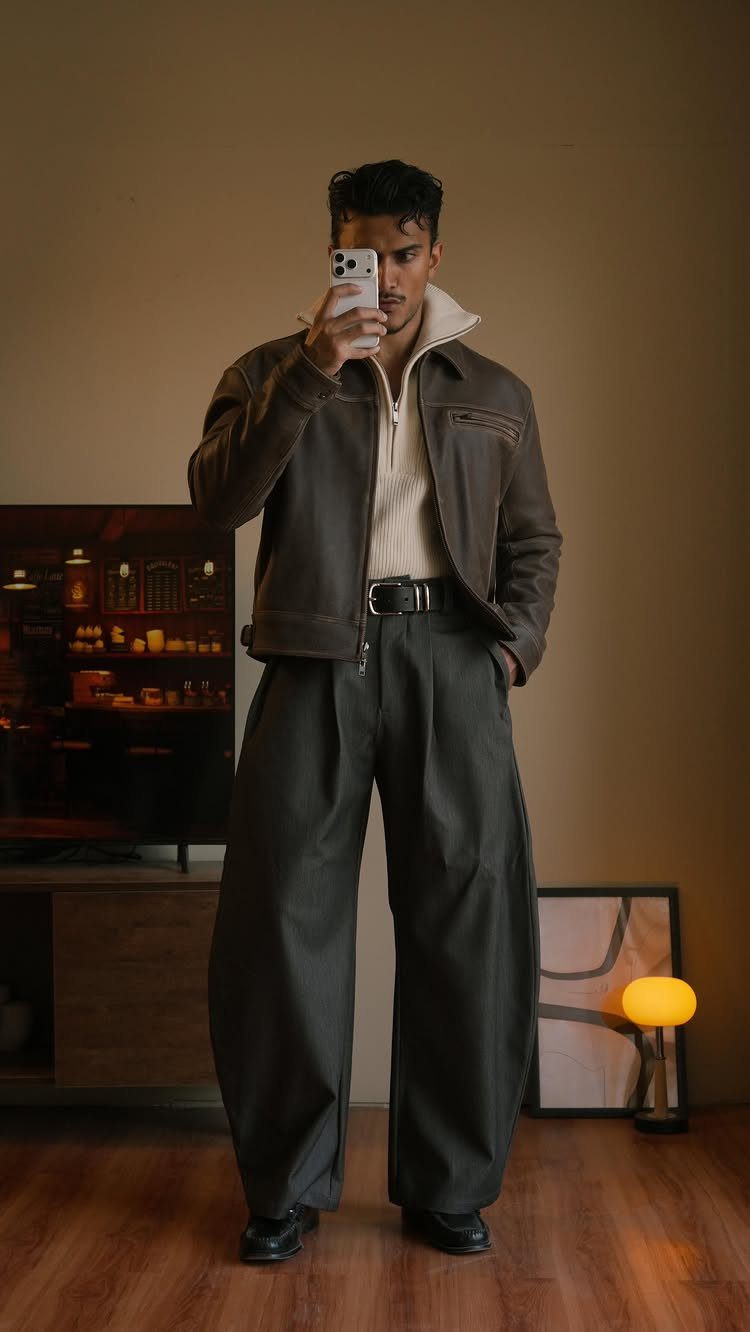
Brown leather over a cream turtleneck is a pairing I would copy exactly: the pale knit softens the jacket and lights up your face. Wide-leg trousers balance the short, close shape of the jacket, so the outfit doesn’t look top-heavy.
Choose gray or charcoal trousers so the brown is the only warm tone.
Try the jacket on with the turtleneck underneath, since a thick knit changes how the shoulders and sleeves sit. Good leather costs real money, but it rewards you for years.
Materials and Quality
Pure wool lasts longest, though it costs the most.
It is warm, resists moisture and doesn’t catch flame easily. A wool blend, usually wool mixed with something like rayon, is cheaper, but check the label: the higher the wool percentage, the warmer the coat.
Nylon handles rain well, which is why so many waterproof shells are made from it. Most current parkas use a windproof, water-repellent polyester outside and a softer nylon inside, so the coat blocks weather without feeling scratchy.
A membrane fabric like Gore-Tex suits business casual, since it keeps out rain and still looks clean enough for the office.
Quality shows in the construction. Check the seams too: taped or sealed ones keep wind from pushing through the stitching.
The collar should stand up so you can wear it raised against the weather. Inspect the stitching for loose threads or lining poking out.
Choosing the Right Fit
Try a coat on over the layers you will actually wear under it.
A fit that looks sharp over a thin shirt will pull and bind over a sweater. The best coat leaves room for those layers without hanging baggy.
If an off-the-rack coat is close, a tailor can fix the rest.
Height changes which length works. Shorter men should watch the hem: a coat down to the calves tends to swallow the frame, while one ending above the knee keeps proportions looking taller.
A single-breasted overcoat is my pick for a first coat, because it’s the simplest cut and works on nearly every build and height. The classic version stops below the knee and has one vent at the back.
Color and Versatility
Buy neutral first: black, navy, gray, camel, olive. They pair with nearly anything already in your closet, so one coat can cover many outfits.
Darker shades tend to flatter more. They give a cleaner, slimmer line and are easier to match with trousers, knits and shoes without second-guessing.
A simple test: pick 3 outfits you wear often and picture the coat over each.
If it works with all three, it is a safe buy. Save bolder colors or patterns for a second coat, once a neutral one is covering your daily needs.
Frequently Asked Questions
What are the different types of coats for men?
The main types are the trench coat, overcoat, shearling coat, puffer, car coat, hooded parka, wool duffle, canvas chore coat, belted field jacket and leather jacket.
Trenches and overcoats lean dressy, while parkas, chore coats and field jackets suit weekends and errands. Pick by how formal your days run and how cold they get.
Which type of coat is best?
For a first coat, I’d pick a single-breasted overcoat in navy, gray or black.
It’s the simplest cut, fits nearly every build and height, and goes over a suit or a plain sweater. If your days are mostly casual or wet, an olive parka covers more ground.
How do I choose a winter coat?
Start with your climate, what you’ll use the coat for, and whether it needs to handle rain.
Wear your bulkiest sweater to the fitting room, because a coat that hangs clean over a T-shirt can pull across the back and shoulders once there’s wool underneath.
How can I tell if a coat is well made?
Check the seams, the collar and the stitching.
Check the seams and collar: sealed seams stop wind, a collar that stands on its own can be turned up, and clean stitching with no stray thread or loose lining tells me the maker cared.
These details matter more than a label.
What coat length is right for my height?
If you’re under 5’8", a hem that stops above the knee makes your legs look longer and keeps the whole outfit in proportion.
An overcoat has to cover whatever you wear beneath it, so bring a suit jacket along and make sure its hem doesn’t peek out below the coat.