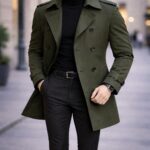
The range is wide: a formal overcoat over a suit at one end, a tan coat over a plain tee at the other, with camel, brown and gray knitwear pairings in between.
Your base layer decides the size, since a coat has to close over the bulkiest thing under it, whether that’s the suit from the second look or the hoodie from the third.
1. Camel Wool Coat
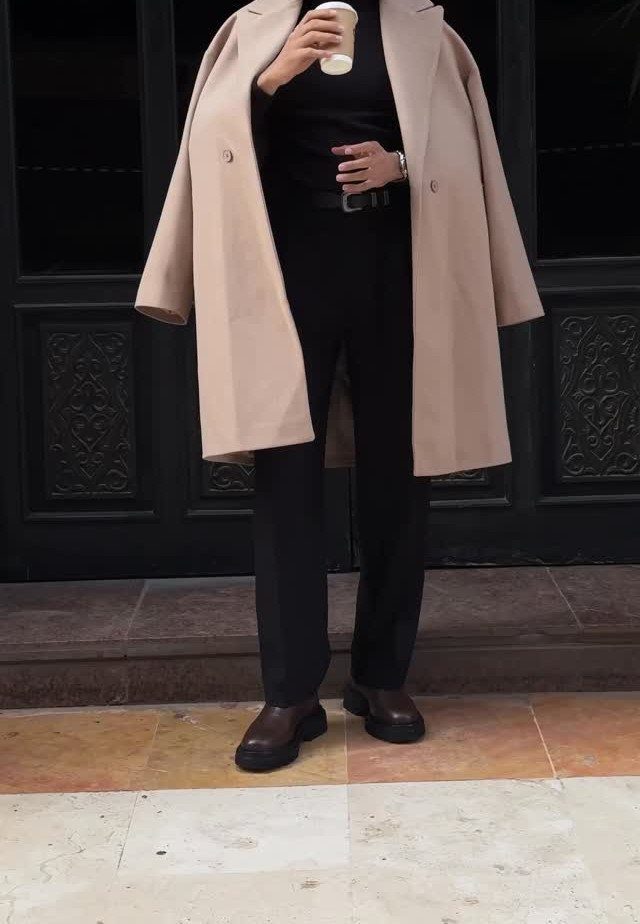
Camel sits in the middle of the color range: warm enough to lift an all-black outfit, neutral enough to wear with nearly anything else.
Black shirt, black trousers and brown shoes or boots is the version I’d copy, because the coat does all the talking.
Keep everything under it dark and plain. Let the camel be the only light color you wear.
2. Overcoat with a Suit
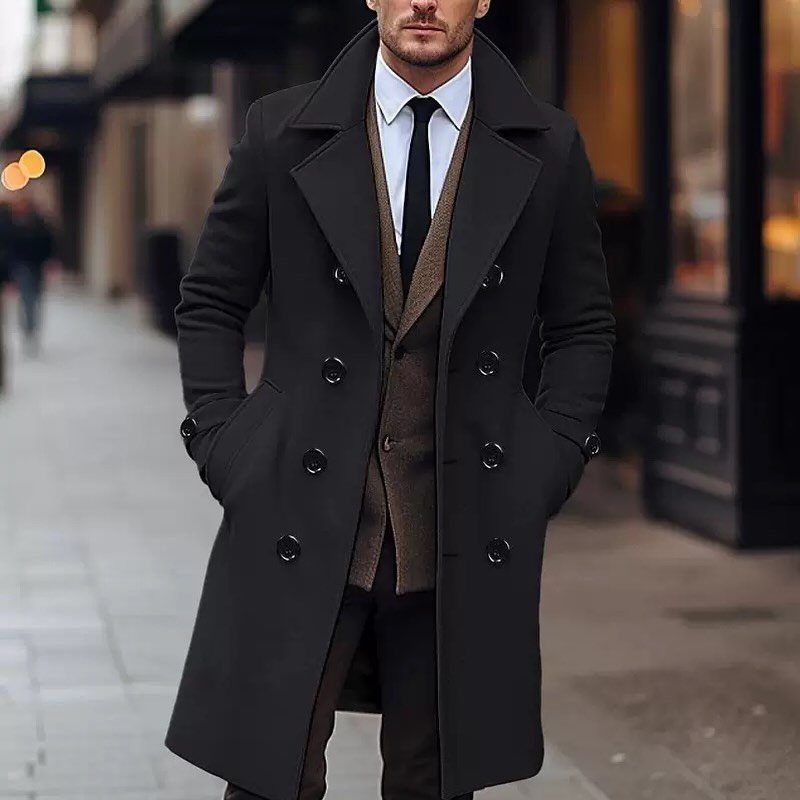
A double-breasted black overcoat over a suit is the formal option, and it works because the coat stays quiet while the layers underneath add interest.
Pick a coat that closes cleanly over the jacket without pulling across the shoulders. That matters more than the color of the vest.
3. Overcoat with Joggers and a Hoodie
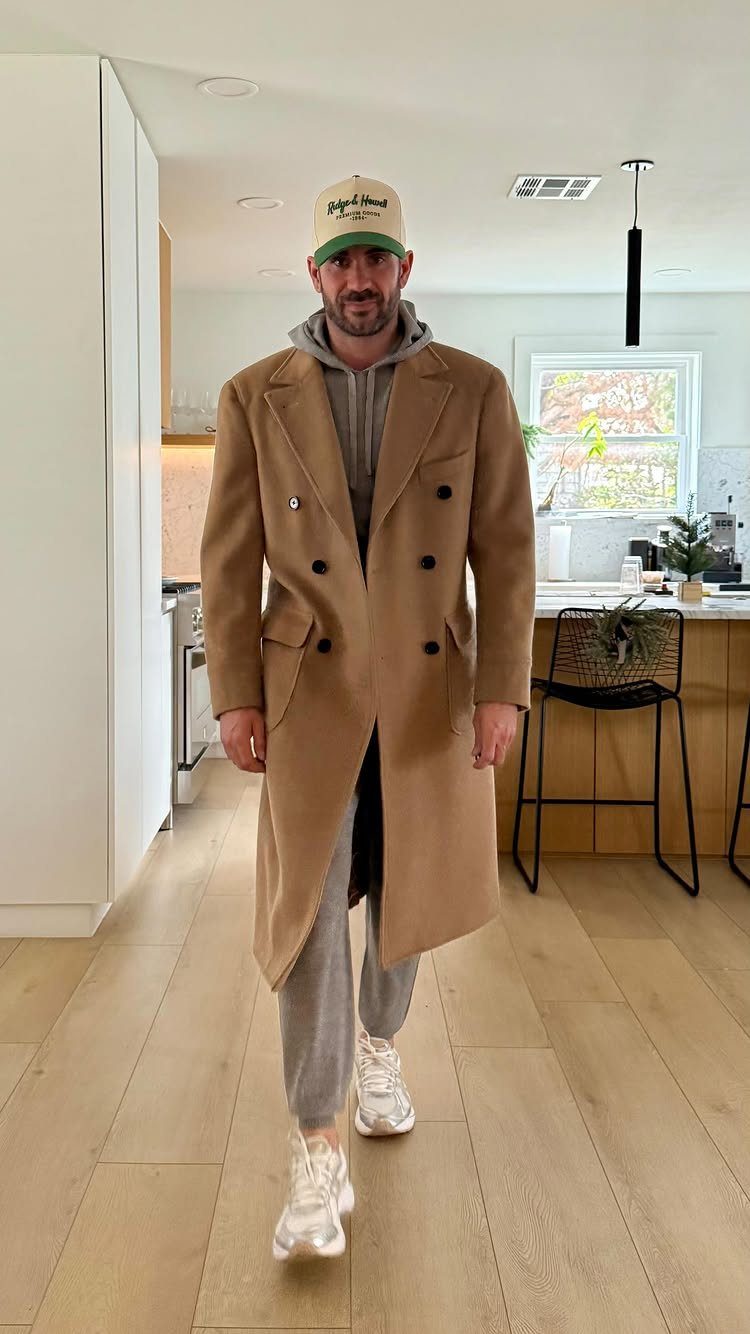
Grey joggers and a grey hoodie look like weekend clothes until a tan overcoat goes over them.
Then the outfit reads as a choice. I like this because the coat does the dressing up and you change nothing else.
Keep the grays close in shade so the base looks like one piece. Add a cap and you’re done, with no extra effort.
4. Overcoat with a Turtleneck
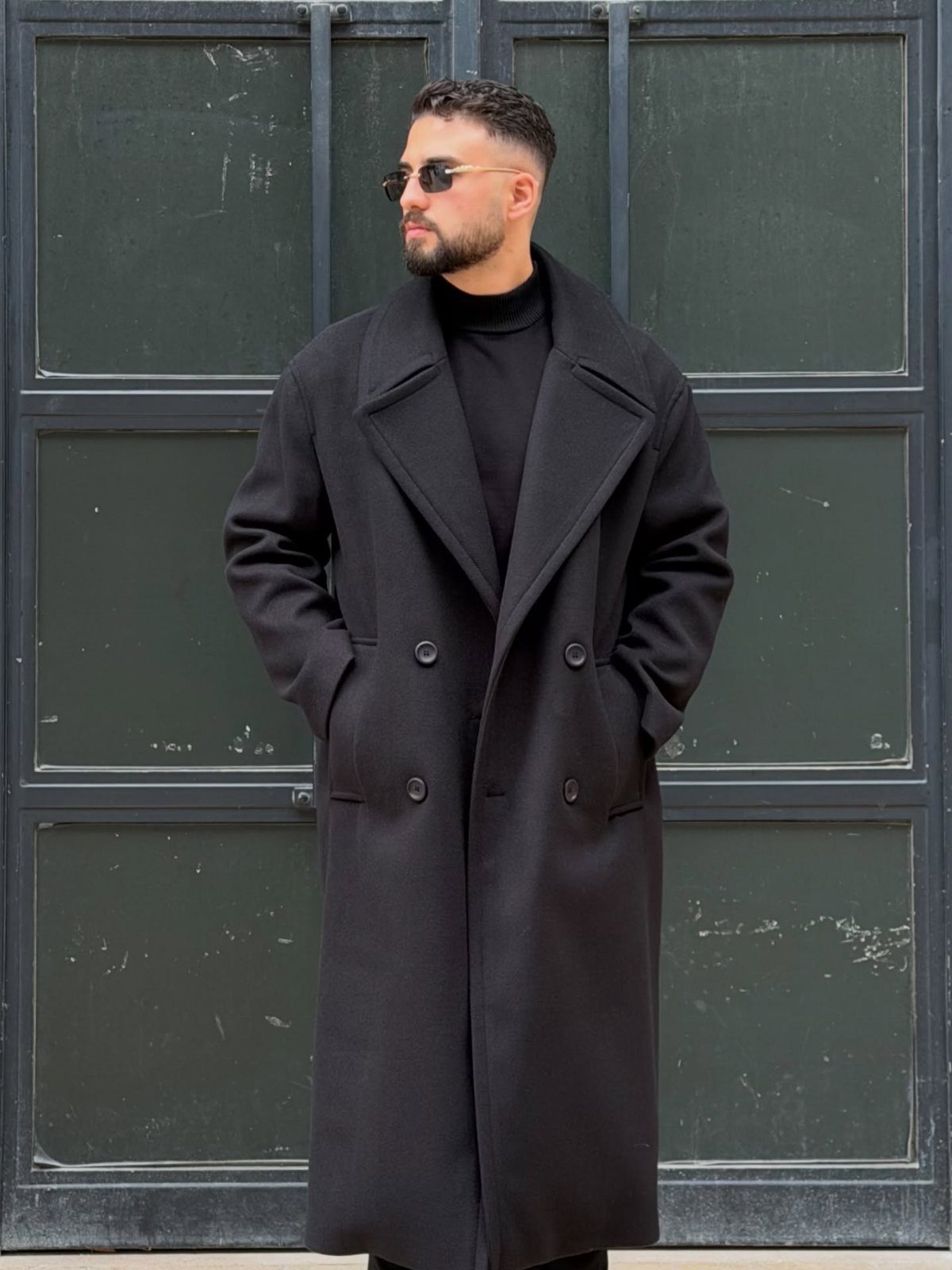
A black turtleneck under a black overcoat gives you a clean column of color, and the neckline does what a shirt and tie usually do without the fuss. Sunglasses are optional, but they fit.
I’d choose a thin, fitted knit so the coat collar sits flat against your neck. A bulky roll neck crowds it.
5. Black Overcoat with Grey Knitwear
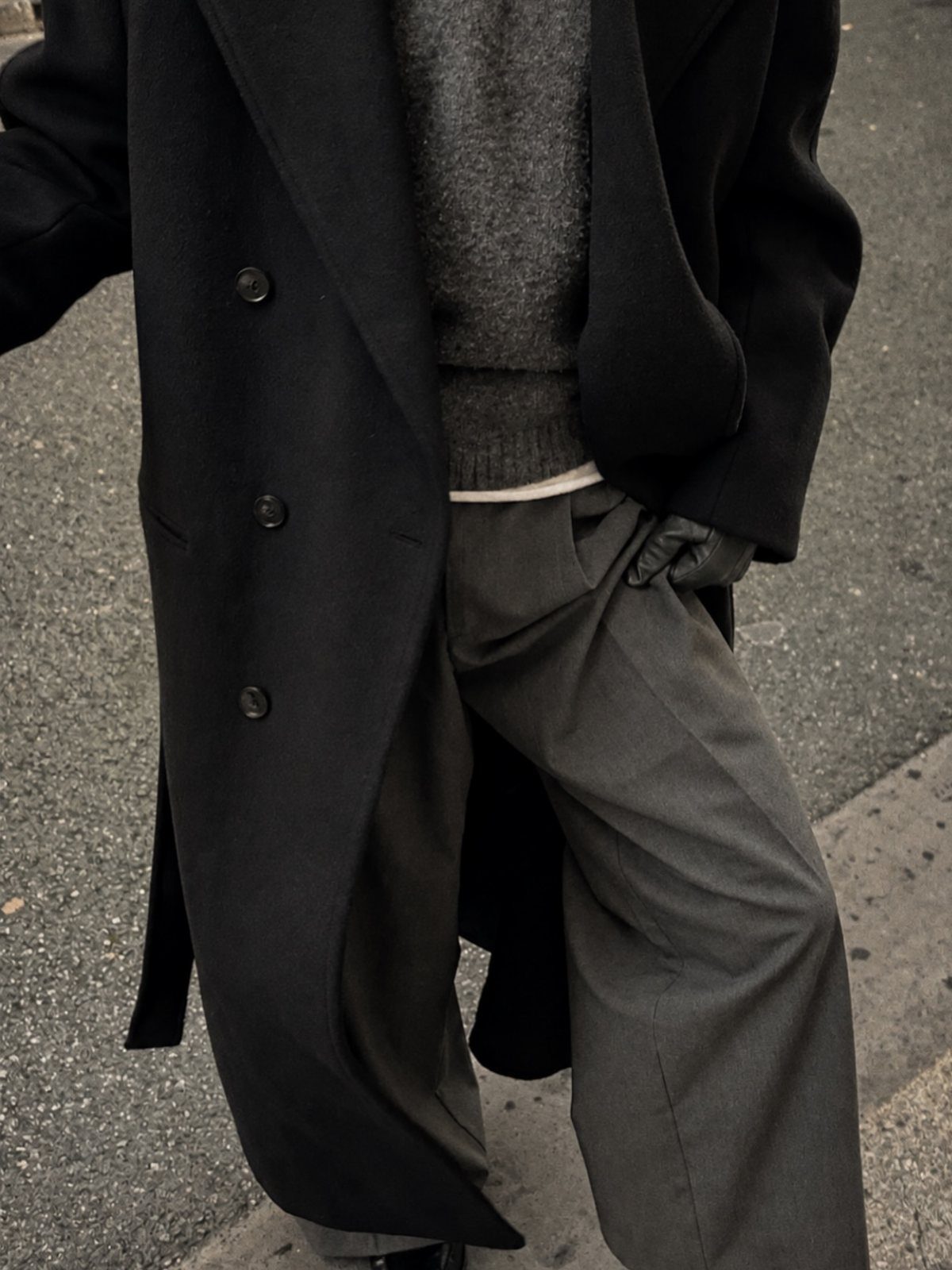
Grey knitwear softens a black overcoat. A crewneck sweater and grey trousers under a long double-breasted coat give you a tonal outfit that looks sharp and takes almost no thought.
Black against grey is a gentler contrast than black against white, which suits a normal workday. If you want more depth, go one shade darker on the trousers than on the sweater.
6. Classic Brown Wool Overcoat
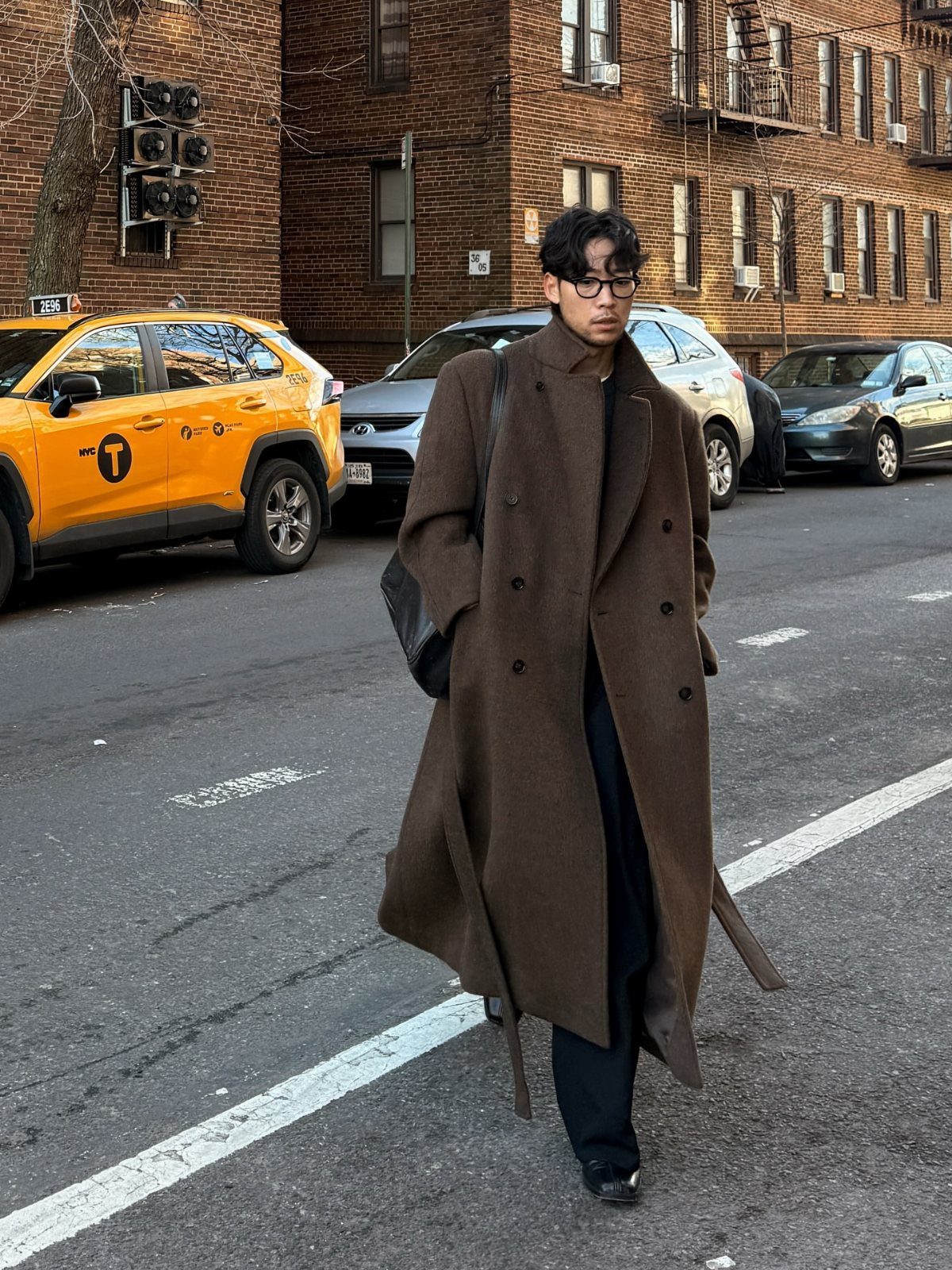
A long brown wool overcoat is warmer in feel than black and just as easy to wear. Black trousers underneath keep it grounded and a little more formal than you’d expect.
Choose a tailored cut with the hem below the knee, since length gives the coat its look. Brown works when black fills most of your closet and a second neutral matters more than a third black coat.
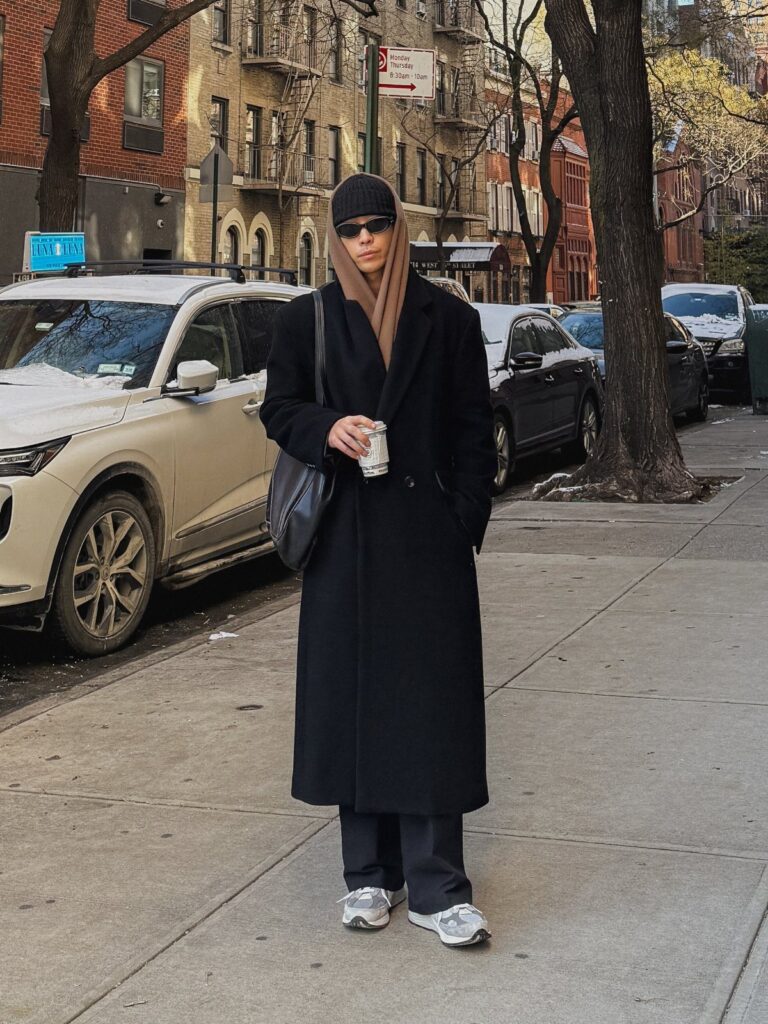
7. Oversized Black Coat Silhouette
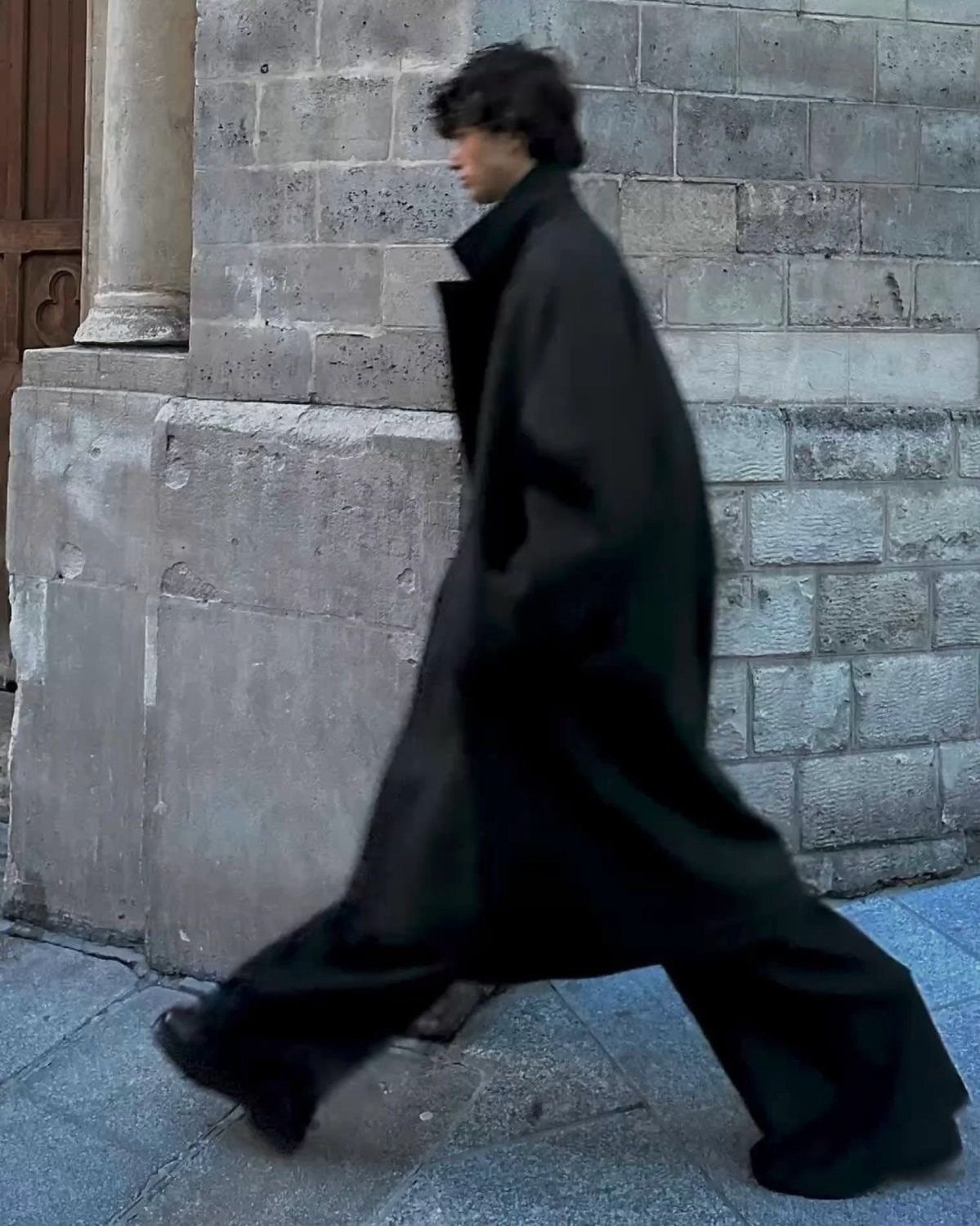
Volume is the whole idea here: a long black coat cut loose through the body, with wide-leg black trousers that match its drape. Keep both pieces the same black so the shape reads as one long line.
Fit matters more than usual.
I’d check that the shoulders still sit near your own, since a coat that is big everywhere looks borrowed. Slim shoes or boots keep the outfit from swallowing you.
Shorter men may find the length heavy, and the look takes more room to move in.
8. Casual Wool Coat with Sneakers
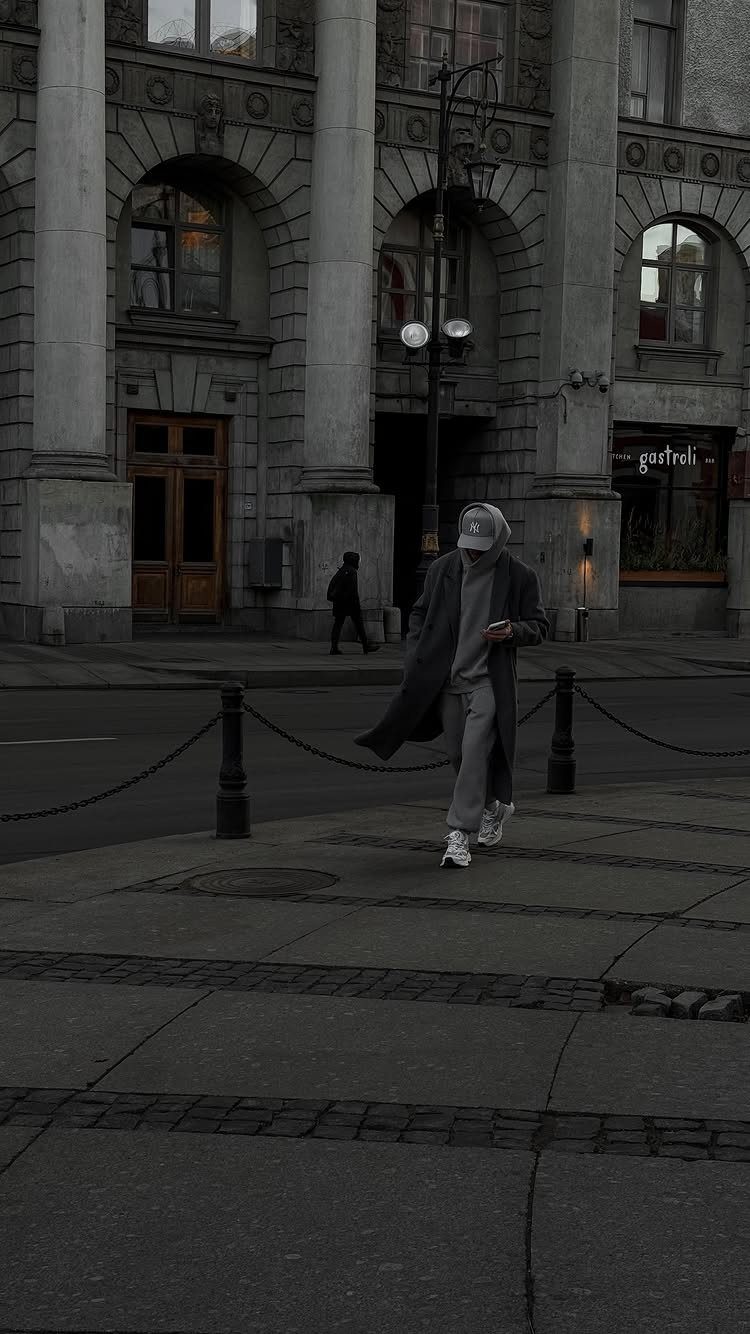
White sneakers pull a long dark wool coat out of the office and into a normal weekend. The grey trousers sit in between, so nothing fights the coat.
Repeat the white at the top with a knit beanie, and the sneakers look planned instead of random. I’d keep the sneakers clean and plain, since they are the loudest thing on the outfit.
Trousers that end near the ankle show the shoes and keep the coat from swallowing the lower half.
9. Tan Wool Coat with a T-Shirt
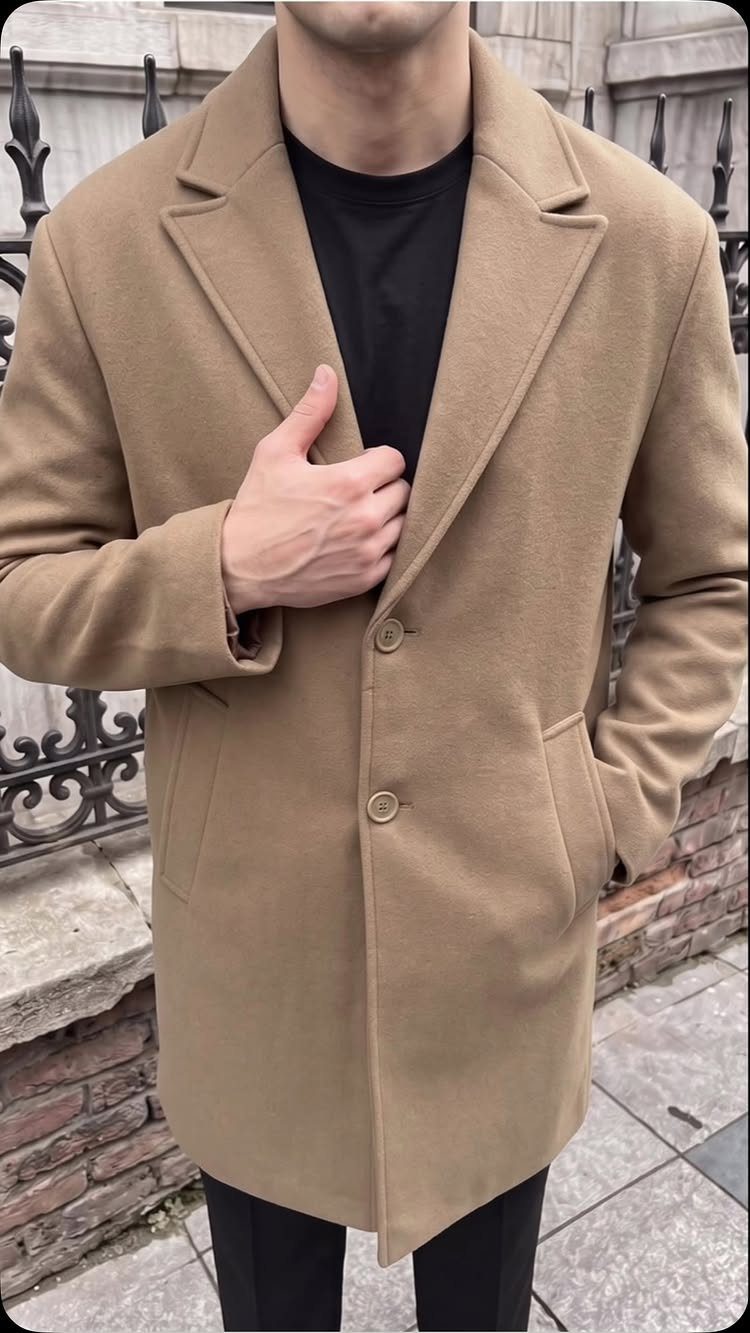
A tan overcoat left unbuttoned and layered on a plain black t-shirt with black trousers makes the easiest transitional outfit I know. Leave the coat unbuttoned and let the dark base show down the middle.
This works in the weeks between jackets and heavy winter layers, when a thick sweater would be too much. Pick a t-shirt in a heavy cotton that holds its shape, with a neckline that stays flat.
Tan gets all the attention, so keep shoes dark and simple.
Fit Considerations
Buy the coat for the layers you’ll wear under it, not for the shirt you have on in the fitting room.
Try it over a suit jacket or a thick sweater; if you shop off the rack, wear one of those to the store.
On a wool overcoat, let the shoulder seam sit about half an inch past the edge of your shoulder bone, which is a bit more generous than a suit jacket allows.
Chest and hips need extra room too. A good overcoat sleeve hides the shirt cuff entirely, and the hem should drop low enough to cover the jacket underneath.
A trimmer fit through the chest and shoulders works fine if all you plan to wear under the coat is a shirt or a thin sweater.
Deep winter calls for even more room, so you can fit a thick knit underneath without the coat pulling across your back.
Check all of this before you pay. Altering an overcoat after it’s been cut and sewn is difficult, and some changes can’t be done at all.
Material and Texture
Wool is the right fabric for a coat, but the weave decides how it looks.
Smooth wool reads formal. Rougher weaves such as tweed, herringbone and bouclé add depth and feel more relaxed.
Herringbone is my pick.
Up close it’s a busy zigzag; from a few steps away it reads as a solid gray, and it catches light differently across the day. That gives it a richer look than a flat cloth at the same price.
There’s a practical benefit as well.
A smooth black coat shows lint and splashes right away, while a textured gray one hides them. If you wear one coat all winter without much brushing, choose the textured cloth.
Accessories
An overcoat leaves your upper chest open, so a scarf does real work.
A thick knit scarf adds bulk around the neck, softens the line of your jaw, and keeps wind from slipping under your collar. Tie it or loop it instead of draping it loose.
Gloves should be leather. Wool gloves soak through when they get wet, while leather stops the wind and looks sharper against wool.
A beanie is the easy add on the coldest days, especially with a casual coat.
Frequently Asked Questions
How to dress up a wool coat?
Wear it over a suit, or over a dark base of black trousers with a thin, fitted black turtleneck.
A double-breasted black overcoat is the most formal choice, and a long brown or camel coat with black underneath also reads polished.
Keep the coat plain and let the sweater or collar underneath carry the detail; black or dark brown leather shoes finish it without a fuss.
How should an overcoat fit?
The shoulder seam should sit about half an inch past the edge of your shoulder bone, a bit more generous than a suit jacket.
Past the shoulders, you want space across the chest and hips, a sleeve that hides your shirt cuff, and a hem that falls below whatever jacket you’ve got on under it.
Try it on with the thickest layers you actually wear, because a tailor can do little to an overcoat after the fact and some fixes aren’t possible at all.
When to wear an overcoat?
Wear it any time it’s cold, from dressed up to weekend casual.
It goes over a suit, a turtleneck, or even joggers and a hoodie. In the stretch between light jackets and real winter, I like a tan overcoat worn open over a simple black tee.