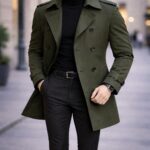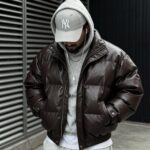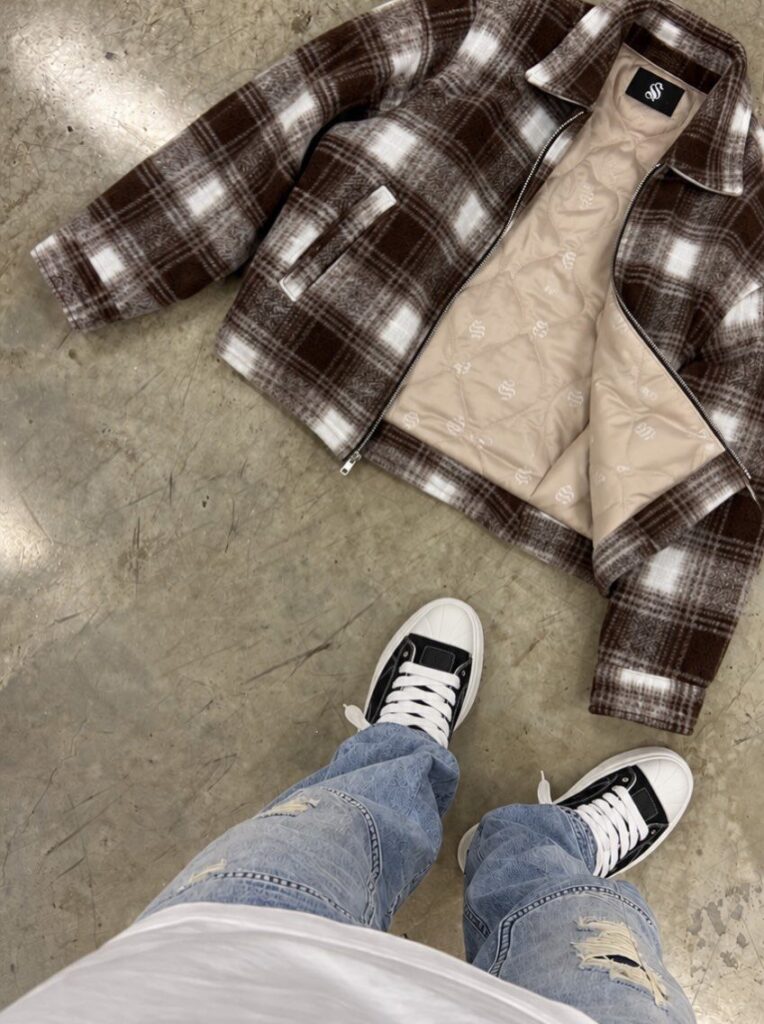
Which jacket suits you depends on your torso length and how cold your fall gets: a cropped collar jacket sits above the hip for shorter builds or longer torsos, while a knee-grazing trench needs height to work.
The list runs from quiet plaid to multi-pocket camouflage that needs a plan, and covers layering techniques, color choices, and the fabrics that decide whether a jacket works in September or January.
Most of them lean on the same warm palette of brown, olive and deep red.
1. Plaid Jackets
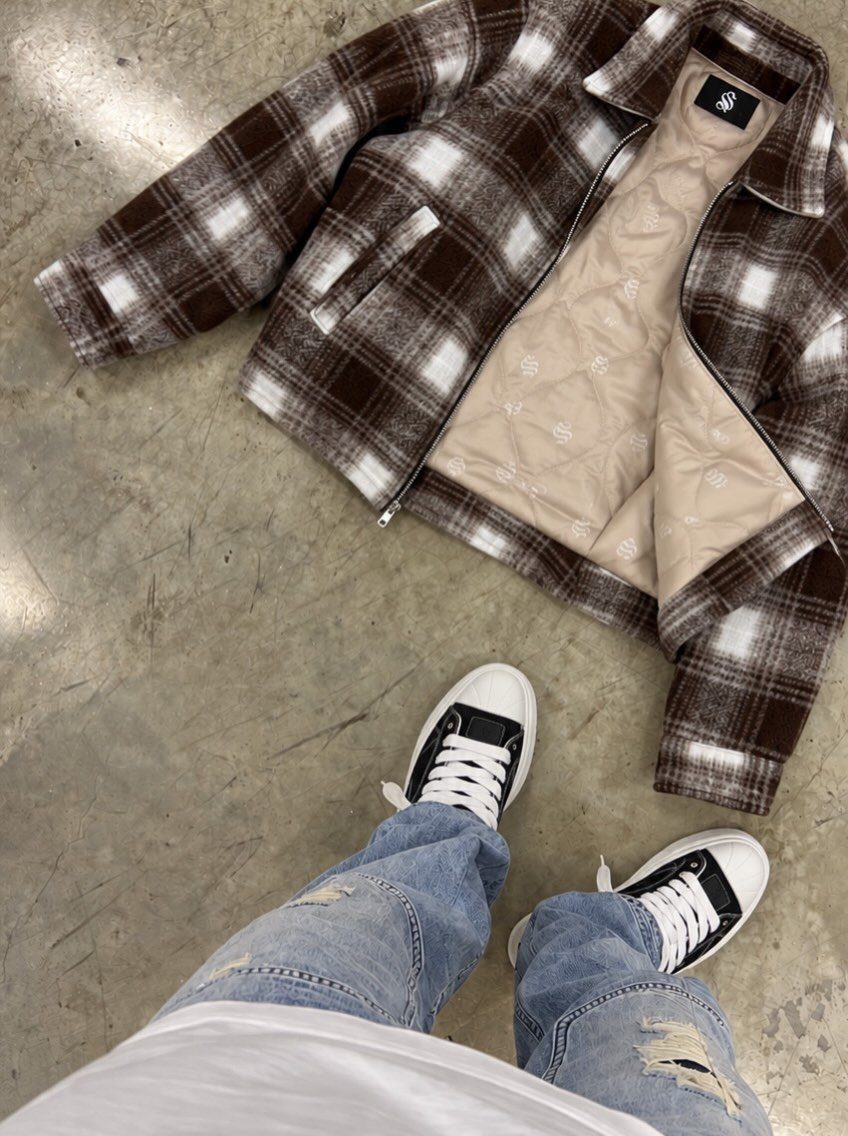
A brown and white plaid jacket does the work of a pattern without asking you to build an outfit around it. Keep everything under it plain: a white or grey tee, and jeans in a solid wash.
Ripped denim and sneakers keep it casual. For work, I’d swap the sneakers for leather boots and drop the rips.
Brown and white is a quiet palette, so it sits easily over most of what you already own.
2. Bomber Jacket
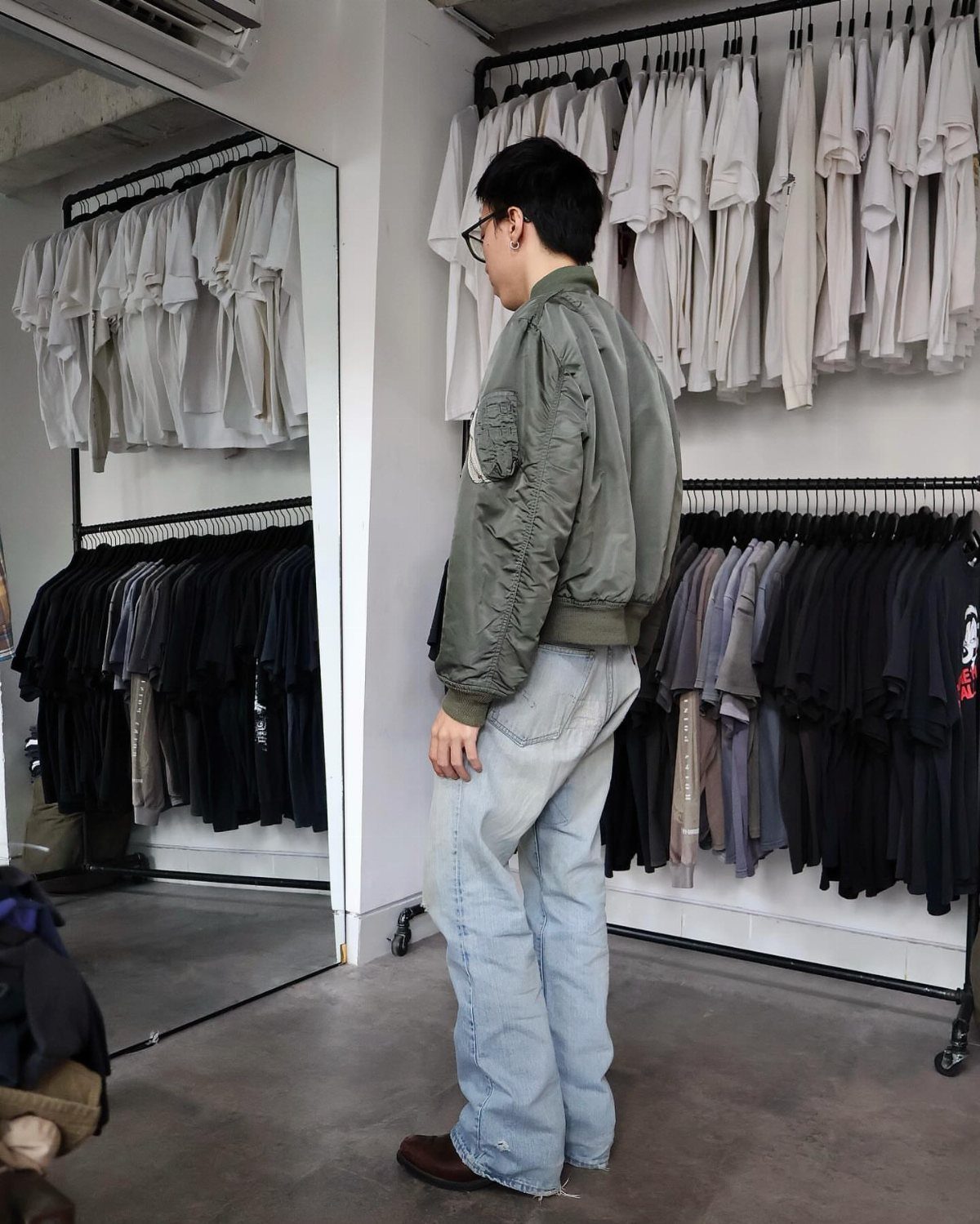
Olive green is the bomber color I’d buy first, because it goes with denim, grey, black and white without effort.
Wide-leg light-wash jeans give the shape a relaxed, current balance. A bomber ends at the waist, so a looser leg keeps your proportions from looking top-heavy.
To dress it up, wear it over a plain knit with dark trousers.
To dress it down, a tee and sneakers are enough. One jacket works for casual wear and dressier occasions.
3. Knee-Grazing Trench Coats
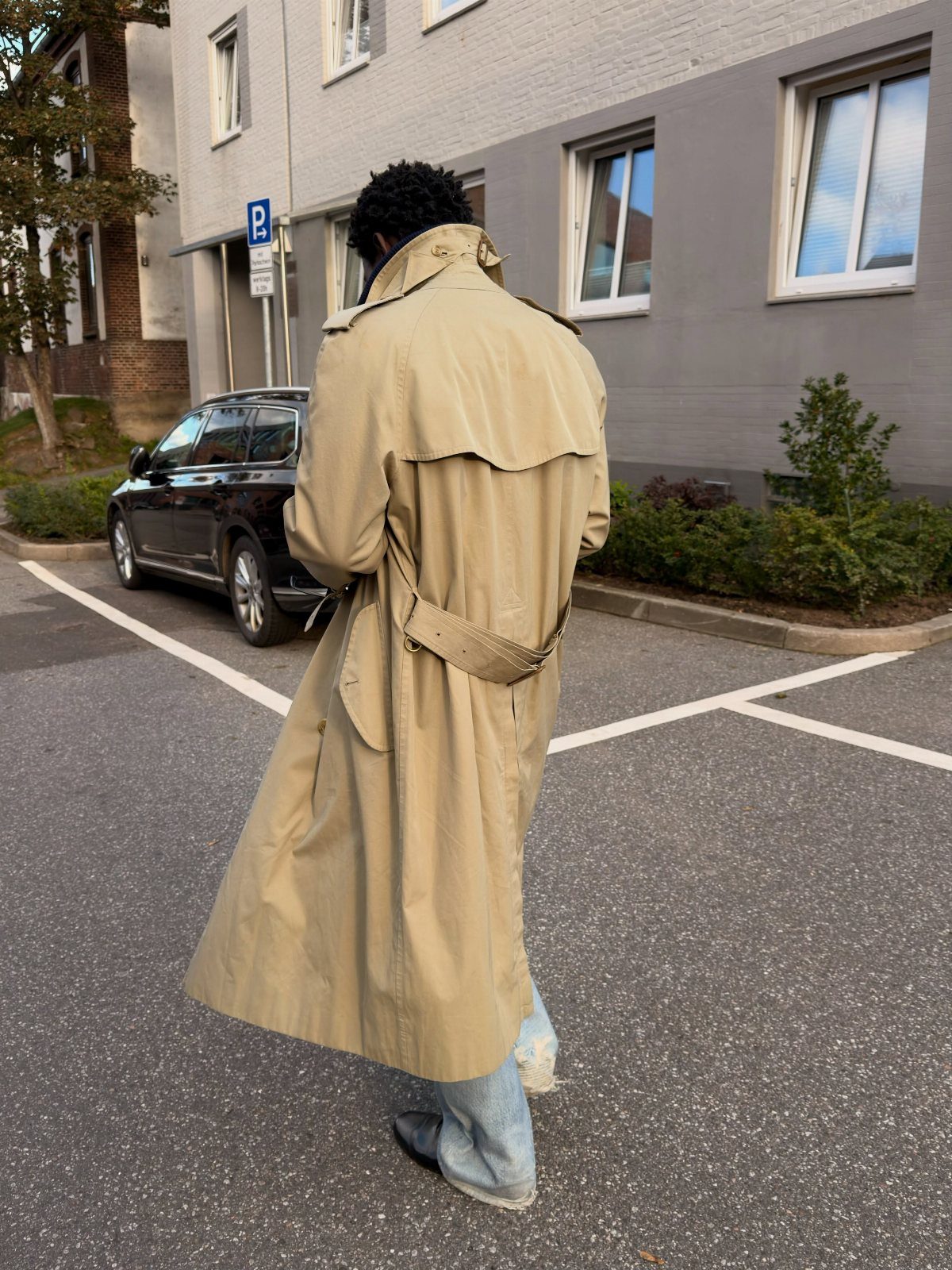
Hem length decides everything here. A trench that grazes the knee reads as deliberate; a few inches shorter and it turns into a different coat.
Tan is the classic color, and it works against light-wash jeans because the two sit close in tone and make one clean column. Add a darker shoe to anchor it.
If you’re shorter, check the shoulder seams and sleeve ends before the length, since those are harder to fix. Belt it for shape, or leave it open for a looser line.
4. Utility Rain Jackets
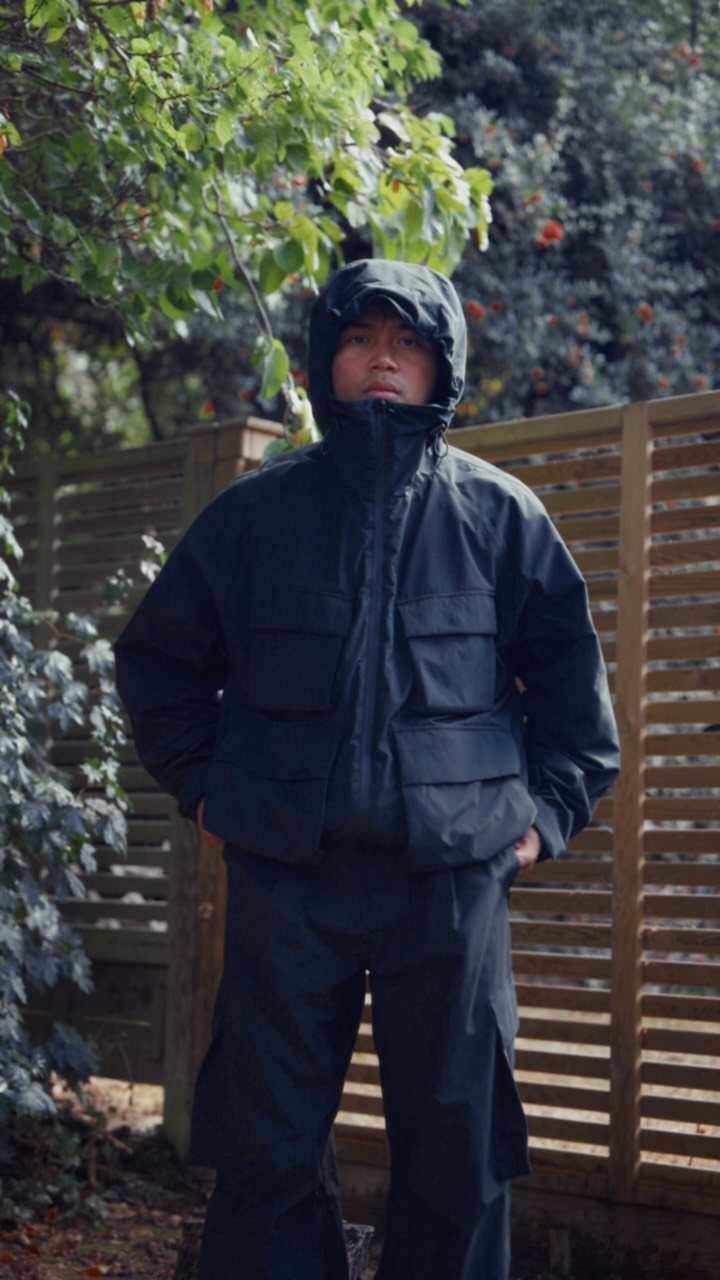
Black on black, hood up or down, makes a rain jacket look like an outfit instead of gear. A matching set of jacket and trousers is the bolder version; the jacket alone with jeans is the easier one.
Pick a hood that sits close and a cut that clears your hips. Utility styling means pockets, and I like them best when they stay flat.
Wear it with plain sneakers and a hoodie underneath, and skip anything loud.
5. Classic Brown Leather Jacket
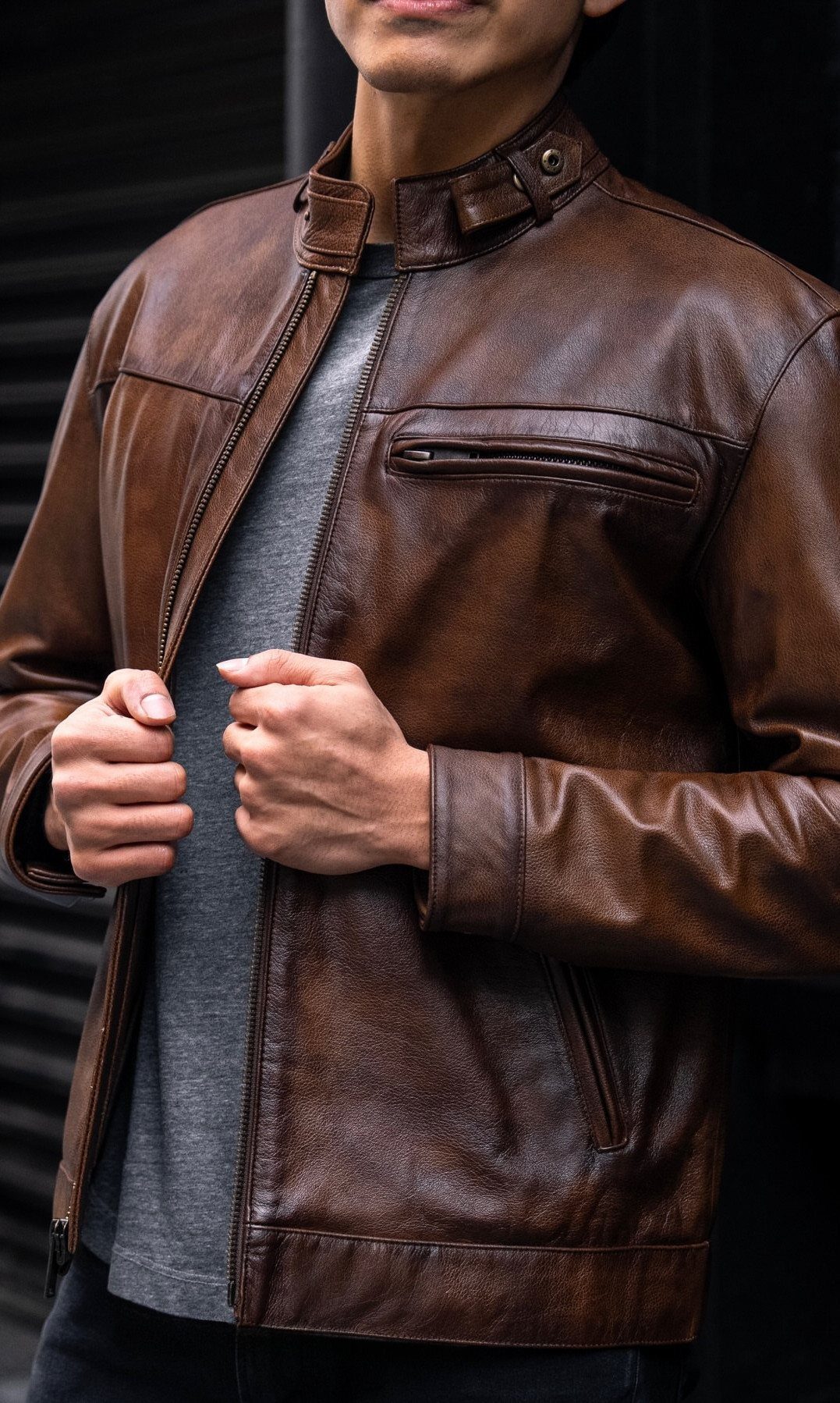
A brown leather zip-up with a stand-up collar is the one I’d pick over a classic lapel style if you want less fuss. No lapels means nothing to fold wrong, and the collar frames your neck cleanly.
Wear it over a grey tee and add dark jeans. That combination is hard to get wrong.
Leather costs more than cloth, so buy for fit first: the shoulders should sit at your shoulder bone, and the jacket should end at the belt line.
6. Tan Cropped Collar Jacket
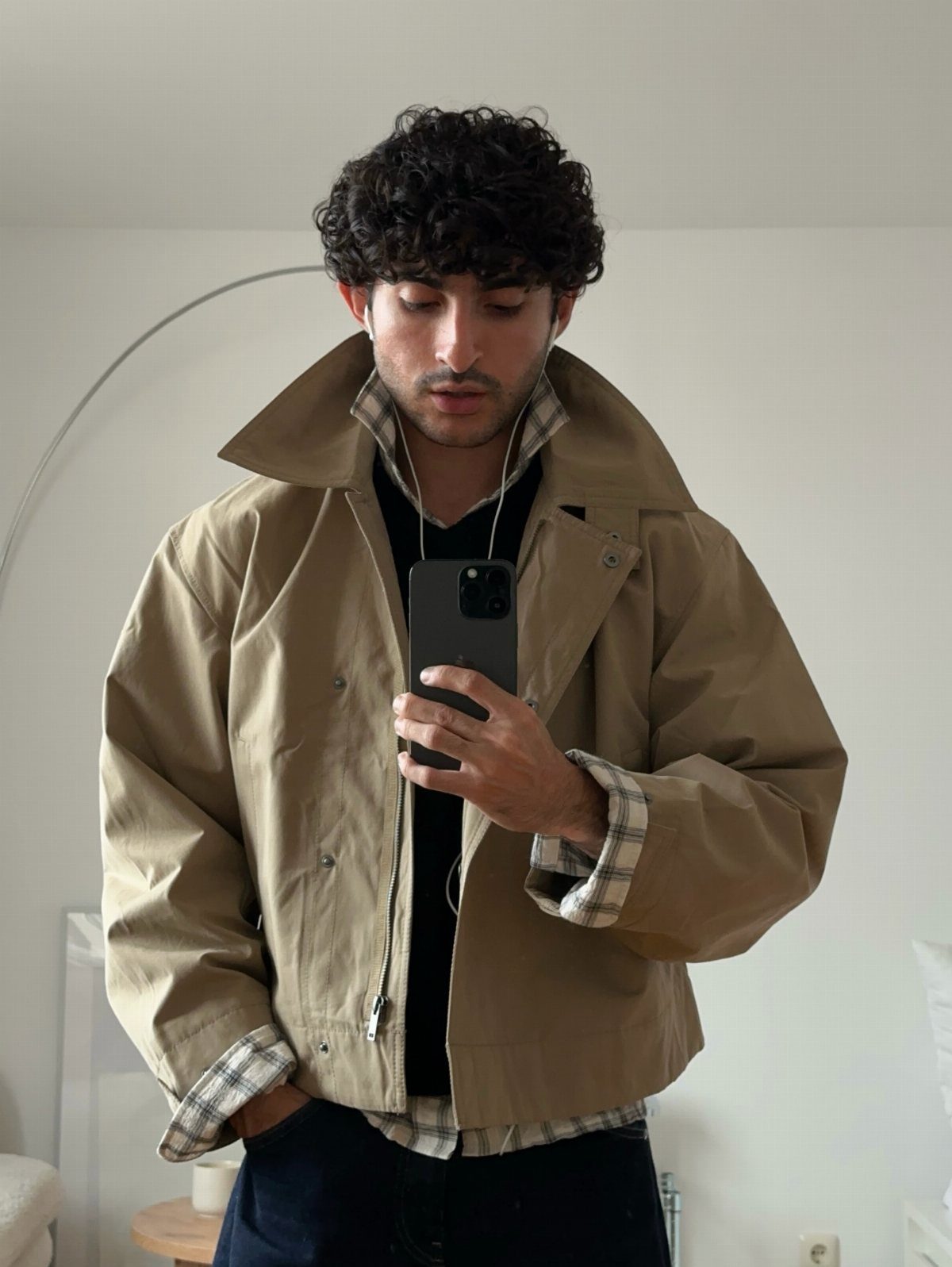
Short, wide-collared and tan, this jacket sits above the hip, which makes it a good choice for shorter men and anyone with a longer torso. Over a plaid button-down and black tee, it gives you 3 layers without bulk.
The trick to layering plaid under a plain jacket is to let the shirt hang a little below the hem or stay tucked, but pick one. Mixed lengths look accidental.
Keep the trousers dark and simple so the tan stays the focus.
7. Multi-Pocket Camouflage Jackets
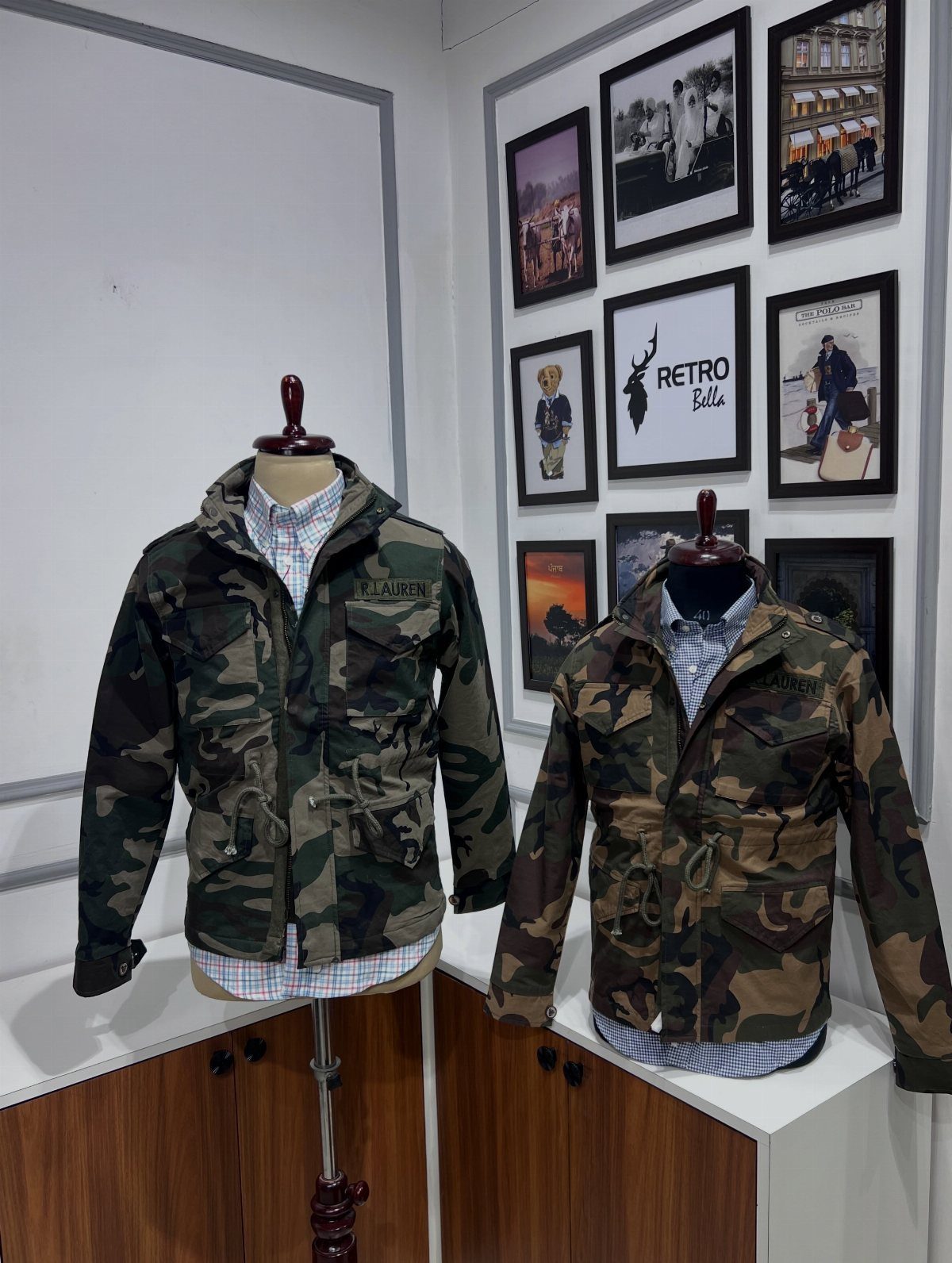
Camouflage works best when it is the only loud thing in the outfit, so a checkered shirt underneath is a bold move that needs a plan.
A flannel or oxford in a muted gray or tan check works under the jacket, since a loud pattern next to camo just fights for attention.
Pockets add volume, so I’d leave the jacket open and let the shirt show as a second layer. Dark jeans or plain trousers and simple boots keep the whole look from turning into a costume.
If camo feels like too much, try it in muted tones first. One patterned layer over another is easier to wear when the colors sit close together.
Layering Techniques
Build fall outfits in 3 tiers: a base layer like a tee or button-up, a mid-layer like a thin sweater, and the jacket on top. Each tier should work alone, so you can drop one when the afternoon warms up.
Fit decides whether this works. A jacket cut slightly roomy lets a thin sweater slide underneath, but if it only closes over a chunky knit, it is too big for everything else you will wear it with.
Keep the mid-layer in a warm, quiet color. It shows at the collar and cuffs, so it should sit well beside the jacket instead of competing with it.
Color Palette
Brown, olive and deep red work as a family because they all carry some warmth.
Spread them across the jacket, the shirt and the shoes, and the whole thing reads as planned, even if you bought each piece on a different day.
Pick one of the three as your main color and let the others show up in small amounts. A burgundy knit under an olive layer is enough; burgundy on top of brown on top of green is too much.
Black and navy are fine anchors for trousers and shoes. Warm tones then have a calm backdrop.
If you live somewhere mild, olive or black is also a safer choice than traditional blue, which can read as workwear.
Fabric Choices
Wool, corduroy and tweed are the fabrics I reach for when the temperature drops.
Tweed is a rough wool with small flecks of color, and its tightly woven strands trap heat, so a tweed blazer is a good first piece if you want warmth that still looks dressed.
For transitional days, go lighter. A medium-weight cotton twill is a solid pick in dark navy or black, especially with extra inside pockets.
Where fall stays mild, a lighter cloth and a trimmer fit make more sense, because the jacket will usually sit over a plain tee or a button-up and nothing heavier.
The latest menswear collections are packed with outerwear in wildly different cuts, colors, textures, and materials, from slouchy field jackets to coats in shades of red and blue that would have seemed downright unthinkable a few seasons ago.
— GQ
Frequently Asked Questions
What are the trends for fall 2027?
Looser shapes, earthy colors and jackets with practical pockets lead the season.
Brown and olive anchor fall wardrobes because they pair easily, deep red adds contrast without fighting them, and a cropped bomber sits better over wider pants than a longer coat would.
Fabrics like wool, corduroy and tweed handle the cooler days.
What coats are in style for winter 2027?
A knee-grazing tan trench and a utility-style jacket with flat pockets are 2 strong picks.
The trench reads as deliberate when the hem touches the knee, and tan looks clean against light-wash jeans. Wool and corduroy handle most cold days, but tweed’s tight weave holds body heat better than either when temperatures drop hard.